At 17 She Was Cast Out Before Winter — She Hid Food in a Cave, Then the Great Freeze Came
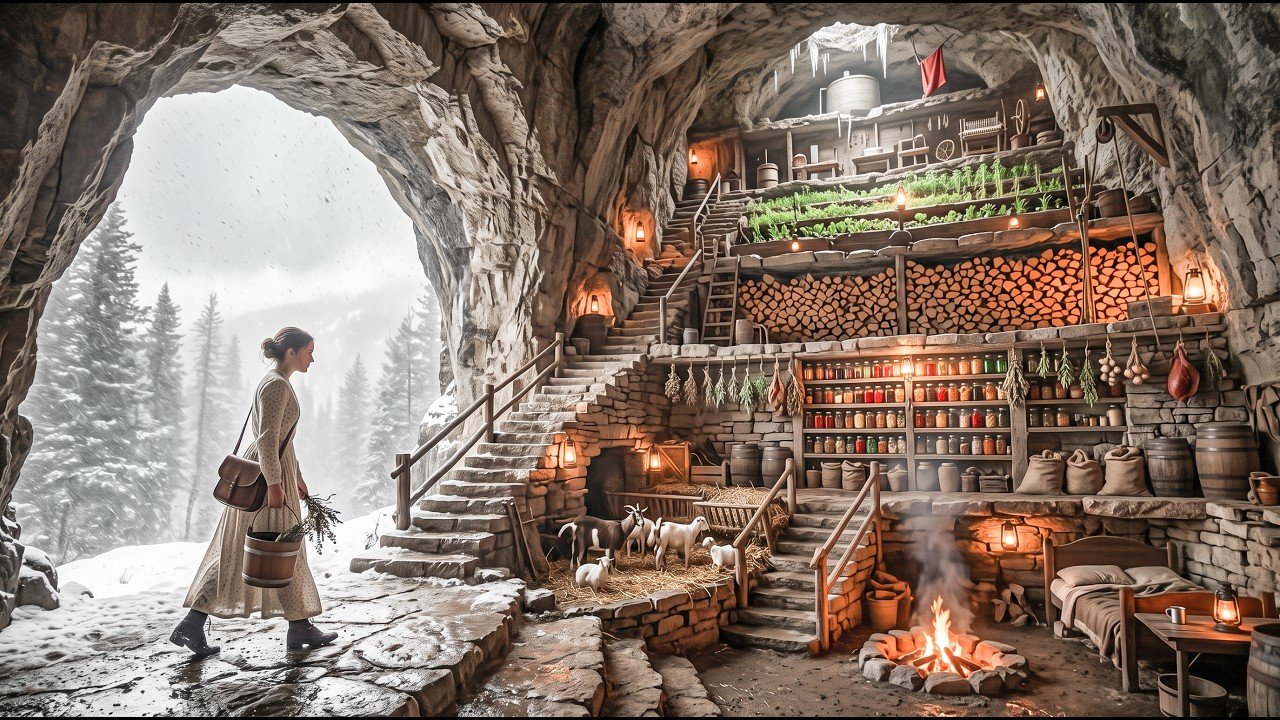
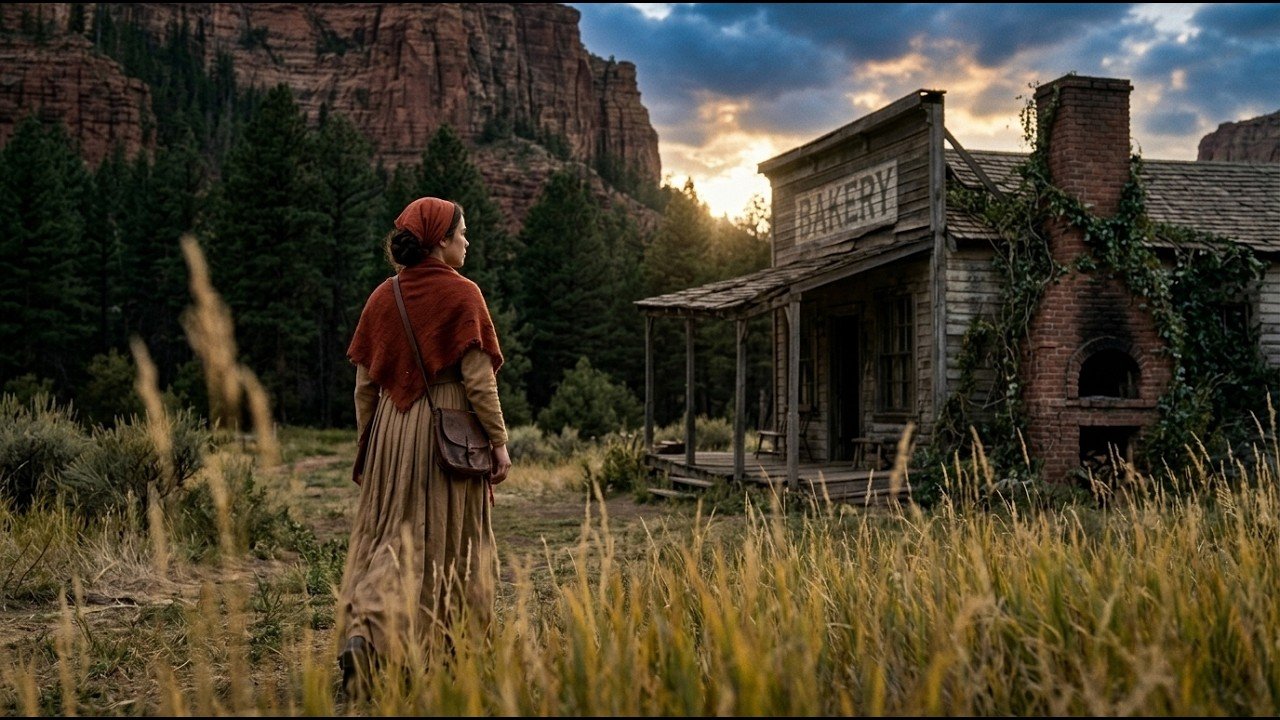
The first thing Dela Marsh carried into the cave was a sack of potatoes. Not blankets, not firewood, potatoes. Because hunger frightened her more than cold ever had, and she had learned the difference the hard way. The way animals learn which berries kill, by watching another animal die from them. Three weeks of sleeping in frozen sheds and beneath abandoned wagons had taught her one plain truth that she would carry for the rest of her life. Cold makes a person miserable, but hunger makes a person stupid. And stupid in a Montana winter gets a person buried under the snow before the first thaw ever comes. She dragged the heavy sack across the frozen ground while Sleet tapped against the rocks overhead, tapping like fingernails drumming slow on the lid of a coffin. Her boots slipped twice on the narrow path, climbing toward the dark opening in the hillside. The second time, she nearly lost everything. 60 lb of survival tilted toward the edge of the slope, ready to tumble down into the brush and the dark below. And for one breathless second, she watched it go. Then she caught the rope, fingers burning, shoulders screaming, and she held on the way a drowning person holds on to the last thing floating. Below her, far down in the valley, the chimneys of a town called Garnet Creek smoked under a darkening sky. Maybe 200 souls lived down there, spread across a handful of timber houses, a church with a steeple that leaned a little to the weSt. A supply store, a blacksmith shop, and the dead bones of a copper mine that had once kept the whole town breathing. The mine was nearly finished now. Half the men who used to work it had packed up and moved on to better ground. The ones who stayed behind farm thin soil, cut timber, and pretended the good years might still come back around like a season. Winter was coming early this year. Everyone knew it. The geese had already gone south weeks ahead of their time. The wind had changed direction twice in a single week, swinging cold and then colder. And that early winter was the reason they had thrown her out before the snow ever fell. Not because they hated her, because the arithmetic did not work. 3 weeks earlier, Dela had been standing in the kitchen of the only house she had known for 2 years. The house belonged to Cyrus Boyd, the man her mother had married just 14 months after Dela's father went into the ground. Cyrus stood beside the table. He did not shout. That somehow made the whole thing worse. He simply set a single piece of paper down on the wood and waited for her to read it. So she read it. It was a list written in Cyrus Boyd's careful patient hand. On the left columns of numbers, food stores, firewood, lamp oil, flour, salt, dried meat. On the right, the number of mouths to feed through the long dark and the number of weeks that stood between that kitchen and the spring. At the very bottom of the page sat a line of simple subtraction, and the numbers did not balance. Beside the column of names, one name had been crossed out with a single clean stroke of the pen. Dela Marsh. There isn't enough, Cyrus said. His voice was flat as a man reading off a bill of sale to a stranger. Not enough wood, not enough food, not enough room, not enough patience to stretch what we've got. You can see the numbers for yourself, girl. I'm not asking you to leave. I'm showing you why somebody has to. Dela looked at her mother. Alma Boyd sat at the far end of the table with her hands folded in her lap, staring down at the floorboards. Her fingers had twisted into the fabric of her skirt and gripped it so hard the knuckles had gone bone white. Dela waited for her to say something. Anything at all. One word would have been enough. One single syllable of proteSt. One small objection. And Dela would have dug in her heels and fought to stay in that house until they carried her out. But Alma never lifted her eyes from the floor. You can see the numbers, Cyrus said again, softer this time, as if the softness were a kindness. My father died in that mine, Dela said. Her voice came out steadier than she had any right to expect. Elias Marsh went underground so this town could have its copper and its wages. He died two years ago with three other men when the east tunnel came down on top of him. It came down because the company wanted them to dig deeper than the timber would hold. And now his daughter isn't worth a single line on your piece of paper. Cyrus did not flinch, not a muscle. Your father died because he took a foolish risk, he said. I don't intend to repeat his mistake in my own house. The sentence landed harder than any fist could have. Not because it was cruel, though it was cruel down to the marrow. It landed hard because Cyrus Boyd truly believed it. He believed that Elias Marsh's death had been a miscalculation and nothing more a column that failed to add up. He believed that survival was arithmetic and that arithmetic was the whole of the world and that a man who understood his numbers would never have to bury anyone he loved. Dela looked at her mother one last time. Elma's lips moved just slightly. The ghost of a word that never became a sound. Then her jaw tightened and her eyes closed and the moment passed her by like a train that does not stop. And Dela understood standing in that kitchen that her mother was not a heartless woman. Her mother was an empty one. Three brutal winters, a husband dead in the dark. A second marriage born out of pure desperation and the slow grinding erosion of poverty had hollowed Elma Boyd out until silence was the only thing she had left to give anyone. Understanding it did not make it hurt 1 ounce less. Dela packed what she could carry into two canvas sacks, a change of clothes, a wool shaw her father had given her the winter she turned 15, a folding knife, a small handful of coins saved up from mending other people's clothes, and a little leather pouch that held a lock of her father's hair cut from his head before they closed the lid of his coffin. She walked out before the sun went down, and she did not say goodbye. The porch steps creaked beneath her boots the same way they always had. The gate swung shut behind her with the same iron squeal it had made a thousand times before. She walked down the dirt road toward the edge of town, and she did not look back once, because looking back would have meant admitting that some small, foolish part of her still hoped somebody might come running after her through the dusk. Nobody came. The road stretched out ahead of her, empty and darkening, and Delam Marsh walked into it, carrying everything she owned in two canvas bags, with a feeling in her chest like a door being nailed shut from the inside. By dawn, the first snow had already begun to fall. The first three nights very nearly killed her. On abandoned equipment shed near the old mineshaft was cold enough to crystallize her breath in the thin light of her lantern. The walls had gaps between the planks where the wind came whistling through all night long. And Dela lay on a pile of old burlap sacking with her coat pulled up over her head, listening to the mice scratching in the corners and to the sound of her own teeth chattering in her skull. The next night, she crawled beneath a wagon behind the feed lot where rats ran across her legs at midnight, and the frozen ground seemed to reach up and pull the warmth straight out of her bones. The night after that, she found a root cellar. Somebody had forgotten to lock damp and black and stinking of rotten turnips, and she slept sitting upright against the wall because the floor was too wet to lie down on. Each morning, the cold bit down a little harder. Each morning, she woke more exhausted than she had been the night before. Her joints stiffened, her thinking slowed, her will frayed a little thinner, like a rope worn down strand by strand. On the third morning, she caught herself standing dead still in the middle of the road, staring at nothing at all. Her mind gone completely blank and quiet. And in that empty moment, she understood something that scared her worse than the cold ever had. She was beginning to shut down. Not her body, her mind. The cold was reaching into the place where a person keeps their decisions, and it was turning down the lights one by one, gentle as a mother putting a house to sleep. She had already tried asking for help. She had knocked on Ambrose Ren's door on the second evening. Ambrose was a quiet man, a widowerower raising his 9-year-old boy, Toby, alone with gentle eyes and hands cracked and calloused from work in a small house that smelled of wood smoke and boiled beans. He had looked genuinely sorry when he told her he had no room for her. Dela could see straight past him into the little kitchen where Toby sat at the table working sums on a slate, and she knew that Ambrose Ren was telling her the truth. The house had two rooMs. There was barely space enough in it for the two of them in their grief. But Ambrose pressed a piece of cornbread into her hand before she turned to go, still warm from the stove, and the warmth of it against her frozen palm, nearly broke her open right there on his doorstep. She had tried the church next, but the door was locked, and the reverend had gone to Helena to buy winter supplies, and it was his wife who came to the parsonage door. Prudence Vain was a careful woman of 52 years with steel gray hair pinned back tight against her head and a voice that carried the quiet authority of a person accustomed to being the conscience of a town full of practical men. She let Della sleep one night on the bench beside the stove. In the morning she brought her a cup of coffee and she spoke to her plainly. If I let you stay longer, child, then others will come and ask me why I didn't do the same for them. And then every family in hardship in this whole valley will be lined up at my door. I cannot shelter every one of them. So I cannot shelter just the one. Do you understand what I'm telling you? Dela understood. It was the very same arithmetic Cyrus Boyd had used only dressed in kinder softer clothes. She thanked the woman for the coffee and she left. On the fourth morning, while she was climbing the hills above the town, searching for fallen branches she could burn, she found the cave. It was not obvious. Most people would have walked right past it without a second glance. Just a narrow crack in the hillside, half hidden behind a leaning slab of stone and a screen of dead brush about halfway up a slope that overlooked the whole valley. But Dela stopped mid-stride because she had noticed something that made no sense to her freezing, slowing mind. The air near the crack was different. Not warm, not truly warm, just less cold. A faint breath of something other than the frozen world exhaling gently from between the rocks. And she thought of her father. Elias Marsh had spent 12 years of his life going underground every single morning, descending into the copper mine with a lantern in one hand and a pickaxe in the other in the quiet faith that the earth would let him climb back out again at the end of the day. He had told her something once when she was small enough to sit on his knee and not understand a word of it. He had told her that the deep places of the world keep their own weather and their own rules and pay no mind at all to the seasons above. Underground stays the same all year. He had set his voice low and rough and kind. Summer or winter, the rock doesn't care what the sky is doing. It just holds whatever temperature it wants to hold, and it ignores everything up top. She had been 9 years old then. She had not understood him at all. But now standing before a crack in a Montana hillside with frost in her hair and no home left behind her, she understood him perfectly. She crawled inside with a lantern she had fashioned from an old jar and a wick set in cooking grease. The passage was tight for the first 10 ft or so, narrow enough to scrape both her shoulders at once, and then all at once it opened. The stone chamber beyond the entrance was deep and surprisingly dry with a ceiling that arched overhead high enough for her to stand up straight beneath it. Along the curved rock above her head, faint black smudges of ancient soot marked the places where fires had once burned. Near one wall, flat stones had been laid out to form an old fire pit, deliberate and shaped by human hands. And a narrow crack in the ceiling directly above that pit made a natural chimney a chute for the smoke to climb toward the open air. Someone had lived here before, someone who had understood winter the same way Dela was, only now beginning to understand it. She sat down on the cold stone floor and stayed there for nearly an hour, just listening to the silence. There was no wind, no snow drifting in to find her. No exposed corners where the heat could bleed away into the dark. There was only the still dry air and the faint mineral smell of deep rock. And in that silence, a realization settled over her that changed the entire shape of her life. She could survive here. The realization did not comfort her. It frightened her because surviving in a cave on a hillside above a town that had cast her out meant accepting a life outside the boundaries of the only world she had ever known. It meant becoming something other than a 17-year-old girl, waiting patiently for some kind soul to take her in. It meant taking full responsibility for her own existence in a way that not one person in Garnet Creek, man or woman, had ever offered to share with her. She noticed one more thing before she crawled back out into the cold. On the far wall, deep inside the chamber, where the light of her little lantern barely reached, someone had carved marks into the stone with the edge of a blade. Hundreds of small vertical lines grouped carefully in sets of seven. And beside them, scratched faintly, but still legible after all this time a date. November 28 will be born, nearly 30 years ago. Whoever had lived here had counted the weeks, many, many weeks of them. Dela stared at those marks and felt two things rise up in her chest at the exact same moment, and both of them were true. The first was hope, because the cave had clearly kept a human being alive before through winters, as hard as the one bearing down on her now. The second was a cold threat of unease, because whoever had made those marks had eventually stopped making them, and she did not know why they stopped. The next morning, she came back carrying supplies. The potatoes first because hunger frightened her more than cold. Then canned peaches bought with the very last of her coins from a farmer's wife on the far edge of town. Then blankets scavenged from an abandoned trapper shack near the river, stiff with dust and age, but still thick enough to hold a little warmth against her body in the night. Every trip up that hill exhausted her. The cave sat nearly a mile from the town uphill the whole way through rough terrain that would only turn worse as the snow began to pile. By the third day, her shoulders were bruised, a deep purple from hauling bundles of firewood tied with rope and slung across her back. Her hands cracked and bled at the knuckles. Her boots wore thin at the soles. A blister rose on her right heel and burst, then reformed and burst again until the skin there hardened into something that was no longer quite skin closer to leather. But every single time she came into that cave and set down her load and looked at the growing store of supplies stacked against the stone walls, something hard and certain settled a little deeper into her cheSt. People noticed her, of course. Small towns always notice. Ransom Tanner spotted her first on the fourth morning dragging a makeshift sled loaded down with grain sacks toward the hills. Ransom was the town blacksmith, 31 years old, broad through the shoulders, and absolutely certain of everything under the sun. He had the kind of voice that carried clear across an open field, whether he meant it to or not. And he used that voice the way some men use their fists to fill up a silence before anybody else could. "What in the world are you doing out there?" He called from the road. Dela kept pulling. "You planning to live up in the woods like some animal." "If I have to," she said. He stared after her a long while, then shook his head slow and heavy. "Girls gone half wild already," he muttered loud enough that he surely meant for her to hear it. But Dela kept walking. She had stopped caring what Ransom Tanner thought of her right around the same hour she had realized that not one soul in that town had offered her a roof over her head. Every day she hauled more up the hill. Flour, salted meat, lantern oil, matches sealed in wax cloth against the damp, buckets for melting snow into drinking water. She organized every bit of it inside the cave with a precision that surprised even herself. The food along the colder rear wall where the temperature stayed loweSt. The firewood stacked near the entrance where the moving air would keep it dry. The blankets raised up off the stone floor on a platform of branches so the cold ground could not steal the heat out of her body while she slept. She built shelves from fallen timber and scavenged planks, notching the joints with her folding knife until they held steady on their own. The cave was changing, not into something comfortable, into something functional. A machine built for the single purpose of keeping a person alive. Harlon Cobb was the one who noticed the change in her buying habits because Harlon Cobb noticed everything that involved money. He owned the only general store within 30 mi of Garnet Creek and he sat on the three-man town council which in plain practice meant Harlon and two other men who agreed with whatever Harlon said. He was 46 years old, lean in the face with pale eyes that seemed to calculate the exact worth of everything they looked upon, people included. He wore pressed shirts even in the roughest part of autumn as though respectability were a garment he could not afford to let wrinkle. And he kept his store ledger locked in a drawer he opened only when he was certain he was alone. "He caught Dela outside the store on the morning she came to buy flower." "You've been buying a good deal more than usual," he said, leaning against the door frame with his arms crossed. "I'm paying full price for all of it," Dela answered. Harlon lowered his voice to something that was almost friendly and was not friendly at all. I've got the right to refuse a sale, you understand? If I judge that somebody's hoarding in a way that does harm to the community, the council stands behind me on that. Dela looked at him steadily and understood exactly what she was looking at. Harlon Cobb did not care two cents for the welfare of the community. Harlon Cobb cared about control. His store was the only source of provisions for a full day's ride in any direction. Every family in that valley depended on him for their bread and their salt and their oil. And if Delar could prove that a 17-year-old girl might survive an entire winter without him, then she existed somewhere outside his system. And people who lived outside his system made Harlon Cobb very nervous indeed. She bought her flower that day, but she walked away understanding that the supply line could close on her at any moment he chose. As she stepped out into the cold, someone caught it her sleeve. Delphine Cobb, Harlland's daughter, 19 years old, and the closest thing to a true friend Dela had ever known back before everything in her life had come apart at the seaMs. Deline had her father's sharp features, but none of his sharpness. Her face was open where his was guarded, warm, where his was cold. She pulled Dela around the corner of the building out of sight of the windows and pressed a bundle wrapped in cloth into her hands. "Salted pork," she whispered. "Take it. He won't ever notice. He counts the flour, but he doesn't count the pork. She hesitated, then said the rest of it, quiet and quick. He doesn't hate you, Dela. He's afraid of you. If you go and survive out there on your own, folks in this valley might start to realize they don't need him half as much as he wants them believing they do. It was a sharp thing to see and a sharper thing to say aloud. Deline Cobb was no fool. She was girl caught between loyalty to her father and a conscience she could not quite manage to silence. Dela took the pork and said nothing, but she held Delphine's hand for a moment before she let it go, and Deli squeezed back, and in that grip lay everything. Neither one of them could put into words in a town where Harlon Cobb had ears built into every wall. Wifred Sledge was the only person in all of Garnet Creek who never once laughed at her. The old widow was 68 years old and thin as a fence rail, and she watched Dela buying sacks of dried beans one evening from a farmer out on the edge of town. She came over quietly and asked a single question. You found yourself shelter. Dela hesitated then nodded once. Wifred studied her the way a woman studies weather signs. She has spent a lifetime learning to read. Underground, she said. It was not a question. That surprised Dela. How did you know that? Because underground is smarter than freezing to death out in the open. And the old woman handed her two extra jars of peach preserves without another word and without waiting to be thanked. Then just before she turned to walk away, she said one more thing. Something Dela would carry with her through every frozen night that followed. The winter I was 10 years old. My family got caught out in a blizzard on the open plains. 3 weeks we were trapped in it. My father died on the 12th day from the cold. And my mother kept the rest of us alive by digging a shelter down under the snow and burning the furniture inside the house to warm it. The chairs first, then the table. Then she pulled the very frames out of the windows and burned those, too. Wifred looked at her with eyes that had watched more than 60 years of hard weather roll through. I am not afraid of a winter child. I never have been. What I am afraid of is people who refuse to prepare for it. And Dela Marsh, standing there in the failing light with two jars of preserves in her cold hands, understood that she had just been given something worth more than the food. She had been given permission. Not from a mother, not from a council, not from any of the men who ran that town by their columns of numbers, from an old woman who had already stared Winter in the face once and lived to tell the tale. That night alone in the cave, Dela sat beside her small fire and looked at the hundreds of tally marks carved into the far wall. All those weeks counted out by a stranger's hand 30 years gone. She looked at the shelves she had built. She looked at the potatoes stacked along the cold rear wall in the firewood and the raised platform where she slept. And she made a decision that no one had made for her, that no one had given her leave to make, that belonged entirely and only to herself. She would not wait to be saved. She would double her firewood. She would stretch her stores. She would learn every route and every rabbit run on that hillside. She would prepare for a winter that the whole valley below her seemed determined to pretend was going to be ordinary. And whatever came down out of that iron gray northern sky, whatever the arithmetic said, whatever Cyrus Boyd's careful pen had written about her worth, she would meet it standing up on her own two feet in a shelter she had found and stocked and built with nobody's hands but her own. Outside the wind, change direction again in the dark. The geese were long gone, and somewhere down in the valley, 200 people slept in their timber houses beside their cast iron stoves, certain that the good years might yet come back around, certain that this winter would be like every winter before it. Dela did not sleep much that night. She fed the fire, and she listened to the mountain breathe, and she waited for the morning so she could climb back down and haul another load up the hill before the snow made the path impossible. She did not yet know about the bootprints that would appear in the frost outside her cave. She She did not yet know about the old man who had counted those weeks on the wall, or the question he had carried down off that mountain and never once sat down in 30 long years. She did not know that the storm bearing down on Garnet Creek would be the worst that anyone in that valley had ever seen, or that the same people who had turned her away would one day come crawling up her hillside through the snow, begging at the mouth of a cave. She knew only this. She was alive. She was warm. And for the first time since her father went into the ground, the shelter around her belonged to her and to no one else. The fire cracked and settled. And in the deep stone quiet, Delmar closed her eyes and let herself reSt. The first snow that meant to stay came down on a Sunday, and by Monday morning, the path to the cave had become a thing Dela had to fight for. She learned to read the hillside the way her father had once read the rock, where the drifts gathered deep and where the wind scoured the ground bare, where the ice hid beneath a skin of fresh powder waiting to take her legs out from under her. She learned to haul her loads in the gray hour before dawn when the crust on the snow was hardest and would bear her weight, and to be back inside the cave before the sun could soften it into a trap. Every trip cost her something. A little skin off her knuckles, a little more from the worn soles of her boots, a little more of the strength in her shoulders, which had gone from the soft arms of a girl who mended shirts to something lean and hard and stubborn. She did not notice the change in herself. A person rarely does. But Ransom Tanner noticed it, and it troubled him more than he would ever have admitted out loud. He saw her again near the supply store, loading another sack of potatoes onto her sled, bought from the same farmer's wife on the outskirts, who still sold to her. "Stocking up enough food for an army," he called out and laughed his big easy laugh. Dela tightened the rope across the load without looking up. "Maybe just enough for one winter. You can't hide in a hole in the ground clear until spring girl." She looked up, then passed him toward the mountains, where the highest peaks had already vanished behind a wall of cloud the color of an old bruise. Watch me, she said, and something in the flat calm of the way she said it wiped the laugh off Ransom Tanner's face for a moment, though he covered it quick and walked on. Then Haron Cobb closed the door. I did it quietly the way he did everything. There was no announcement, no public word. He simply spoke to the three farming families who had been selling to Dela directly off their own land, and he told them the council recommended against it. He did not threaten. He never threatened. He only reminded them in that lean, reasonable voice, how a man's credit at the store could grow harder to come by. How his orders could take a little longer to fill. How his prices might drift upward just enough that a family would notice it and never quite be able to prove a thing. Two of the three families stopped selling to her that same week. Only the rens kept on. Every Thursday, without a word and without a note, a small sack of dried corn appeared at the trail marker where the path up to the hills began. Dela never once saw Ambrose leave it. She never thanked him for it because to thank him would have been to say his name aloud where the wrong ears might catch it and that would have cost the quiet widowerower more than he could spare. Some debts you repay by remembering them. So she remembered and she said nothing and every Thursday the corn was there. But the corn alone would not carry her through a Montana winter and Dela knew it. So she solved the problem the way her father would have solved it. She set snares along the ridgeeline for rabbits learning the craft slow and clumsy at first ruining more loops than she set right until the morning. She came out and found a rabbit hanging frozen and perfect in a snare of her own making. And she stood there in the cold and felt something close to pride for the first time in weeks. She dug for roots beneath a thin early snow cattail and bock and wild turnup knowledge that came up out of the deep well of her childhood out of long idle afternoons in the hills with Elias Marsh when the man had taught her the name of every green thing worth eating. Remember this one Dela cattail root. You dig it out of the mud, you wash it clean, you roast it slow over the coals. Won't taste like much of anything, but it'll keep you standing when there's nothing else. His voice came back to her whole and clear every time she knelt in the frozen earth and pulled the roots up out of the ground. She could see his hands rough and darkened with copper dust, breaking a root apart to show her the white flesh hidden inside. She could hear him humming under his breath tuneless the way he always hummed when he was teaching her something. He wanted her to keep as though the little wordless melody helped the knowledge settle down and take root in her. I had been dead 2 years now. Some mornings it felt like 200. It was in the second week of the real snow that she found the bootprints. She woke before dawn, as she always did now, and crawled to the mouth of the cave to check the weather before she started her day. And there, in the fresh frost outside the narrow entrance were prints, large boots, a long, even stride. Her stomach dropped straight through the stone floor, and her hand went to the folding knife at her belt. Before her mind had finished the thought, she crawled out into the gray halflight with the knife open in her fiSt. No one there. The prince came up the slope, paused a little way from the entrance, and turned back down toward the treeine. But hanging from a low branch near the cave mouth, still faintly warm, was a freshly killed rabbit. And beside it, coiled neat a length of good, strong rope. No note, no sign at all of who had left them. The gifts came three more times over the two weeks that followed. A piece of tanned deer hide, supple and clean, and worth more than anything she owned. A box of matches sealed against the wet and wax cloth. A small hatchet with a short handle, the kind a trapper carries into the deep country where a full axe would only weigh him down. Each time the same large bootprints pressed into the froSt. Each time nothing else. No face, no voice, no name. Dela was not a fool. A stranger who watched a girl's cave and left her gifts in the dark could be a great many things, and most of them frightened her. But a person bent on doing her harm does not leave her a hatchet in a coil of rope and the means to feed herself. So she watched and she waited and she asked the one person in that valley she had come to truSt. She asked Winterfred Sledge about the marks on the wall, the hundreds of tallies grouped in their sevens and the date carved beside them. "The old woman was quiet for a long time before she answered." "Could be old Josiah Ror," she said at laSt. He was a fur trapper. Lived up in these mountains alone for years and years before he ever came down into the valley. Folks say he's odd. Keeps to himself in a cabin on the far side of the ridge. Doesn't come to town but twice a year. She paused. But he knows winter better than any man still breathing in this valley. I'd stake my life on that. Is he dangerous? Winterfred considered the question honestly the way she considered everything. He's lonely. She said that's a different kind of dangerous. Not the kind that means you harm, the kind that's forgotten how to be around folks without frightening them. So Dela decided to find out for herself. She rose long before dawn and waited outside the cave in the dark, her breath smoking in the frozen air. The hatchet the stranger had given her resting across her knees. She waited two full hours in the killing cold before she heard it. The slow, deliberate crunch of boots on frozen ground. He came up through the trees without hurry, carrying something in his arms, and he stopped a good 30 yards from the cave. He did not come any closer to the entrance. Instead, he sat himself down on a flat rock near the frozen creek bed, set his bundle on the ground beside him, and waited, as though he expected her to come to him, as though he had all the time in the world, and no particular need for any of it. Dela approached with her hand on her knife. I was older than she had pictured, 57, perhaps thin and weathered with a gray beard that had not seen a blade in months, and a coat of worn deer skin patched at both elbows. He did not turn to look at her when she drew close. "You use the rope to snare rabbits," he said. His voice was rough with disuse, like the hinge of a door that has not been opened in a long, long time. "Good, that's good." "Why are you helping me?" Dela asked. Now, at last, he turned. His eyes were calm, but they were deeply and permanently sad. The way certain old dogs look when they have been left alone too long and have made a kind of peace with it. Because 30 years ago, he said, "I was the first person to live in that cave. Those tally marks on the wall are mine. Every one of them is a week. I spent two winners up in there." He nodded toward the hillside. The winner of 54 and the winner of 55. Why did you leave? Josiah Ror looked at her for a long moment and something passed behind his sad eyes. Because when you live alone long enough, he said, you start talking to the stone, and after a while, the stone starts answering you back. He let that sit in the cold air between them. I don't want that to happen to you, girl. Not to somebody so young. He did not stay long. Old Josiah Ror was not a man who could bear company for more than a little while at a time. But before he went, he taught her one thing, and he taught it to her. The way a man teaches something, he has tested against his own survival and found true. He showed her how to lay the firewood out in a fan shape around the pit, so the surrounding stone would soak up the heat evenly and give it back slow through the long hours of the night after the flames themselves had died down to coals. "The stone holds warmth the way a cast iron pan holds heat after you pull it off the stove," he said, kneeling stiffly beside her fire. Slow, steady, for hours. A small fire serves you better than a big one always. Less smoke, less fuel burned for nothing. He fixed her with those sad eyes. And drywood matters more than all the rest of it put together. Smoke is your enemy. Smoke tells the whole world where you are, and smoke steals the very air you've got to breathe. Then he rose and he gathered up his empty arms and he walked back down into the trees without another word. It was the only time anyone would ever explain to Dela the mechanics of keeping a cave alive with fire. After that, it would simply be a thing she knew worn into her hands through the doing of it, shown in her actions rather than spoken in words. The old man had given her a spark, but it was Dela who would keep the fire burning night after night through everything that came. By the last weeks of autumn, the whole town had grown nervous. The signs were everywhere now, and even the men who prided themselves on ignoring signs could not ignore these. The geese had gone long ago. The wind swung from one quarter to another without warning cold out of the north one hour and colder out of the west the next. A hard frost came down one night and killed the last standing crops in every field in the valley, blackening them where they stood. In the diner, the men gathered before breakfast and spoke of snowfall in low, worried voices. Feels wrong this year. Too quiet by half. Something building up north. You can smell it." Dela heard them from the corner where she sat, warming her raw hands near the stove, buying nothing, saying nothing, watching the certainty on their faces, the way she had learned to watch the sky. Then she went back up the hill and doubled her firewood again. Deline Cobb met her outside town in the failing light one evening and pressed a small sack into her hands. Sugar and salt. If my father finds out, I took this from the store room, she said and did not finish the thought. Don't risk it, Dela told her. You'll get thrown out, too. I know that. Delphine's face was hard to read in the dusk. I just can't stand watching him sit in that store and decide who in this valley gets to eat and who doesn't. Then Harlon Cobb made it official. 2 weeks before the first real snowfall, he refused to sell to Dela at all. She came to the counter with her coins ready, and he did not even reach for the goods. Council decision. He said the store was empty, but for the two of them and the smell of lamp oil and dried corn, resources are limited this year. Priority has to go to established families. You understand? Dela left without arguing. There was no point in it. The council was Harlon and his two echoes, and the door closing behind her sounded less like rejection than like a lock clicking shut around the whole valley. She was cut off now entirely from any store-bought provision. Whatever she had already hauled up that hill, whatever she could snare or dig from the frozen ground, that was all she would have until the spring. That night, Deline came to her again in secret with what little she dared take. And this time, she told Dela the thing that had been eating at her. "He's keeping the store room locked now," she said, her voice low and shaking with more than cold. "I counted it, Dela. He's got 200 lb of flour back there, 100 lb of salt pork, 40 jars of preserves, maybe more. And he's only selling to the families he chooses, the ones who owe him money, the ones who owe him favors. Everybody else he turns away with that reasonable voice of his. She wiped at her face with the back of her hand. He's hoarding enough to feed half this town and calling it prudence. Dela looked at the girl she had known since they were children, stealing apples together from the orchard behind the church. And she understood that Delphine Cobb was being torn slowly in two by the distance between the father she loved and the man she was watching him become. "Why are you telling me this?" Dela asked. "Because you're the only one who will believe me, and because I don't know what else to do with knowing it." The last thing Dela tried, she tried for the town's sake and not her own. She walked down into the diner on a gray morning when the men were gathered thick around the tables and she stood near the door in her frost dusted coat. And she said it plain enough for every soul in that room to hear. A bad storm is coming, not an ordinary one. You should increase your wood and your food stores now, today, before the roads get worse than they already are. For a moment, the room only stared at her. Then Harlon Cobb, sitting by the window with a cup of coffee, cooling in his hands, smiled the way a man smiles at a stray dog that has wandered somewhere it does not belong. The girl who lives in a hole in the ground, he said, has come to teach us how to keep house for the winter. You don't even own a roof child. A few of the men laughed. Ransom Tanner leaned back in his chair. If this storm's as fearsome as all that, we've got timber houses and cast iron stoves down here. What have you got a crack in a hillside? More laughter. Dela let it wash over her. Ambrose Ren stared down into his coffee and said nothing at all. And his silence was its own kind of confession. Prudence Vain, who had come in to buy bread, spoke up in her measured careful voice, the voice of the town's conscience. Dela dear, the men in this room have lived through more winters than you have been alive on this earth. You must let them be the judge of their own preparations. Dela looked around the room one more time. She looked at every face in it. She was not looking out of spite. She was looking because she wanted to remember them. She knew in a way she could not have explained to a single one of them that in a few days some of these faces might look very different. And she wanted to remember what their certainty had looked like before the world came and proved it wrong. Then she turned and walked out. Nobody followed her. Nobody asked what she had seen up on that mountain or what the old widow had told her or what she knew that they did not. She walked back up the hill through the first thin flurries of what would become the worst storm Garnet Creek had ever known. And she did not look back. But Dela did not know everything that was moving in the valley below her. She did not see Harlon Cobb in the days after he laughed at her in the diner, hiring two quiet men to haul extra timber to a store under cover of the early dark. She did not see him reinforce the walls of his own building, brace the roof beams, seal the shutters tight against the wind. While the rest of the town prepared when it prepared at all for an ordinary winter, Harlon Cobb prepared for something else entirely. And he prepared for it alone, and he prepared for one man only, himself. Dela did not know this yet, but she would. The night before the storm, Wifred Sledge climbed partway up the hill to find her moving slow, her thin breath coming in ragged white clouds. Dela came down to meet her and took the old woman's arm for the last hard stretch. And they stood together at the mouth of the cave and looked out at the northern sky where the clouds had begun to stack themselves in heavy dark layers the like of which Dela had never seen in all her life. Big storm coming, the old woman whispered. How big? Wifred's eyes did not leave the horizon. Big enough that people should have started getting ready for it weeks ago. Dela thought about the supplies stacked safe behind her in the stone chamber. Three months of labor by a girl the whole town had judged to be surplus. A single line crossed out with one clean stroke of a pen. Then she thought about the valley below her. The family still acting as though this winter would be like every winter before it. The men in the diner who talked about snowfall and never once changed what they did about it. The children who had no say at all in the choices their fathers made for them. And she felt two things rise up in her chest at once. And both of them were true. Relief that she had prepared and guilt for feeling the relief. Dela helped the old woman back down the first stretch of the path and watched her go the rest of the way alone. A thin dark figure moving slow across the white toward the lights of a town that did not yet understand what was coming for it. Then she climbed back up to her cave and she sat down beside her small, careful fire and she listened. The wind was beginning to change again. Not yet a storm, just a warning. The sound a river makes before the flood arrives. A low vibration you feel in your teeth before you ever hear it with your ears. It came down off the mountain and moved through the trees and pressed against the mouth of the cave. And Dela sat very still and let it move through her. She had told them, every one of them, and they had laughed. And now a question began to take shape in the darkness of that stone chamber, quiet as the cold itself, a question that would come to define everything that followed. When the storm finally came and the snow rose to the rooftops and the people who had turned her out began to suffer for their certainty, what would she do? Would she open this door or would she become exactly the kind of person who had thrown her out? She did not have an answer yet. She only had the fire and the wind and the long dark hours between herself and the morning. She fed another split log into the coals arranged in the fan shape the old man had shown her and watched the stone above the pit begin to glow faintly with held heat. She pulled her father's shawl tighter around her shoulders, and somewhere far off to the north, past the last ridge, she could see the sky finish stacking its heavy layers and began at long last to move. The blizzard came on a Tuesday night, 3 days after the old woman's warning, and it did not come gently. Dela was sitting beside her fire when she heard it approach. Not the wind itself, but something that ran ahead of the wind. A change in the pressure of the air that made her ears ache and bent her lantern flame sideways without any draft she could feel. Then the sound of it struck the mountain a roar so deep and so sustained that it seemed to rise up out of the stone beneath her rather than fall down out of the sky above. The flames steadied. The cave walls did not so much as tremble, and outside the world she had known came apart. The snow did not fall that night. It attacked. It drove sideways in sheets so thick and so fast that within the first hour the mouth of the cave had become a solid white wall of moving ice. The wind hammered the valley below with a violence Dela could hear even through a mile of dark and stone, a steady pounding against timber and glass, and against anything foolish enough to stand upright in its path. She sat wrapped in her blankets, feeding her fire, slow and careful, the way the old man had shown her. And she listened to the storm spend its whole rage against the hillside while the cave absorbed the noise of it. The way deep water absorbs a throne stone completely, without effort, without so much as a ripple. And that was the thing that truly frightened her. Not the storm, the cave's indifference to it. Because the calm inside those walls meant the destruction outside them was far worse than she had let herself imagine. If the cave barely noticed a storm like this, then the storm was something beyond any ordinary winter. And down in the valley below, 200 people had prepared for ordinary. She did not sleep. She sat with her back against the cold stone and stared at the packed white wall where the entrance had been. And she thought about the question that had been forming in the dark for three days now, whether to open this door, whether the people who had laughed at her and refused her and sent her out into the snow deserved the thing she had built with her own bleeding hands. She thought about her father. She thought about what Elias Marsh would have done. The answer came to her at once, and without any doubt at all. He would already be halfway down that hill by now. A lantern swinging in one hand and a rope over his shoulder, his coat hanging open because he would have given his own scarf away to somebody who needed it worse. That was simply who the man had been. And she had learned young what that kind of goodness cost a person because it was that same goodness that had taken him down into the dark after a voice he could not ignore and left her standing at the edge of a grave. Dela was not certain she was that kind of person. She was not certain she wanted to be. Near dawn, a shape appeared at the mouth of the cave. It was snowcovered and moving slow, too tall to be any woman. Dela grabbed her knife and her lantern and pressed herself flat against the wall beside the narrow passage. The shape crawled through on its hands and knees, shedding great clumps of snow, and stood up in the firelight. Josiah Ror, ice caked in his gray beard, his deer skin coat gone black with melt. He looked at her with an expression that was not quite calm and was not quite afraid. Something caught between the two. The face of a man who has seen what is coming down the road and understands that nothing on this earth is going to stop it. Came up through town on my way here, he said, shaking the snow from his sleeves. Roof of the church tore clean open on the north side. The Ren place has a chimney block solid with snow. They can't get a fire going in it. He lowered himself down near the flames and held his cracked hands out over the heat. If this keeps up past 3 days, girl people are going to start dying down there. Dela set her knife down slow. Are you here to tell me I ought to help them? Josiah looked at her across the fire for a long moment. I'm here because this cave is warmer than my cabin, he said. And because my cabin lost half its roof about an hour ago. He let the silence stretch. But since you're asking, yes, you ought to think on it. They laughed at me, Dela said. Every last one of them. Harlon cut off my supplies. Prudence vain told me I was just a child. Ransom said I'd gone half wild. My own mother watched me walk out that door and did not say one word. I know it. Then you know I don't owe them a thing. You don't. The old man agreed. Then why should I open this door? Josiah was quiet for a good while. The fire cracked between them, sending its sparks up toward the natural chimney in the ceiling. And when he finally spoke, his voice was lower than she had heard it and slower as though the words had been waiting a very long time to be set aloud. 30 years ago, he said, "I sat exactly where you're sitting right now. Same cave, same kind of storm, though not so bad as this one. I had supplies enough for myself, firewood enough, food enough, and I knew there were folks down in that valley who were cold and hungry and scared out of their minds." He paused, staring into the coals. And I chose not to open the door. I stayed inside. I waited the winter out and it passed. Nobody died that year because the storm wasn't quite bad enough to kill anyone. But I never knew that while it was happening. For 8 days, I sat in here not knowing if some soul was freezing to death a mile below me while I ate warm soup and slept dry under my blankets. The fire popped. A log shifted and settled into the coals. I've carried that question 30 years, Josiah said, every winter of my life. What if the storm had been worse? What if somebody had died down there while I sat warm? What if I could have changed it all of it by doing one simple thing and opening one door? And what would you tell yourself now? Dela asked. If you had it to do again, the old man looked at her with those deep and permanently sad eyes. I'd tell myself that surviving all alone is just a slower way of disappearing. Dela did not answer. She stared into the fire and felt the whole weight of every load she had hauled up that hillside. Every blister, every bruised shoulder, every black morning she had woken in the cold and chosen to keep going when not one person in the world expected her to. All of it built for one. All of it hers. And now the old man was asking her to share it with the same people who had decided she was not worth the keeping. If I open this door and let them in, she said at last, my supplies won't last the winter. I planned for one, maybe two, not a dozen. I know it. So, I'd be giving up my own survival for people who threw me away. Josiah leaned his back against the stone, or he said, you'd be becoming the kind of person who doesn't throw people away, even when she has every reason on earth to. The silence that followed was long enough for the fire to burn down toward Kohl's before either of them spoke again. Then Dela said it very quietly, the thing at the bottom of it all. If I let them die when I could have helped them, then I become Cyrus. Just somebody sitting with a piece of paper deciding who's worth saving and who isn't. Josiah Ror nodded once. He did not say that he had told her so. He did not need to. Morning came gray and howling. Dela crawled to the entrance and pushed her way through the wall of packed snow to look out on the world, and the world had been remade in the night. Where the road through Garnet Creek had run, there was now a smooth white plane shaped by the wind into drifts taller than a standing man. The fence post had vanished entirely. The rooftop showed only as dark patches beneath growing mounds of white, and from some of the chimneys, no smoke rose at all. The storm was not weakening. If anything, the wind had gained its strength back overnight, driving the snow in long curtains across the buried valley, with a sound like fabric tearing slow and deliberate and final. She pulled back inside, brushing the ice from her face. And it was then through the gap in the entrance that she saw the movement. Something on the slope below, barely visible through the blowing white. A figure struggling upward through drifts that came to the waist, falling every few steps, rising slower each time it fell. Too small and too unsteady to be a man. The figure went down again, and this time it did not get back up. Dela was moving before she had time to think about it. She grabbed her lantern, pulled her coat tight, and pushed out through the entrance into the full teeth of the blizzard. The cold struck her face so hard her eyes watered shut on the instant. The snow drove against her from the left, packing into every fold of her clothing, finding every gap in every seam. She could not see 10 ft in front of her. She fought her way downhill through drifts that grabbed at her legs like hands half running and half falling, following the line where she had seen the figure go down. She found Winterfred's sledge face down in the snow. The old woman's gloves were crusted with ice so thick they looked like stones on the ends of her arMs. One side of her coat had frozen solid where the snow had soaked through and then hardened. Her lips had gone gray. Her eyes were closed. Wifred. Dela dropped to her knees and rolled the old woman onto her back. Wifred, can you hear me? The eyes opened, barely drifting, and unfocused the eyes of a body that has already begun the slow work of shutting itself down. But the cracked gray lips moved. "I knew you'd gone underground," the old woman whispered. Dela pulled Winterfred's arm across her own shoulders and lifted. The old woman weighed almost nothing at all. And somehow that made it worse the terrible lightness of a body that had given so much of itself to cold and to age into hard years that there was barely enough of it left to save. "You're coming with me," Dela said. Getting back up that hill very nearly killed them both. The climb through the deepening snow with a half-conscious woman draped across her shoulders was the hardest thing Delam Marsh had ever done in her life. Twice the wind struck them broadside and tore the old woman out of her grip and knocked her sprawling into the drifts. Twice Dela crawled back, found her, lifted her again, and kept climbing. Her legs burned, her lungs screamed. She lost all feeling in her hands. The third time Wifford slipped, Dela caught her by the collar of her frozen coat and held on with a strength that came from somewhere far below muscle, somewhere in the part of her that had decided three months ago on a frozen porch with two canvas bags that she would not let winter take one more thing from her. She found the cave only because she had memorized its place against a split boulder 20 yards below the entrance, and even that landmark was half gone under the snow. Then they crossed the threshold, and the narrowstone passage swallowed the wind hole. The roar dropped to a murmur, then to nothing. Warmth reached out and touched them like a living hand. Josiah was already on his feet. He took the old woman from Dela's arms and carried her to the fire as though she weighed no more than a child. He stripped off her frozen gloves and began working her white hands between his own, rubbing the blood back down into fingers that had gone bloodless at the tips. Dela wrapped a blanket around the old woman's shoulders and built the fire up until it blazed. Wifred's eyes came slowly back into focus. She looked around the cave, taking in the shelves and the stacked wood and the ordered rows of provisions and the raised platform bed, and her face moved from confusion to recognition and then to something close to awe. "You really did prepare for this," she whispered. Someone had to Dela said. They were trapped together for two full days after that, while the blizzard screamed on outside without pause, building its drifts against the hillside and erasing every last trace of the valley below. Inside the cave, the three of them settled into a quiet rhythm. Dela kept the fire. Josiah melted snow in the buckets for drinking water. Winifred once her strength came back sorted the food stores and calculated the rations with the sharp unscentimental efficiency of a woman who had survived famine once before and knew exactly what it coSt. They did not talk much. There was a comfort in the silence, the particular quiet of three people who had each learned in their own separate ways that actions are more honest than words. Josiah whittleled a spoon from a piece of pine and gave it to the old woman for her soup. Wifred mended a tear in Dela's blanket with a needle she kept always in her coat. Dela divided every meal into three exactly equal portions without being asked and without a word. By the third morning, the storm had weakened just enough to see outside, and the sight of it stunned all three of them into silence. The drifts had climbed to the rooftops. The road had ceased to exiSt. Several barns on the eastern edge of the valley had collapsed under the sheer weight of the snow, and smoke rose weakly from only a bare handful of the chimneys. They're in trouble down there, Wifford said. Dela already knew it. She had known since the first gray morning when she had counted the smokeless chimneys. By afternoon, the first of the survivors began to appear. Ambrose Ren came struggling up through the snow with his boy Toby on his back. The child's lips were blue. His eyes were half shut. Ambrose himself looked like a man who had been fighting for his own life for three days and was losing the fight. His coat torn at the shoulder, his boots soaked through. When Dela pushed open the entrance and he saw the warm glow behind her, he stopped dead in the snow and stared. "You've been living up here," he said. "All this time?" "Yes." He looked past her into the lit chamber at the shelves and the fire and the ordered supplies in his face did something complicated. Something made of shame and relief and pure exhaustion all at once. Dela watched his eyes find in the shelf where she kept the dried corn, and she knew he recognized it, the same corn he had left at the trail marker every Thursday of the autumn. He looked at her, she looked back at him. Neither of them said a word about it. Some things are better left exactly where they lie. "Please," he said quietly. "Our stove went out two days back. The chimneys blocked solid. I couldn't clear it no matter what I tried." Dela stepped aside. "Come in." She wrapped the boy in a blanket by the fire and gave him warm water first in small sips, then soup. Toby shivered hard for 20 minutes before the warmth began to reach the center of him. Then he curled against a sack of grain and fell asleep with the sudden completeness of a child whose body has finally decided that it is safe. After that, others followed, but not all at once. The rest of that third day passed with just the five of them. And in the space between the first arrival and the flood that would come, something began to change in the way they lived together in that chamber. Ambrose, once he had rested and eaten, and seen the color coming back into his son's face, began to do things without being asked. He restacked the firewood that had shifted in the night. He cleared the passage of snow. He took the water buckets from the old man's hands and carried them himself, telling Josiah to sit and reSt. He did all of it quietly, the way a man works when he has understood that labor is the only fit way to say thank you. That evening, while the boy slept against his side, Ambrose spoke to Dela for the first time since his plea at the entrance. "I sat in that diner," he said, staring into the fire. "The day you came in and warned us. I sat right there, and I did not say one word. I knew you were right. I'd been watching that sky for weeks. I knew it was coming, and I still didn't stand up for you. Why not? Ambrose was quiet a long time because standing up for you would have meant crossing Harland, and crossing Harlem means your credit gets harder. Your prices creep up just enough to notice. He looked down at his own hands. I chose my credit line over your dignity. That's the plain truth of it, and I'll carry it. You left corn at the trail marker, Dela said. Every Thursday, Ambrose looked up at her sharply. You knew that was me. I knew that doesn't make up for the diner. No, Dela agreed. But it kept me fed through the weak Harlland's band spread to the farmers, so it made a difference. Not the same kind, but a real one. Ambrose nodded slowly, and from that night forward, whenever Dela made a decision about the cave, whether it was rationing or the fire or where folks would sleep, Ambrose Ren backed her without a moment's hesitation. Not because he owed her, because he had seen what his silence cost, and he had decided he was finished paying that price. On the fourth morning, a woman and two children came up from the east side of the valley. Then a young married couple from one of the homesteads, half frozen, carrying nothing in the world but each other. By noon, the cave held nine souls. Souls. By evening, it held 11. Ransom Tanner arrived just before dark on the fourth day. Frost caked so thick in his beard it looked like a white mask across his face. He came through the entrance and stopped dead. Staring at the interior the way a man stares at a thing he has fundamentally misunderstood his whole life. The shelves stretched along the walls stacked with jars and grain sacks and potatoes. The firewood sat dry and ready. The air was warm and steady while the storm still screamed outside the stone. You built all this, he said yourself. Yes, I laughed at you for hauling supplies up this hill. You did. Ransom pulled off his gloves, slow looking around the chamber with the particular discomfort of a man realizing he has been wrong about something that mattered. "Well," he said, and then, after a pause that seemed to cost him something real, "Guess I was the fool." "I had not come alone. Ransom had carried his six-year-old sister, Pearl, up the mountain, and the child was burning with fever, coughing so deep that each breath sounded like something tearing loose inside her small cheSt. Dela took the girl from his arms and could feel the heat of her straight through the blanket. Wifred examined this child with the practiced hands of a woman who had nursed the sick where no doctor rode within 50 mi. She drew Dela aside and spoke low. Lung fever or near enough, she needs warmth and water and reSt. If that fever doesn't break in two days, she did not finish it, Ransom heard. He sat down beside his little sister and took her hand. And the big loud blacksmith who had called Dela half wild went white in the face and fell silent. His hands, which could bend cold iron, trembled visibly as he stroked the child's hair. By the fifth day, near a dozen people sheltered in the cave. Families shared blankets by the fire. Children slept against the grain sacks. Snow melt simmered in a kettle over the coals. Prudence vein had come up on the fourth day wet and shaking, and she had not said one word about winters or experience or knowing better. She simply sat where Dela told her to sit and ate the food Dela handed her and watched a 17-year-old girl manage a cave full of frightened grown adults with the quiet competence of someone who had been preparing for this exact moment without ever knowing it. Then Merrick Dunn arrived with his son. Merrick was 40 years old, a broad-chested farmer with hands like the blades of shovels, and a voice that filled a room whether the room wished to be filled or not. His boy Wade, 16 thin and watchful, followed behind him, carrying a bundle of wet blankets. They came in on the fifth evening, and Merrick immediately began to complain about the cold, about the cramped space, about the lack of proper food, pacing the chamber like a penned animal, and muttering about his farm and his livestock, and the indignity of being reduced to sleeping in a hole in the ground beside people he would not normally share a fence line with. "That night, when Dela divided the rations into her equal portions, Merrick stood up. I'm twice the size of half the folks in here, he said, jabbing a thick finger at his share. I need more than that. Equal portions, Dela said. No exceptions. Who gave a girl the right to make the rules? This isn't your house. It's a hole in a hillside. Ransom Tanner rose and stepped between them. She built this place. She stalked it. She's the reason every last one of us is drawing breath right now. You want to argue about your portion, Merrick? You can argue about it outside. And from the shadows near the back wall, Josiah spoke his voice low and even. I've watched men kill each other over half a loaf of bread in a winter like this one. Equal shares is the only way nobody in here dies by another man's hand. The cave went silent. The fire light moved across a dozen faces throwing long shadows up the stone. Merrick looked around for someone, anyone who would take his side. Not one person met his eyes. Then his own son spoke. Dad, stop. WDE's voice was quiet, but it did not waver. She's right. Merrick looked at his boy as if he had been struck across the face. Wade did not look away, and for a long moment, the two of them stood there, father and son, and something shifted between them that had nothing to do with food and everything to do with what a boy sees when he watches his father choose selfishness in front of strangers. It was the kind of moment that cannot be taken back. Wade would carry it the rest of his life, and so would Merrick, and both of them knew it. Merik sat down. He took his portion without another word, but his eyes stayed hard. Later, when the others slept, Wade came to where Dela was banking the fire for the night. "I'm sorry about my father," he said. "You don't have to apologize for another man." "I know, but somebody needed to say it." I went back to his blanket and lay down. Andela watched him a moment. This boy so near her own age who had just chosen the truth over his own blood in front of a cave full of witnesses. She understood exactly what that choice had cost him. She had made her own version of it the night she walked out of Cyrus Boyd's house and chose survival over belonging. On the sixth night, there was a sound at the entrance, soft, barely there beneath the wind. Dela crawled to the passage and pushed the snow aside and found Deline Cobb crouched in the gap, shaking violently. Her hair matted with ice. A small sack clutched hard against her cheSt. "Delfine." Dela pulled her inside and brought her to the fire and waited until the shaking eased enough for words. "I took food from the storoom," Deline finally said. She opened the sack. "Flower, dried corn, a handful of salt pork." "Not much, but something." Her voice broke. Father saw me take it. He said if I walked out that door, I wasn't his daughter anymore. Then why did you come? Delphine's eyes filled because he's keeping the storoom locked. He's got 200 lb of flour in there and 100 pounds of salt pork and 40 jars of preserves and he's only feeding the families he chooses, the ones who owe him. She wiped her face with the back of a shaking hand. I couldn't sit in that house and watch him decide who gets to eat while a six-year-old girl is sick in a cave a mile away. Dela pulled her close and held her. Two girls thrown out by their own families, one for being surplus and one for having a conscience, sitting together in the only honest shelter in a valley full of locked doors. That same night, the child's fever climbed to its peak. Pearl burned so hot that the blanket over her went damp with sweat, and her small body jerked with coughs that came from somewhere far deeper than her lungs. Winterfred stayed beside her through every hour, changing the wet cloths on her forehead, spooning warm water and a little honey between her lips, whispering words that might have been prayers or instructions, or both. Josiah had brought a small jar of honey down from his cabin before the roof caved. Ransom sat next to his sister and held her hand so tightly his knuckles went white, and he did not speak, and he did not move, and he did not eat when Dela brought him food. The man who had held an opinion about everything sat in absolute silence and watched his sister fight for her life and learned that every word he had ever spoken was worth nothing at all against this. Sometime past midnight, Pearl stopped coughing. The cave went very still. Ransom's hand tightened on her small fingers, and his breathing stopped, and Dela felt the whole chamber hold its breath as one. Then the child drew a long, clear breath, deeper than any she had taken in days, and her face softened, and the sweat on her brow began to cool. Near dawn, on the seventh day, the fever broke clean. Pearl opened her eyes, blinking at the fire light, and said in a small, clear voice, "Ransom, where are we?" Ransom Tanner gathered his sister into his arms, and his shoulders shook, and no sound came out of him at all. Across the fire, Winterfred caught Dela's eye and nodded once, and Dela let out a breath she had not known she was holding for two full days. On the seventh evening, she counted what remained of her supplies while the other slept moving along the shelves with her lantern held low, touching each sack and jar and bundle. The way a person counts money they already know is nearly gone. Flour less than 15 lbs. Potatoes may be 20some, already going soft at the eyes. Salt pork three pieces enough for one more pot of soup if she stretched it thin with snow melt. The preserves were gone entirely eaten on the fourth day when the young children arrived crying and she had nothing else sweet enough to stop their tears. She thought about what Cyrus Boyd would say if he could see her now. He would say the numbers don't lie. He would say she had proven his whole point by running out of food in exactly the way he had predicted, only faster because she had chosen to feed a dozen mouths instead of one. And he would be right about the numbers. But Dela had learned something that winter that Cyrus Boyd would never understand. There are things that matter more than numbers. The sound of a child breathing clear after 3 days of fever. The look on a father's face when son finally sleeps warm and safe. The weight of an old woman's hand on your shoulder in the dark. Those things do not fit into columns. They do not subtract. She told only Josiah. He looked at her and said what she already knew. If the storm doesn't break by the ninth day, we go out regardless. Some chance is better than none. That night with the others asleep, and the fire burned low. Deline came and sat beside her at the entrance. Are you afraid? She asked. Yes. Of the storm. Dela shook her head slowly. I'm afraid that when this is over, everything goes back to how it was. They'll thank me. Maybe. Then they'll forget and I'll be the girl who got thrown out the surplus all over again. That won't happen, Deline said. Some things people can't forget. This is one of them. The storm broke on the eighth morning. There was no dramatic clearing, no sudden silence. The wind simply grew tired. It lost its edge hour by hour through the last night, dropping from a howl to a moan to something almost like breathing. And by the time the first gray light showed at the entrance, the world had gone still for the first time in 8 days. They walked down together when the snow had settled enough to bear them a single file line-breaking trail through drifts that reached the chest in places Dela and Ransom at the front, Josiah silent at the rear. And they came down into a town that had been struck by a fist and then buried. Windows smashed, barns collapsed, families dug out from behind doors that snow had sealed shut for 6 days. One family on the south end had burned their own kitchen chairs on the third night to stay alive. But it was the general store that stopped them all where they stood. Harlon Cobb's building stood whole, its walls braced with extra timber, its roof held, its shutters sealed tight, while every other structure in Garnet Creek had suffered and sagged and broken. The store looked as though it had been built for this one storm, because it had. While the rest of the town prepared for an ordinary winter, Harlon Cobb had fortified his own walls and protected his own inventory and prepared exclusively and alone for himself. Ransom walked to the bar door with a look on his face Dela had not seen before. Not anger exactly, something colder. Harlon, he called, "Open the door or I'll open it for you." The bar lifted, the door swung in. Harlon Cobb stood in the frame thinner than Dela remembered, his pale eyes moving across the gathering crowd and calculating, "Even now." "You locked this store," Ransom said, and his voice carried in the still white air through the worst storm this valley has ever seen. "You sat in here on 200 lb of flower while a six-year-old girl nearly died of lung fever in a cave. "I protected what was mine," Harlon said. His voice held steady, but his hands did not. "I have a right to protect what's mine." Then quiet Ambrose. Ren pushed forward through the crowd, and for the first time in all the years Dela had known him, there was iron in his voice. You chose who ate based on who owed you. My boy's lips were blue when I carried him up that hillside. 9 years old and turning blue, and I had nothing to give him. Nothing. Because you locked this door. Dela stepped forward. She did not raise her voice. In the silence of that crowd, she did not need to. You refused to sell to me 3 months ago, she said. You told me I was hoarding in a way that harmed the community. Then you locked your store through a blizzard and fed only the people who served your intereSt. She let it hanging there in the cold. So which one of us was harming the community? Haron, the silence that followed was absolute. Ambrose spoke again. I'm calling for the council to remove Harlon Cobb from overseeing the winter supplies. Effective now. All in favor, raise your hand. Prudence Vain's hand went up first, then ransoms, then one by one, hands rose across the crowd, the families who had received nothing, the neighbors who had dug each other out. And at the back, with his jaw set and his eyes on the ground, Merrick Dunn raised his hand, too. Wade raised his own beside his father's, and the two of them looked at each other, arms lifted for the same cause, and something passed between them that was not quite forgiveness, but might have been the beginning of it. Harlon looked across the crowd and found his daughter. Deline stood beside Dela, not behind her, looking back at her father with grief and resolve in equal measure. He stared at her a long moment. Then he stepped back into the store and closed the door. Not with a slam, just a quiet click, the sound of a man retreating into the only space still his. They opened the store and shared everything in it equally. And Dela organized the distribution the way she had organized the cave, measuring, tracking, ensuring no family got more or less than any other. And beside her, weighing flour on the counter scale, stood Deline Cobb, working in her father's store for the first time, not as his daughter, but as someone else entirely. Josiah Ror was gone by the second morning after the storm. His blanket folded neat on the stone floor. The only thing he left behind was the small hatchet set on the shelf beside the fire pit and a scrap of paper with five words on it in a hand unused to holding a pencil. Cave is yours now. Paid. Dela folded it and put it in her pocket beside the pouch that held the lock of her father's hair. Two men who had shaped her life, one by dying, one by choosing at last to let go. She walked down two weeks later to the house she had been thrown out of with a sled of supplies behind her and she knocked on the door. Cyrus Boyd opened it thinner or older, the certainty gone out of his face. She did not come for an apology. She came to see if her mother needed food, and her mother, Elma, appeared behind him, smaller than Dela remembered. But this time, she did not stare at the floor. She looked her daughter in the eye. "The night you left," Alma said, her voice steady in a way it had not been in years. "I stood at that window and watched you walk away until I couldn't see you anymore. Then I went back to that table and I burned Cyrus's paper. Cyrus turned to look at his wife. He had not known. I burned it because I would not look at my daughter's name crossed out on my own table every day of the winter. That was my answer. The only one I had the strength left to give. Dela understood then that her mother had never been empty. She had been shattered. And broken things still have edges. They still hold the shape of what they used to be. She took her mother's hand and Elma gripped back hard enough to surprise them both. I know, Dela said. Not forgiveness, not yet. But a bridge narrow and fragile laid across the space between them with the understanding that bridges are built from both sides, and this one would take time. Spring came slow to that high country, suspicious as though the mountains were not convinced winter had truly agreed to go. The town changed. A community reserve was dug into the church basement, kept full year round, open to any family in need regardless of standing. Families put up their preserves in September now instead of November. And every autumn when the geese flew south and the first frost killed the crops, someone from Garnet Creek climbed the hill to check the cave to be sure the firewood was stacked and the shelves were full because they remembered the winter of 1883 when a 17-year-old girl the whole valley had dismissed prepared better than all of them combined. On the first true morning of spring, Dela walked out at dawn to check her rabbit snares and stopped. There, in the thin remaining snow, was a line of bootprints. Large boots, a long stride. They came up the hill, paused 20 yard from the entrance, and turned back toward the foreSt. Nothing left beside them this time. No rabbit, no rope, just the prince walking up to see that the cave was clear and the stone above it was solid, and the girl who lived inside was still there. Dela looked at them a long while in the early light. Then she went back inside and carved one single vertical line into the wall beside the old man's hundreds of tallies, separated by 30 years and a few inches of stone. It was the only mark she ever made. She did not need to count anymore. Counting is what you do while you are waiting for something to end. And Dela Marsh was no longer waiting. She was already home.