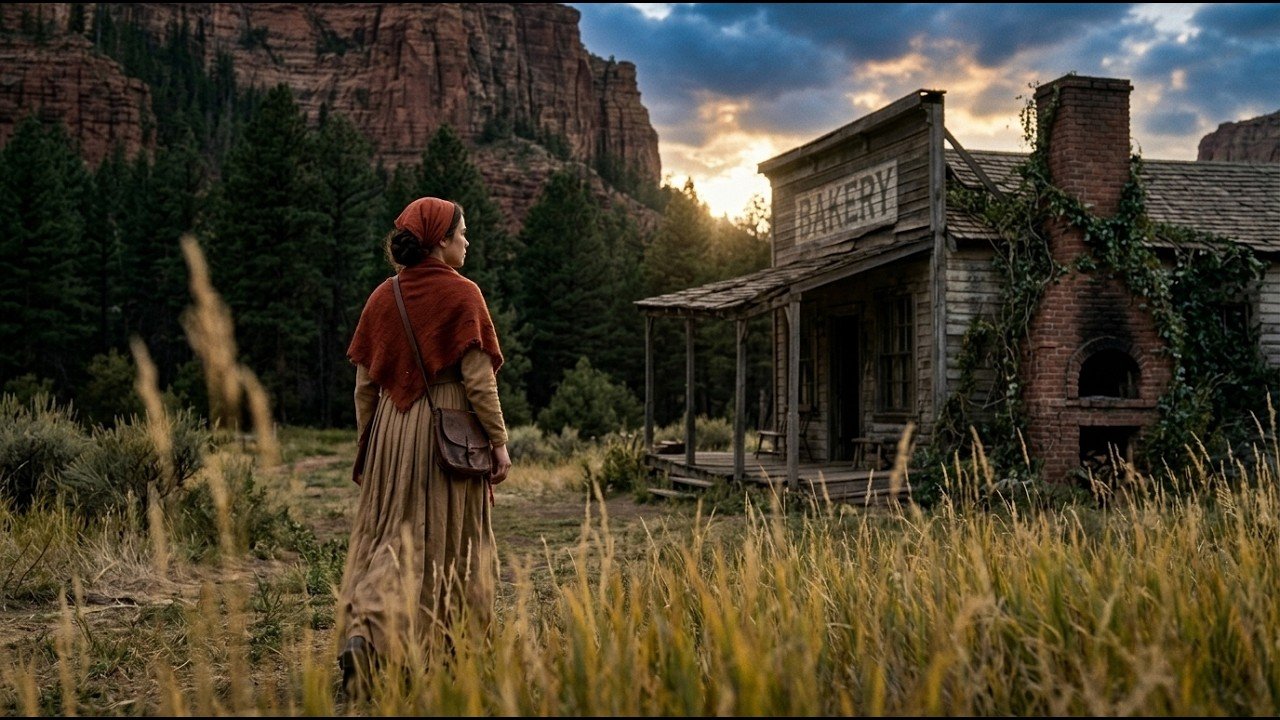
You're Going to Break Hearts... She Whispered, I Came to Heal Yours Instead
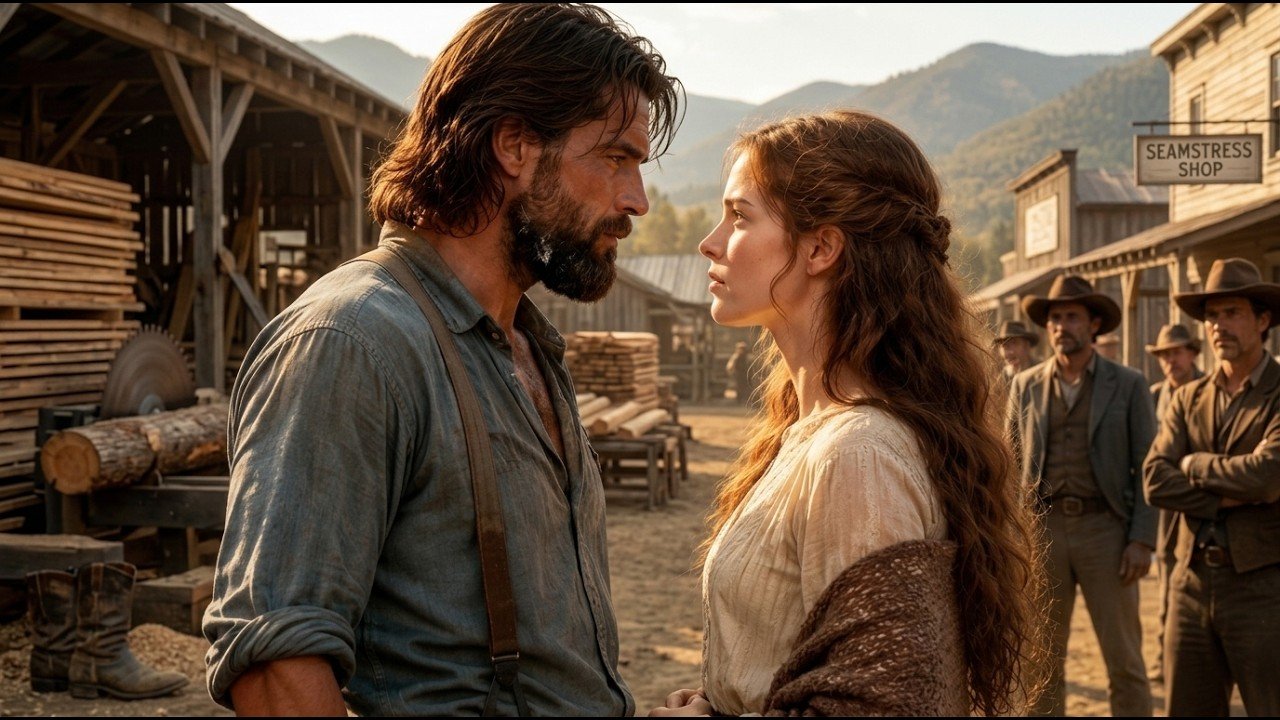
Some men don't drown in rivers, they drown in memories. Nobody even notices they're gone. Silas Rowan was the best carpenter in Willow Ridge, Montana, and the loneliest man anyone had ever seen. Five years of silence, five years of sawdust and splinters instead of conversation, five years of building homes for everyone else while his own heart sat locked in a wooden chest he refused to open. Then a 19-year-old seamstress walked into town with nothing but two suitcases and a smile that made him forget, just for one dangerous second, that loving someone always cost more than he could afford to pay. If this story already has you hooked, stay with me until the very end. Hit that like button and drop a comment telling me what city you're watching from. I want to see exactly how far this story travels. The hammer came down at exactly the same time every morning, 6:00. Not 5:59. Not 6:01. 6:00. The sound cutting through the pale gray quiet of Willow Ridge like a church bell nobody had asked for, but everyone had learned to expect. Folks set their coffee by it. Old Walter Briggs, who ran the feed store on the corner of Main and Sycamore, claimed he hadn't needed a pocket watch in 3 years because Silas Rowan's hammer was more reliable than anything made in a factory. It was October of 1885 when everything changed, though nobody recognized the change for what it was at firSt. October in Montana was a season that couldn't make up its mind. Warm in the morning, cruel by nightfall. The sky going from pale gold to the color of a bruise in the space of an afternoon. The aspens along the creek had already started letting go of their leaves, dropping them into the water where they floated like small, silent surrenders. Silas was 41 years old that autumn. He didn't look it, exactly, or maybe he looked older in some ways and younger in others, depending on what you were measuring. His hands were weathered, the knuckles scarred from years of close calls with chisels and nails. His shoulders were broad from a lifetime of lifting and hauling and pressing his weight against stubborn wood, but his face his face had something boyish still buried underneath the quiet. Something that surfaced occasionally, briefly, like a fish coming up for air and then disappearing before you could be sure you'd actually seen it. He was working on the Hendersons' back porch that particular Monday. Ruth Henderson had asked for a covered extension wide enough for a rocking chair and a small table with a railing her grandchildren could lean against without her heart stopping every time they got near it. Silas had drawn up the plans himself, as he always did. Measured twice and cut once, as he always did. He worked alone, as he always did. Thomas Briggs, Walter's nephew, 17 years old and possessed of the kind of cheerful nosiness that only young men in small towns seem to carry without embarrassment, came around the side of the house mid-morning carrying two biscuits wrapped in a cloth his aunt had sent. "Ma said you'd probably forget to eat again," Thomas announced, holding out the biscuits like an offering. Silas looked up from the board he was measuring. "Your aunt worries about things that don't need worrying about. She worries about everything. It's her primary occupation." Thomas sat himself down on a nearby stump without being invited because he never waited to be invited. "Did you hear about the woman who took the Callaway place?" Silas marked his measurement with a pencil and said nothing. "Came in on Friday's stage," Thomas continued. "Young, maybe 19, 20, from St. Louis, somebody said, though Mrs. Prentice said she heard it was Kansas City. She's setting up a sewing shop in the old Callaway storefront. Already had the sign painted. People come through." "She's not coming through. She bought the lease. Paid 3 months up front." Thomas pulled apart one of the biscuits then seemed to remember it wasn't his and put it back. Her name's Mercer. Eliza Mercer. Silas picked up his saw. She's got red hair. Thomas added, as though this detail were the most significant piece of information he'd offered. Most people have some kind of hair. Thomas gave up and left the second biscuit on the stump, which was what his aunt had probably intended in the first place. Silas ate the biscuit at noon, standing up, looking at the work he'd done that morning. The frame was coming along clean. He ran his hand along the top rail, feeling for imperfections, for places where the wood had given him trouble. There were a few. There always were. Wood was never as cooperative as it looked in a plank. It had its own history, its own knots and complaints, and part of the job was learning to work around them, rather than pretending they weren't there. He thought about this sometimes, late at night when the workshop was quiet and the lantern burned low. How much his philosophy of carpentry had come to resemble his philosophy of everything else. Work around the hard places. Don't press too hard. Know when to stop. He'd had another philosophy once. A longer time ago than he liked to calculate. Her name had been Catherine. He didn't let himself think it often, but it surfaced sometimes without permission, the way certain smells did. Pine resin and lavender and the particular cold, clean smell of early spring. Catherine Walsh, who had laughed at things most people didn't find funny, who had strong opinions about absolutely everything and made no apology for it, who had agreed to marry him on a Tuesday evening in April of 1880 and was dead by the following November. Fever. The word was too small for what it had actually been. The speed of it, the incomprehensibility. One week she was planning the wedding. Three weeks later, she was gone. The doctor had said it was common, as though the commonness of it was supposed to help. Silas had survived. He was clear-eyed enough to know that surviving and living were not the same thing, and most days he didn't bother to pretend otherwise. He picked up his hammer and went back to work. He first saw Eliza Mercer on a Wednesday. He hadn't been looking for her or thinking about her. Thomas's gossip had drifted out of his mind as Thomas's gossip generally did. He was at the hardware store picking up a box of finishing nails when the bell above the door rang and she came in out of the wind, pulling the door shut behind her with both hands because the October gusts had been particularly aggressive all morning. His first impression was practical. She was shorter than he'd expected, though he wasn't sure what he'd expected, and she was wearing a coat that was good quality, but it seemed better seasons, and she was holding a list in one hand and appeared to be reading it while simultaneously trying to get her bearings in an unfamiliar store, which struck him efficient use of attention. His second impression arrived a half second later and was less practical. She had the kind of face that was interesting rather than merely pretty. A face that was doing something, thinking something, fully inhabited in a way that some faces weren't. She looked up from her list and found him looking, and neither of them said anything for a moment. "Do you know where they keep the curtain rods?" She asked. Direct, no preamble. "The ones near the door were all the wrong length, and I didn't want to dig through the whole store if someone already knew." "Back wall, left side," Silas said, "past the hinges." "Thank you." She went. He paid for his nails and left. That should have been the end of it. In the life Silas had built for himself, it would have been the end of it. He was good at ends. Uh, she appeared at his workshop door four days later. He heard the knock, two sharp raps, and looked up from the chair leg he was turning on the lathe. A woman standing in the frame of his doorway, afternoon light behind her, a look on her face that was somewhere between determined and cautiously uncertain. Mr. Rowan? He stopped the lathe. Yes. Eliza Mercer. I took the Callaway lease on Main Street. She stepped into the shop, looking around at the half-finished pieces and the hanging tools and the sawdust on the floor. Not with the polite glazed appreciation most people offered, with actual attention. I have a problem I was hoping you could help with. What kind of problem? The fitting room door in my shop won't close properly. It's not I've tried adjusting it myself, but the frame seems off. The whole thing sits crooked. She paused. Someone at the feed store said you do repair work. I do construction work, Silas said. Repair work is something I'll take on if it's worth the trip. She looked at him steadily. Is a crooked door worth the trip? He almost said no. It was on the tip of his tongue. The automatic deflection, the polite but firm refusal, the same wall he'd been building for five years and had gotten quite skilled at. It was a good wall, solid construction. He had real talent for that kind of thing. Where on Main Street? He said instead, and wasn't entirely sure why. He met it. The problem with the door was immediately clear when he saw it. The building had settled unevenly over the past few winters, hardly unusual for a structure that had been standing since the mid-70s, and the door frame had shifted enough to throw the whole thing out of alignment. It wasn't catastrophic, but it was the kind of thing that got worse if you ignored it. Eliza stood in the doorway of the shop and watched him examine frame. The front room was half set up already. Bolts of fabric organized by color on a long table, a sewing machine positioned near the window for light, a dress form in the corner wearing what appeared to be a half-finished green jacket. "You've been here less than a week?" He said, looking at the organization of it. "5 days." "I don't like chaos." She said it simply, without apology. "Can you fix it?" "I can fix it. Might need to come back a second time depending on whether the frame needs shimming or if the whole thing shifted further than it looks." "That's fine. What do you charge?" He told her. She agreed without negotiating, which surprised him. Most people negotiated. "I'll come back Thursday morning." He said, picking up his hat. "I'll have coffee ready." She said, then caught herself. "If you drink coffee some people don't." "I drink coffee." "Good." She turned back to the green jacket on the dress form. Conversation over, as far as she was concerned. Silas walked back to his workshop and spent the rest of the afternoon telling himself the situation was uncomplicated. A door that didn't close right, a professional obligation, the kind of thing he did regularly. He believed himself mostly, until about halfway through supper, when he caught himself thinking about what she'd looked like examining that green jacket, the slight frown, the way her fingers had moved to check a seam, and he put his fork down and stared at his plate for a long time without eating. Thursday came. He arrived at 8:00 as he'd said he would. She had coffee waiting in a plain tin cup, black, which was exactly how he drank it. He didn't ask how she'd known. He fixed the door in an hour and a half. The frame needed two shims on the left side and the hinges had to come off and be repositioned. Not complicated, but detail work that required patience. He worked in silence mostly, focused, and she worked at her sewing machine, mostly, focused. The shop was quiet except for the sounds of their separate occupations. At one point, he dropped a hinge pin. It rolled under the dress form, and she got up, found it, and handed it back to him without making a production of it. "Thank you," he said. "You're welcome," she said. She went back to her machine. Later, when the door swung clean and latched exactly as it should, she came and tested it several times with a satisfaction that was frank and unperformed. "That's what it should feel like," she said. "Yes." "How long before it settles again?" "Couple of years, maybe. The building isn't getting any younger, and neither is the ground under it. I'd have someone check it every spring." "Will you be available to check it?" She asked. Not coyly. An actual logistical question. He should have said he was usually busy in spring. He should have given her a name. Jimmy Cutler did good repair work and wasn't selective about what jobs he took. "Probably," he said. She nodded, satisfied, and paid him exactly what they'd agreed on. He was at the door, hat in hand, when she said, "Mr. Rowan, can I ask you something?" He turned. She was standing with her arms crossed, not defensively, just the posture of someone who was thinking carefully before speaking. "The rocking chair in the hardware store window. The one with the carved armrests. Did you make that?" The question caught him off guard. "Yes. 3 years ago. Hannigan buys a piece every now and then to display." "The detail work on the armreSt." She paused, seeming to choose words. "It's not just skilled. Anybody can learn skill. There's something careful in it. Like whoever made it was paying very close attention to the wood itself, not just what they wanted the wood to become. She looked at him directly. That's rare. Silas held his hat and didn't say anything for several seconds. People commented on his work regularly. They said it was fine work, solid work, work that would laSt. They talked about the craftsmanship the way they talked about a well-maintained road. Approvingly, functionally. Nobody had ever said anything like that before. I appreciate it, he said finally, and left before he could say anything else. And done. The first frost came the second week of October, hard and sudden, the way Montana frosts were. Not a warning, just an arrival. Silas woke to see his breath in the air of his bedroom, which meant the overnight temperature had dropped faster than expected, and spent 20 minutes checking the insulation on his workshop pipes before he could convince himself to stand still and drink his coffee. He was standing on his porch with the cup when he saw her. She was a block down the street, wrapped in a wool shawl that wasn't quite heavy enough for what the morning had become, carrying a bolt of fabric under one arm and a basket in the other hand, walking at a pace that suggested she had been walking this way her whole life and wasn't about to adjust it for something as presumptuous as weather. She didn't see him. She went into her shop and the door, the door he'd fixed, swinging clean, closed behind her. He went back inside and drank his coffee, which had gone cold. There was a small carved flower sitting on his workbench. He'd made it two nights ago without fully meaning to, the way certain things came out of his hands when he wasn't paying close enough attention. It was only 4 in across, a mountain aster, the kind that grew along the creek banks in late summer. Simple work, faster than he usually liked to go. He'd been meaning to throw it in the scrap pile. He wasn't sure why he hadn't. He covered it with a cloth and went to start the day's work. And outside the frost glittered on the empty street, and the morning was very quiet, and Willow Creek continued being exactly the town it had always been, completely unaware that something in it had just shifted a fraction of an inch, the way a door frame shifts when the ground underneath it moves. Too small to see, impossible to ignore once you know what to feel for. Bus. He saw her a dozen small times over the following two weeks. At the dry goods store, where she was particular about her thread and unashamed of it. At the post office, picking up what appeared to be a large package from St. Louis that she managed entirely on her own, refusing the postmaster's help with the expression of someone who had learned to be self-sufficient and found it more comfortable than the alternative. At the creek on a Sunday afternoon, sitting on a flat rock with her boots off despite the cold, appearing to be doing absolutely nothing except watching the water, which struck him as an unusual thing for someone who seemed to be always in motion. He didn't speak to her on any of these occasions. He told himself this was because he had nothing to say. This was not entirely honeSt. What was true was this: Something about Eliza Mercer made his chest feel strange. Not painful, not the way grief felt, the familiar heavy weight he'd learned to carry without showing. This was something different, a kind of aliveness he'd almost forgotten the sensation of, like circulation returning to a limb that's been still too long, uncomfortable and unwelcome and impossible to simply stop. He was, he told himself, 59 days from finishing the Morrison house on the north end of town. He had three other commissions waiting. He had work to do and a life that functioned adequately, and no business reaching towards something that would only make the ache worse when it ended. He had been through this reasoning before. He was good at it. He went home and picked up the carved flower and turned it over in his hands. And the wood was smooth, and the aster's petals were not perfect. One was slightly thicker than the others because he'd been tired when he made it, because he was human. And he set it back down on the bench and stood there in the lamplight of his workshop for a long time in the silence he'd built around himself like the best and loneliest house he'd ever made. Outside the wind moved through Willow Ridge the way wind always did. The aspens had lost almost all their leaves by now. Winter was coming, and somewhere on Main Street a fitting room door swung clean on its hinges exactly as it should. The second time Eliza Mercer came to his workshop, she didn't knock. He heard the door open. He always heard the door even over the sound of his tools because he'd built it himself and knew exactly what it sounded like. And he looked up from the cabinet he was fitting to find her standing in the entrance holding a tin pail with a cloth over the top wearing an expression that suggested she had thought about whether to come here and had arrived at a decision she wasn't entirely comfortable with but intended to see through anyway. "I made soup," she said. "I made too much. I'm not good at cooking for one person yet. I haven't figured out the proportions." He set down his plane. "You didn't have to do that." "I know I didn't have to. I wanted to." She came inside without being invited, which he was beginning to understand was simply her way. Set the pail on the one clear corner of his workbench and looked around the shop with that same careful attention she'd given it the first time. "You're working on a cabinet breakfront for the Morrison house. Is that dovetail joinery on the corners?" He looked at her. "You know what dovetail joinery is?" "My father was a furniture maker. Not as good as you from what I can tell, but he knew what he was doing. She touched the edge of the piece lightly, a testing touch, the way someone does when they've learned to read wood through their hands. He died 4 years ago. The shop went to my brother, who has no patience for detail work and will probably sell it inside of 2 years. She said it plainly, without fishing for condolence, just information offered as context. "I'm sorry about your father," Silas said. "Thank you." She stepped back. "The soup's venison, Mrs. Apprentice at the boarding house told me where to buy it. I added potatoes because I think soup without something solid in it is just hot water with ambitions." Despite himself, he almost smiled. It didn't quite make it to his face, but it was close. He ate the soup standing at his workbench because he didn't have a proper table in the workshop, just the bench and a stool, and she sat on the stool and looked at the work in progress around the room and asked questions. Not polite questions, the kind people asked when they were filling silence. Real questions, the kind that required actual answers. "How long does a piece like this take?" "The breakfront? 3 weeks for the case, another week for the doors if the glass shipment comes in on time, which it usually doesn't." "What do you do when you're waiting on materials?" "Work on something else. I usually have four or five things running at once." She looked at the far corner of the shop where a rocking chair sat in various stages of completion. "Is that yours? The one you're making for yourself?" "No." He paused. "I don't make things for myself." She turned and looked at him. Not with the pity people usually put on. He'd learned to recognize that particular expression from 100 ft away, and he hated it with a specific, exhausting hatred. What she had on her face instead was more like honest puzzlement, like he'd said something she was genuinely trying to understand. "Why not?" She asked. He didn't answer. He drank the last of the soup and handed the pail back and thanked her, and she took the pail and left without pressing the question, which he appreciated more than he was able to say. But that night, sitting alone in his house with the lamp burning low, he thought about it. "Why not?" He couldn't remember honestly when he'd stopped making things for his own use. At some point in the years after Catherine, the house had just stayed the way it was, functional, unembellished, nothing in it that hadn't been there before. He'd told himself it was because he was too busy. He told himself it was because he didn't need anything. Both of these things were true in a technical sense and false in every sense that mattered. He got up and went to the workshop and looked at the rocking chair in the corner. It had started as a commission 2 months ago. The buyer had changed his mind and hadn't wanted it. Silas had kept working on it out of stubbornness, or something that felt like stubbornness when he didn't look at it too carefully. He sat in it. It wasn't finished. The armrests still needed their final shaping, and the back spindles were rough, but the rocker itself was correct. The balance of the thing, the way it moved when he settled his weight into it. He sat there in the dark workshop and rocked slowly for a while, which he hadn't done since he was a child. And it was a strange, uncomfortable thing to want. He got up and went back inside. The carved aster was still on his bench, still under its cloth. He hadn't thrown it in the scrap pile. He hadn't given it away. It sat there occupying a small corner of his workbench and a larger corner of his thoughts, and he was starting to be irritated with himself about that. The next morning, he went to work on the Morrison house and told himself the situation was simple and under control. Then Thomas Briggs showed up at noon with a message from his aunt, would Silas come to supper on Friday, and mentioned with the total lack of subtlety that was Thomas's defining characteristic, that Elijah Mercer had been at the feed store that morning and had asked after Silas by name. "Asked what?" Silas said. "Whether you were the same Rowan who built the schoolhouse extension last spring. That's all." Thomas paused. "She seemed I don't know. Interested. Not like the way Mrs. Hannigan is interested in everything, where she's just collecting information. More like she actually wanted to know." "People ask questions," Silas said. "Sure they do," Thomas said with a diplomatic tone of someone who was 17 and had already figured out when adults were lying to themselves. Silas told him to go home. The week moved the way November weeks in Montana moved, cold settling in with real intention now, the ground going harder, the creek slowing at its edges. Silas kept his head down and worked, which was what he always did, but he noticed things he didn't usually notice. The light in the window of Eliza's shop when he walked past after dark. She worked late, later than the other businesses on Main Street. The sound of her voice one morning when he passed, coming out through the wall. She was talking to a customer and he caught three words before the wind took the reSt. And the three words were nothing in particular, but the voice was warm and direct and unapologetic. He was 41 years old and he had not been a fool in a long time. He recognized what was happening the way you recognized early signs of weather. Not because you wanted the storm, but because ignoring it didn't make it go somewhere else. What he did with that recognition was keep walking. She came to the workshop twice more in the space of 10 days. Once with bread, sourdough, dense and slightly burnt on the bottom, and she told him flatly that she was still learning to manage the temperature of her small oven, and he shouldn't read anything into the bottom cruSt. He ate it anyway. It was good, burnt bottom and all. The second time she came to ask whether he knew anyone who could build her a proper cutting table, something sturdier than what she'd been using, the right height for working standing up. "What height do you work at?" He asked. She measured from the floor with her hand. He looked at the measurement and knew it. Knew exactly what the table needed to be, the width and the bracing underneath. The kind of top that would take the wear of scissors and patterns without splintering. "I could build it." He said. "I have time between the Morrison job and the next commission." She looked at him steadily. "I would pay you properly. I'm not asking as a favor." "I know you're not." "Good." She nodded. "Because I don't like being in debt to people. It makes everything complicated." "That's a reasonable philosophy." He said. Something shifted in her expression then. Not softening exactly, but a kind of opening. Like a door moving slightly in its frame. "My father used to say that owing people things gave them power over the shape of your life." She looked away toward the window. "He was right about that at leaSt." "At least?" She was quiet for a moment. "He was wrong about other things. Parents usually are." She brought her eyes back to him. "Did yours get things wrong?" The question landed differently than it should have. Too close to something he wasn't prepared for, in the way Eliza's questions sometimes had of finding angles he hadn't defended. "They did their beSt." he said, which was both true and not a real answer, and she seemed to know it, but she didn't push. She left. He stood at his bench and looked at the place in the doorway where she'd been standing, and the workshop felt slightly different than it had an hour ago. Not better or worse, exactly, just different. More air in it, maybe. Which made no logical sense, but neither did most of what he'd been experiencing since October. He started on the cutting table that weekend. He worked on it in the evenings after the Morrison job, getting the dimensions exactly right, using a hardwood top that would hold an edge without warping. He took more care with it than he needed to, technically. He was aware of this and didn't stop. Ruth Henderson found him on a Tuesday and invited him to the harvest celebration the following Saturday. He said he'd think about it, which meant no, and Ruth knew it meant no. And she pursed her lips the way she did when she disagreed with something, but had decided not to argue about it. "That Mercer girl is going," Ruth said, pulling on her gloves. "She made the decorating committee sashes. Did a beautiful job from what I saw." "That's good for her," Silas said. "You could try having a conversation with someone who isn't a piece of wood occasionally, Silas." He didn't point out that the piece of wood was a better conversationalist than most people, because Ruth Henderson was 72 years old and had been kind to him for years and didn't deserve the sarcasm. He thought about the harvest celebration all week and told himself he wasn't going. He'd gone the first 2 years after Catherine because people expected him to, because grief had a public-facing period after which it became something you were supposed to manage privately, and he'd understood that. By the third year, he'd stopped going and nobody had really argued. He was useful to people and they'd learn not to ask too much of him outside of that usefulness. He finished the cutting table on Thursday evening. It was, honestly, one of the cleaner pieces of practical furniture he'd made. Nothing fancy, but everything right. The bracing underneath was solid, the surface smooth, the height exactly what she'd measured. He delivered it Friday morning, early, before the shop opened, because he'd intended to leave it at the door and be gone. But the door was already unlocked. She was already inside and she opened it when she heard him coming up the walk with the table carried over his head like an oversized hat. "That's early." She said. "I was done with it." He set it down in the back room where she'd cleared a space, positioned it where she indicated and stood back. She put both hands flat on the surface and leaned her weight into it testing the solidity. Then she walked around it, looked at the joints, crouched to check the leveling, stood up and put her hands on her hips. "It's perfect." She said. "It's functional." "Functional and perfect aren't the same thing, but this is both." She looked at him. "Thank you. I mean it." He named his price and she paid it without comment, but when he picked up his hat she said, "Are you going to the harvest celebration tomorrow?" He opened his mouth to say no. "I don't know many people yet." She said before he could. "I know Mrs. Henderson and the Briggs family and about four others. I'm not She stopped, seemed to be choosing. I don't mind being alone in a crowd usually, but it's easier when there's someone you can look over at when something happens that you want to comment on. And right now I don't really have that person here." The honest plainness of it was something he wasn't prepared for. She wasn't asking him to take her. She wasn't pretending it was anything romantic. She was simply describing a real thing. The lack of a person to exchange a look with. With the straightforward accuracy of someone who said what she meant because she'd decided life was easier that way. "I'll be there." He said and she nodded and that was the whole of it. The harvest celebration was held in the long barn at the edge of Whitmore's property which had good acoustics for the fiddle player and enough space for the whole town and their general tendency to bring too much food. Silas arrived late enough that the initial wave of greetings was already over and people were settled into their conversations which was how he preferred it. He found a spot near the back wall with a decent view of the room and stayed there with a cup of cider and tried to look like a man who was present by choice and not obligation. He saw Eliza 15 minutes after he arrived. She was talking to the Prentiss sisters, holding her own cup of cider, and she was laughing at something, a real laugh, sudden and unguarded, the kind that a person couldn't perform. She looked up a few minutes later, scanning the room, and found him across the crowd. She raised her cup slightly. He raised his. That was all it was. A cup raised across a noisy barn. He didn't know why it landed so hard in the center of his chest, but it did. The evening wore on the way these evenings did. The fiddle getting livelier, people moving between conversations, children running between adult legs with the specific impunity of children who knew nothing would really happen if they got caught. Thomas Briggs somehow ended up teaching Eliza a reel she didn't know, which she picked up in about three passes, but continued performing with deliberate exaggeration that made Thomas laugh until he doubled over. Silas watched this and drank his cider and felt the strange dislocating sensation of being entertained by something when he had been so long without being entertained by anything. She found him near the end of the evening when people were beginning to find their coats. Her cheeks were flushed from dancing and the warm barn, and she had a strand of hair loose from whatever she'd pinned it with, and she looked untidy. Real. Like a person who had genuinely been present for the last few hours rather than simply attending. "Thomas Briggs is going to be a terror when he's older," she said, arriving next to him. "He's already a terror." "True, but a harmless one." She looked out at the thinning crowd. "Tonight was good." "Thank you for coming." "I didn't come because of you," he said. The words were out before he'd decided to say them, and And were only half true, which meant they were also half a lie, which was an uncomfortable ratio. She looked at him sideways. Not offended. Thoughtful. "I know," she said. "But you stayed." He didn't have anything to say to that, so he said nothing, which she seemed to accept as reasonable. They stood there side by side for a minute or two, not talking, watching the last of the dancers slow down as the fiddle came to reSt. "Silas," she said quietly. He looked at her. "I don't know what happened to you. I'm not asking you to tell me." She kept her eyes on the room. "I just I noticed that you look at good things sometimes like they're already ending, and I think that must be an exhausting way to see the world." The quiet settled around them, and inside it something moved in his chest like a thing shifting that had been stuck for a long time. He didn't answer. He wasn't sure he could have put an answer into words that wouldn't have come out broken or wrong. She didn't seem to need one. She put her cup down on the nearby table, found her coat on the hook by the door, and said goodnight in that practical, unhurried way of hers. As if the conversation had simply reached its natural end, and she was comfortable with where it had stopped. Silas stood in the emptying barn for a while after she left. Outside, the Montana night was sharp and very clear, the kind of cold that arrived without apology, and the stars were the way they only got this far from any real city, thick and close and slightly overwhelming, like a crowd in a small room. He stood on the porch of the Whitmore barn and breathed the cold air, and looked at the stars, and felt something he hadn't felt in years. Not happiness, not yet, maybe not something that would ever be that clean and simple again, but a kind of possibility, a crack in something that had been sealed for a long time. He didn't know what to do with it. He He trust it. He was aware of both these things as he walked home through the frozen dark, his boots crunching on the hard ground, his breath coming in small white clouds in front of him. Back in his house, he lit the lamp and sat at his kitchen table and didn't do anything for a while. Then he got up and went to the workshop and picked up the carved aster from the bench where it had been sitting under its cloth for 3 weeks. He turned it over in his hands. The imperfect petal, the one slightly thicker than the others, caught the lamplight differently than the reSt. He should give it to her, or he should throw it in the scrap pile. Those were the two honest choices, and he had been sitting between them long enough. He set it back down, covered it again, went to bed. The crack in the sealed thing was still there when he woke in the morning. He had almost hoped sleep would close it up. It hadn't. It was there, and it was real, and the cold morning light coming through his bedroom window did absolutely nothing to make it smaller. And Silas Rowan lay in his bed staring at the ceiling and understood, with the helpless clarity of a man who has spent years being careful, that careful wasn't going to be enough anymore. The careful thing, Silas decided, was to keep his distance. Not cruelly, not the way a man slams the door, more the way a man simply stops going down a particular road. No announcement, no explanation, just a quiet redirection, the kind that other people might not even notice until enough time had passed to make the whole thing irrelevant. He managed it for 11 days. In those 11 days, he finished the Morrison Breakfront, started the framing on a small addition for the Callaway property on the east side of town. Different Callaway, different building, and repaired the steps on the Methodist Hall roof access that had been rotting since summer. He worked longer hours than usual, which he told himself was about the coming winter slowing construction work and needing to get ahead of it. And which was not entirely about that. He saw Eliza twice in those 11 days. Once at the post office where she was mailing something and he was picking up a delivery invoice. And they exchanged a nod the way two people exchange nods when they have established a familiarity but have not decided what to do with it. Once through the window of her shop when he walked past, she was bent over her cutting table, the one he'd built, and her attention was so completely on the work in front of her that she didn't look up and he kept walking. On the 12th day, Thomas Bridge delivered the news that Eliza's stovepipe had come loose in the wind and she was worried about the connection at the ceiling. "She asked if you'd look at it," Thomas said, "said she'd ask someone else if you were too busy." "It's not a carpentry job," Silas said. "She knows that. She asked if you knew who to call and whether you could come with them since you've seen the inside of the building and would know if anything else looked wrong with the structure while you were up there." It was, Silas had to admit, a reasonable request that had nothing sentimental in it. He went the next morning with Pete Gruder who handled stove and chimney work for most of the north side of town. Pete fixed the pipe connection in 20 minutes. Silas walked the inside of the building checking for anything the cold had loosened, found a small issue with a baseboard near the back wall where moisture had gotten in at the corner, and made a note to come back with caulking when the temperature came up enough to let it set. Eliza made coffee for both of them and asked Pete three pointed questions about the pipe connection that told Silas she had already done some reading on the subject before they arrived and was checking Pete's answers against what she knew, which Pete didn't seem to notice but Silas did. When Pete left, she poured Silas a second cup without asking if he wanted it, which he did. "The baseboard corner," she said. "How bad?" "Not bad. Moisture intrusion, early stage. I can fix it in an hour. When? When the temperature is above freezing for long enough to let the caulking cure. Probably not until late March. She nodded. Is that what you do? Walk around knowing what's wrong with every building you see? He thought about that. More or less. You get so you can feel it in a structure. Where the stress is. Where it's holding on and where it's starting to give. She was quiet for a moment, both hands around her cup. That must be strange. Seeing what everyone else doesn't. It's just what you learn to see. She looked at him then with the particular quality of attention she had. The kind that made you feel she was actually looking at you, at the whole of you, and not just the part you decided to show. Do you do that with people, too? He didn't answer. I think you do. She said, not unkindly. He drank his coffee. Outside the December wind pressed against the window glass and the stove ticked with heat and the shop was warm in the specific quiet way of a place where a person has made themselves at home. Eliza. He said. And it was the first time he had used her name directly and they both seemed to notice it. What is it you're after, coming to Montana on your own and setting up here? She didn't look surprised by the question, which meant she'd been waiting for it or had already asked it of herself. A place that's mine, she said. Not borrowed from someone else's plan for me. She turned the cup in her hands. In St. Louis, my mother had a husband picked out. Good family, solid income, pleasant enough man. She couldn't understand why I wasn't interested. Why weren't you? She looked straight at him. Because I've seen what happens when a woman builds her life around someone else's. My mother spent 30 years arranging her whole existence around my father's moods and my father's ambitions and my father's opinion of what dinner should look like. And when he died, she didn't know who she was anymore. She was 54 years old and she didn't know what she liked for breakfaSt. She set down the cup. I wanted to know who I was before I built anything with anyone else. It was the longest she'd spoken in one stretch around him. He thought about it carefully. "That's sensible." He said. "Most people think it's strange." "Most people are wrong about a lot of things." She looked at him with something that was almost amusement and almost something more serious. "Yes, they are." She said. "They really are." He left shortly after that and did not examine too carefully why the 11 days of distance now seemed not just unnecessary, but slightly stupid. A wall he'd built out of reflex rather than genuine need, the way an experienced carpenter sometimes over corrects on a measurement and ends up cutting the piece wrong. December settled hard over Willow Ridge. The creek froze at its edges and then all the way across and the mountains went wide above the timberline and the town folded inward the way small towns do in real cold. Everyone a little closer together, the social geography compressed. Silas found, without planning it, that his evenings were sometimes spent at Eliza's shop rather than alone in his workshop. It happened the way those things happen. Gradually enough that he couldn't point to the moment when it became a pattern. She worked while he was there and he didn't mind that. He'd brought a small project one night, a set of wooden buttons she'd mentioned needing, and had worked on those while she sewed and the shared quiet of it was something he hadn't experienced since Catherine. That specific ease of two people occupying the same space without needing to fill it with noise. He thought about Catherine less when Eliza was near and more when she wasn't. He wasn't sure what to make of that. Ruth Henderson noticed. Of course, Ruth Henderson noticed. Ruth Henderson noticed everything and had the additional advantage of being someone Silas had known for 20 years, which meant she could say things to his face that other people only said behind his back. You've been over at that sewing shop three times this week, she said, appearing beside him at the dry goods store with the specific timing of a woman who had been waiting for an opportunity. She needed help moving some shelving. She needed help moving shelving three separate evenings. The shelving was complicated, Silas said. Ruth looked at him over her glasses with an expression that required no words. It's not what you're implying, he said. I'm not implying anything. I'm observing. She selected a spool of thread with unnecessary deliberation. She's a good woman, Silas. Straightforward, doesn't carry on. I'm aware of what she is. Are you aware that she talks about you? Not in a gossip way, she just references you, the way you reference things that matter to you. Ruth put the thread in her basket. I'm not telling you what to do. I'm too old to waste my time on that. I'm just saying I haven't seen you look like a person in a long time, and lately you've been looking like a person again. Silas paid for his nails and left without responding, which Ruth accepted with the serenity of a woman who had made her point and didn't need to hear it confirmed. He thought about what Ruth had said for 3 days, which was 2 and 1/2 days longer than he'd intended to. It was a Sunday afternoon when it shifted. Not dramatically, not the way things shift in stories where there's a single moment that changes everything. More the way ice shifts on a river when the temperature changes, a slow deep movement that only becomes visible at the surface later. They were sitting in her shop, both working, a tin of gingerbread between them that she'd made, and that was, she informed him, correctly spiced but slightly dry because she'd lost track of time and left it in the oven 8 minutes too long. He was eating it anyway. It was fine, it was good, the dryness was minimal. And she was working on a complicated collar detail, frowning at it with the concentration she brought to anything that wasn't cooperating with her intentions. Tell me about her. Eliza said without looking up from the collar. Silas went still. You don't have to, she said immediately. I'm not I'm not asking as a condition of anything. I just She set down her work, which meant she decided this mattered enough to look at him directly. I can see her sometimes in the way you hold yourself. And I don't want to be someone who pretends she doesn't exiSt. The shop was very quiet. Outside the Sunday afternoon had gone gray and still, the particular stillness of a December day with no wind. He had not spoken about Catherine to anyone, not since the funeral, not in 5 years. The town knew the outline. Everyone in a small town knows the outline of everyone else's worst thing, but he had never put it into words for another person. And the resistance to it was physical, a tightening in his chest and throat that he recognized and knew how to wait out. He waited it out. Her name was Catherine, he said. Catherine Walsh. She was going to be Catherine Rowan. Eliza didn't say anything. She was still, the collar in her hands, her eyes on him, and there was nothing in her face that he had to manage or work around. No distress that would require him to take care of her while he was talking, no hunger for dramatic detail, just attention, the clean uncomplicated kind. We were to be married in March of 1881, he said. She got sick in October, fever. The doctor He stopped, started again. The doctor said these things happened, that it was common. I wanted to hit him when he said that. That's reasonable, Eliza said quietly. I didn't. I went home and I sat in this house that I'd built for the two of us, and I understood, I think for the first time, that I could build anything in the world, and I couldn't build a single thing that would have kept her. He looked at his hands. After that it seemed easier, I suppose, to just work. To do the one thing I knew how to do and not expect anything from it except the work itself. The gingerbread tin sat between them on the table, ordinary and domestic, and the stove kept its warm ticking, and Silas felt the strange disorientation of having said true things out loud. The way the air seemed different afterward, as though language had changed the pressure of the room. I used to be angry about it, he said, for a long time. Then I wasn't angry anymore, and I thought that meant I was finished with it. But I think I just I put it somewhere very deep, and I built a floor over it, and I told myself that was the same as being finished. Eliza was quiet for a moment. When she spoke, her voice was careful, the way she was careful with things that mattered. It's not the same thing. No. He agreed. It's not. She set the collar down on the table. I'm not trying to step on anything that was hers. I want to be clear about that. She met his eyes without flinching from whatever she saw there. I'm not here to replace something. I'm here because I like who you are, Silas. The actual man, including the part of him that loved someone and lost her. I don't want the version of you that's gotten over it. I'm not sure that version is real. He looked at her for a long moment. That's the most honest thing anyone has said to me in years, he said finally. She picked the collar back up. I prefer honeSt. It saves a lot of time. He was quiet after that, and she went back to her work. And the December afternoon moved around them, and the stove burned, and neither of them said anything more for a while. But something had changed in the texture of the silence. It was different than it had been an hour ago. Less like two people being careful with each other, and more like two people who had decided without making any formal announcement that careful wasn't the only option available. He walked home that evening in the dark and the cold with his hands in his pockets and his mind full of things he hadn't thought about in years and it was not comfortable, not in the least, but it was real. And real, he was discovering, was something he'd been starving for without knowing he was hungry. The letter arrived 3 days before Christmas. He found it with his mail. A thick envelope, good paper, from a firm in Helena he recognized by name. Callaway and Marsh, one of the largest construction companies operating in the territory. He opened it at his kitchen table with his morning coffee. The offer inside was significant. A major contract in Helena, a civic building, the kind of project most carpenters in Montana would work a lifetime without seeing. The scale of it, the scope. It was the kind of thing he would have wanted once, badly. A chance to build something that would stand for generations, something with his name attached in the way only large public works could carry a name. The money was more than he'd made in the last 2 years combined. The contract would start in February. He would need to relocate to Helena for the duration, 8 months, possibly 10. He read the letter twice. Then he put it down and drank his coffee and looked at the wall of his kitchen, which he had built himself, which was solid and square and had not given him any trouble in 13 years. He picked up the letter and read it a third time. That evening he went to Eliza's shop. She was open late. She'd taken on an order for the Henderson family, holiday garments for five grandchildren, which she'd mentioned was more work than she'd calculated, but that she refused to do carelessly. She looked up when he came in, registered something in his face, and set down her scissors. "What happened?" She said. He told her about the letter. He laid it on the cutting table, his cutting table, the one he'd built, and she read it without touching it, just leaning over it. And when she finished, she straightened up and looked at him. "That's a remarkable opportunity," she said carefully. "Yes." "Are you going to take it?" He looked at her. The lamplight in the shop fell the way it always did at this hour, warm and a little uneven because the lamp on the left side was slightly lower. And Eliza stood at his cutting table with her hands flat on the surface and her eyes on him, and she looked exactly like herself, no more, no less, the specific person she was, irreducible. "I don't know," he said. She nodded. She picked up her scissors. "Well," she said, "you should figure that out." It was not what he'd wanted her to say. He wasn't sure what he'd wanted her to say, but it wasn't that. Not the practical, unbothered acceptance that let him off the hook by not putting anything on it. He'd wanted, maybe, for her to give him a reason in words, to say something that would make the choice obvious, to do what he hadn't done, reach across the distance between them and close it by force. She didn't. Because she wasn't that kind of person, and he knew it. And the knowing of it was both one of the things he admired most about her, and right now, the most frustrating thing in the world. He went home and sat with the letter on the kitchen table until very late. He'd spent 5 years building walls. He was very good at walls. And here, laid out on good paper in the neat handwriting of a professional firm, was a wall he had not built himself. One that had appeared out of nowhere, perfectly timed, that he could step behind and call it ambition, call it opportunity, said she wasn't there to replace something. He thought about the carved aster still on his workbench under its cloth. 3 months now, never thrown away and never given. He thought about the crack in the sealed thing. Outside, the December wind moved through Willow Ridge, and somewhere on Main Street a lamp burned in a shop window later than it should have. And a woman who said what she meant was bending over work she refused to do carelessly. And Silas Rowan sat at his kitchen table and felt, for the first time in five years, genuinely afraid. Not of loss, not yet, but of something harder to name. The fear of a man who has been alone long enough that the aloneness has become load-bearing, who is not sure anymore what happens to the structure if you take it out. He went to bed without deciding anything, but in the morning, before he'd had his coffee, he went to the workshop and took the cloth off the carved aster and set it on the corner of the workbench where the morning light could reach it. And he stood there looking at it for a long time, at the imperfect petal, at the wood that had come out of his hands without him meaning it to. He didn't know yet what he was going to do, but he was done pretending the flower wasn't there. He accepted the contract on a Thursday. He told himself he had thought about it carefully, which was true in the way that a man who has already made a decision and is searching for reasons to justify it can be said to be thinking carefully. He wrote the letter to Callaway and Marsh that morning, folded it, sealed it, and walked it to the post office before his second cup of coffee. Because he understood that if he waited until after his second cup of coffee, he might not send it. The postmaster took the envelope. Silas walked back out into the January cold and stood on the step for a moment with his hands in his pockets, and the wind finding the gap between his collar and his hat. Then he went to the workshop and picked up his tools and started the day's work. And the day was ordinary in every measurable way. And he told himself that was fine. That ordinary was what he had chosen in the largest sense. Ordinary and safe and unassailable. He did not go to Eliza's shop that evening. He did not go the evening after that, either. On the third day, Thomas Briggs appeared at the workshop door with the expression of a young man who had been asked to deliver a message he wasn't sure he fully understood, but was going to deliver it anyway because he'd said he would. "Miss Mercer asked if you were all right," Thomas said. "She said she hadn't seen you and wanted to make sure nothing had happened." "Nothing happened," Silas said. Thomas lingered. "Should I tell her that?" "Yes." "Just nothing happened? That's the whole message?" "That's the whole message." Thomas left, visibly dissatisfied, which was not Silas's problem. He told her on a Wednesday, 8 days after he'd mailed the letter. He went to her shop in the afternoon, not the evening, which felt like a choice he was making without fully acknowledging he was making it. And she was at her machine when he came in, and she looked up with a steadiness that told him she'd already been expecting something, the way a person who has been watching weather knows when the front has arrived. "I accepted the contract in Helena," he said. "I leave the second week of February." She was quiet. She looked at him for a moment, then looked at her work, then back at him. "How long?" "8 months, maybe 10." "That's a long time." "Yes." "Will you come back?" The question was direct, the way she was direct about everything, and it deserved a direct answer. "This is my home," he said. "I'll come back." She nodded. She turned back to her machine. He waited, not sure what he was waiting for. Argument maybe, or at least the acknowledgement of something unresolved between them that deserved to be named. She gave him neither. She picked up the fabric she was working on and found her place in the seam. "All right," she said. Those two words occupied more space in his chest than any speech she could have made. "Eliza, you don't have to explain it," she said, and her voice was steady but not easy. There was something underneath the steadiness he could hear but couldn't get to. "It's a serious opportunity. I understand that." "I'm not leaving because of the opportunity," he said, and was surprised to hear himself say it. Not because it wasn't true, but because he hadn't intended to say it out loud. She put the fabric down. She looked at him fully, both hands flat on the cutting table, and her face was doing several things at once. Something that was almost sadness. Something that was something harder than sadness. Something that was very careful. "I know," she said. "I know that, too." He didn't say anything. There was nothing to say that wouldn't make it worse, and he knew it, and she seemed to know it as well, because she picked the fabric back up, and he said goodbye and walked out into the January afternoon, and the door swung closed behind him, clean on its hinges, exactly as it should. He didn't look back. He had 10 days before he left. He spent them finishing the work he had outstanding. A set of kitchen shelves for the Parsons family. A repair job on the schoolhouse window framing that had been on his list since autumn. A final check on the Morrison house to make sure everything had settled correctly through the first hard cold. He worked systematically, and he did not think about what he was doing, not in any way beyond the immediate and practical. This was something he was good at. He packed his tools with the same care he always took. The planes and chisels and saws that were old enough to be trusted. The newer ones that had earned their place. He arranged the workshop so that nothing was left unfinished or exposed to moisture while he was gone. He arranged for Thomas Briggs to check the place once a week, and confirmed with Pete Gruder that he could handle any emergency calls to his regular clients. On the last evening, he stood in his workshop for a while with the lamp burning. The carved aster was still on the bench. He picked it up, turned it over. He had been intending to leave it here. He was still not going to give it to her. That choice felt too large, too much like making a statement he wasn't prepared to stand behind. But he also could not leave it on the bench in the dark for eight or 10 months gathering duSt. He put it in the inside pocket of his coat. He told himself it was just easier than leaving it out. He left Willow Ridge at 5:00 in the morning on a Saturday before the town woke up, which was how he'd wanted it. No farewells, no send-offs. He loaded his things onto the wagon he'd hired, climbed up to the seat, and drove out of town in the dark with his breath clouding in the cold and the stars beginning to fade and the mountains ahead of him pale shadows against a slightly lighter sky. He did not pass Main Street on his way out. The route to Helena Road didn't require it. He had drawn the route himself the previous evening, and he was aware that he had drawn it to avoid Main Street. And he was aware that this awareness was not comfortable, and he drove north anyway into the pre-dawn dark and told himself he had made the right decision. Helena was 8 hours in good conditions. He arrived in the late afternoon, stiff from the cold in the wagon seat, and found the boarding house Calloway and Marsh had arranged. Three floors, 11 boarders, a landlady named Mrs. Doyle who served dinner and tolerated no exceptions. His room was on the second floor, small, adequately heated, with a view of the building lot across the street where a civic project would begin. He unpacked his things methodically, hung his coat on the hook behind the door, and sat on the edge of the bed in the small room in the strange city and felt all at once and without warning the full weight of what he had done. Not the contract, not the project. The other thing, the thing he had been not thinking about for 10 days with such concentrated energy that the effort of it had masked how heavy it actually was. He had left. He had looked at the first real thing in five years, and he had turned around and walked away from it. He had done it carefully and deliberately and with good reasons, and he had done it exactly the same way he'd done everything since Catherine, building walls and calling them choices. He sat there for a while. Then he got up, found a lamp, and went to the window and looked at the lot across the street where there was nothing yet. Just frozen ground and stakes marking where the foundation would go. He was good at starting from nothing. He had been doing it for years. The work began in earnest the second week, when the rest of the crew had assembled and the foreman from Callaway and Marsh, a practical, humorless man named Driscoll, had gone through the plans with all of them and established the sequence of work. It was a serious project, the kind that required real coordination, and Silas threw himself into it with the same total attention he gave everything, because total attention was the one thing he knew how to give without reservation. He was good at it. Driscoll, who complimented no one, told him on the third day that his framing work was the cleanest on the crew, which from Driscoll was essentially a standing ovation. The other men were competent and mostly agreeable and asked nothing of him beyond the work, which suited him. He ate his meals at Mrs. Doyle's table, and he slept in his room, and he worked, and he thought, at very controlled intervals, about Willow Ridge. The carved aster was in the drawer of the bedside table. He had taken it out of his coat pocket the first night and put it there and not looked at it since. He was aware of it the way you're aware of a sound you've decided not to hear. Not absent, just pushed to the edge. February became March. The foundation went in ahead of schedule because the foreman was obsessive about scheduling, and the crew had learned to be equally obsessive. The walls began to rise, first story framing appearing out of the ground with the particular momentum of a project that had good planning behind it. Silas measured and cut and fit and checked, and sometimes when the work gave him half a second of stillness, he stood and looked at what they were building and felt the old pride in it. The solid satisfaction of a structure coming right. But it was not the same. He did not have a word for what was different, exactly. The work was the same work. His hands did the same things they had always done. But something in the quality of the satisfaction was thinner. Like coffee cut with too much water. You could still taste it, still call it coffee, but there was something missing in the depth of it. He wrote a letter to Ruth Henderson in March, asking after the town and the winter, and whether the Parsons family's shelves had held up. Ruth wrote back, a long letter, because Ruth's letters were always long, and mentioned that Eliza Mercer had taken on two new clients and was doing well, apparently, and that the shop had a new display in the window that three people had already complimented. He read that paragraph four times. He moved on to the next paragraph. He came back and read it again. He wrote a letter to Eliza. He wrote three versions of it and burned the first two because they were not wrong, exactly, but not honest in the way he wanted to be honest, now that he had nothing to lose by it. The third version was shorter than the others and said what it meant. I think about your cutting table. I think about the way you tested it before you thanked me for it. I think about a lot of things, most of which I didn't have the sense to say when I should have. I hope the winter is treating you well. He signed it with his name and address and mailed it without letting himself reread it. She wrote back in 10 days, which told him she had written it quickly. Not the 10-day turnaround of the Helena to Willow Ridge mail, but something much faster, which meant the letter had been written close to the day his arrived. The cutting table is the best thing in the shop, and I tell it so every morning. I'm glad you wrote. I was trying to decide if I should write to you first, and I kept arguing myself out of it, which is not like me. And I was finding that annoying. I hope the work in Helena is everything you went there for. He folded the letter and put it in the drawer with the aster and went back to work. They wrote through March and into April. The letters were not long. They were both people who chose words carefully and knew the difference between saying a thing and patting around it. But they came regularly, and each one he read more than once, and each one he wrote he took longer to finish than the previous one. Working through what he actually meant rather than what was easy. She told him about a client who had wanted a dress made in 3 days and had been unreasonable about the timeline in a way that had required Eliza to say some words that surprised even herself. She told him about the creek thawing and the sound it made, which was a thing she'd noticed and apparently thought he'd want to know about. She told him that Thomas Briggs had started a small argument with the feed store owner's son, and that the whole thing had been resolved by means of a foot race, which Thomas had won, and that she found this a very efficient system for conflict resolution. He told her about the building, not in general terms, in real terms, the particular problems of it, the way the stone contractor had miscalculated a load-bearing calculation, and what it had taken to correct it without losing a week, the way a piece of framing timber had come in with a flaw that would have caused problems in 6 months if if hadn't caught it. She asked questions that showed she was actually reading what he wrote, which he appreciated without saying so directly, though she probably knew. In April, walking back from the site to the boarding house on a late afternoon when the light had gone gold over the Helena rooftops, he stopped on the street and understood something about himself that he should have understood months ago. He was in love with Eliza Mercer. He was not surprised by this. He had been in the neighborhood of it for months, circling it the way you circle something you're not sure is safe to approach. What surprised him was the clarity of it. Standing on a street in Helena on a Wednesday afternoon, it arrived not as a slow revelation, but as a simple fact, the way you understand a thing about a piece of wood when you finally let yourself look at it straight. It had been there the whole time. He'd just been looking away. What he felt after the clarity was something considerably less clean. He had left. He had looked at this person, this specific, irreducible, infuriating, honest person, and he had taken the offered door and walked through it and been gone now for nearly 3 months, writing letters that said real things, but never the realest thing, because the realest thing required him to be standing in the same room as her, and he had made sure he wasn't standing in the same room as her. He walked back to the boarding house and sat on the edge of his bed and took the aster out of the drawer and looked at the imperfect petal. The distance between knowing something and doing something about it, he thought, was the longest road a person could travel. He put the aster on the nightstand where he could see it from the bed. That night he lay awake for a long time in the small room with the lamp out, listening to the sounds of Helena, different sounds than Willow Ridge, more of them, less identifiable. And he tried to imagine finishing the contract. Eight months, he told her, maybe 10. He had been here three. Five or seven more, writing letters and building a building in a city where he didn't belong and telling himself this was forward motion. He thought about Eliza at her cutting table at the end of the evening, the lamp low, the shop quiet. He thought about her hands testing the joints of the table he'd built. He thought about the moment at the harvest celebration when she'd raised her cup across the room and the way that small gesture had landed in his chest like something heavy and permanent. He thought about her saying, "You look at good things sometimes like they're already ending." He thought about the fact that he was, at this moment, making her right. He was building another floor over another thing he should have said out loud. And the floor was made of good lumber and he'd built it solidly and it was going to hold and the thing underneath it was going to stay exactly where it was and in five years he would be 46 years old and still sleeping in his own house alone and still building things for other people and the letters would probably have slowed and then stopped. The way things did, the way distance let things fade when you didn't fight it. He sat up. He turned the lamp on. He got the writing paper from his bag and sat at the small table under the window and stared at the blank page for a long time. He did not write a letter. Instead, he sat in the circle of lamplight in the rented room in the wrong city and let himself finally, fully, feel the weight of the wrong decision. Not as an abstract awareness he'd been managing from a distance, but as an actual thing pressing on his chest, concrete and undeniable. He had made a mistake. Not a small one. Not the kind you could correct by adjusting a measurement. He had made the kind of mistake that required him to go back and take it apart from the beginning. He was afraid. He had not stopped being afraid. That was the part he'd gotten wrong from the start. He had believed that running away from the fear was the same as resolving it. He had believed that 800 miles of Montana wilderness between himself and the source of the fear would eventually make the fear manageable. He had been building all his life with the grain of the wood instead of examining what the wood was actually made of. He was afraid of losing someone again. He knew this. He had always known this. But sitting alone at 3:00 in the morning in a small room in Helena with a carved wooden aster on the nightstand, he also knew clearly and without the usual protective confusion that he was also losing someone right now. That loss didn't require a fever or a tragedy. It just required a man to keep choosing distance until the distance became permanent. Outside, a late-night horse and rider went past on the street below, the sound fading, and the lamp burned, and the page stayed blank. And Silas Rowan sat with the full weight of his wrong decision and did not look away from it, and this at least was new. This willingness to sit in the truth of it without building something over it immediately, without reaching for the next plank. He picked up the pen. He did not write to Eliza. He wrote to Driscoll. The letter said that he had a personal matter in Willow Ridge that required him to leave immediately, that he understood the timing was poor, that he would return what remained of the advance, and that he was sorry for the disruption. He kept it professional because Driscoll deserved that much. He folded it and set it where it would be found in the morning. Then he packed his tools, the ones that mattered, the ones that were his, in their leather roll and laid out the clothes he'd need for the road and set them on the chair by the door. He did not sleep. He sat at the window and watched the sky begin to change, the black going to a deep gray, going to the first pale edge of something lighter, and the city coming awake around him in increments. And when the light was enough to see by, he shouldered his bag and picked up his tool roll and walked out of Mrs. Doyle's boarding house without breakfaSt. And the morning air in Helena hit his face cold and sharp, and he breathed it in and walked toward the livery stable where he would arrange a horse for the road south. 800 miles. More, depending on the route and the weather, which in Montana in April could still turn without warning. It would take days. The mountain passes were still cold. The roads between here and Willow Ridge were not what you'd call roads in several places. He didn't care about any of that. He knew what waited at the end of the road, assuming she was still willing to be found, and he believed she was. Not because he deserved it, but because Eliza Mercer said what she meant and did what she said. And she had said she wasn't there to replace something. She was there to stand beside a man who survived. And those were not the words of a person who changed her mind easily. He might be wrong. He was aware he might be wrong, but the only thing he knew for certain was that the carved aster had been sitting on his nightstand for 3 months, and he had never once considered leaving it behind. And a man who could not leave a small piece of carved wood in a drawer was not, honestly, a man who had chosen distance over the thing the distance was keeping him from. He was going home. The road out of Helena was long and pale in the early light, and the mountains ahead were still heavy with winter. And somewhere far to the south, Willow Ridge was waking up to a Thursday morning. And somewhere on Main Street, a fitting room door was swinging clean on its hinges. And a woman who preferred honest to everything else was starting her day in a shop she had built herself, in a life that was entirely her own. Silas rode south into the cold morning, and for the first time in months, in years maybe if he was being true about it, he was not running away from anything. The first 2 days of riding were the kind that tested a man's conviction. April in the Montana high country was on spring in any comfortable sense of the word. The passes still held ice in the shadowed stretches, the kind of black ice that appeared without warning and had opinions about horses and riders that were not favorable. The wind came off the peaks with a personal animosity, finding every gap in a coat, every unprotected inch of face and neck. Silas rode with his head down and his jaw set and his mind almost entirely on the road because the road required it, required all of him, the full attention that he usually gave to wood and joints and the precise angle of a saw cut. He stopped the first night at a way station between Helena and the first real pass, a rough place with four walls and a stove and a man who charged too much for bad coffee and didn't talk, which Silas appreciated. He sat by the stove and ate the food he'd packed and thought despite himself about what he was going to say when he got there. He had no speech prepared. He was not a man who prepared speeches, but he knew the shape of what he needed to say. Not as a performance, not as a declaration designed to produce a specific outcome, just the truth laid out plainly the way you lay out a plan before you start cutting. Here's what I know, here's what I got wrong, here's what I want if you'll have it. He was not sure it would be enough. That uncertainty was something he had to carry alongside everything else on the road south. And he carried it the way you carry a heavy thing when there's no choice, one step after another, not putting it down, not pretending it wasn't there. The second day brought snow, not a storm, just the casual indifferent snowfall of a Montana April that had not yet decided to become May, coming down in large flat flakes that melted when they hit the road but accumulated on the higher ground and on Silas's coat and on the brim of his hat. He rode through it and thought about the aster in his inside pocket against his chest, which he had moved from his bag the second morning because he wanted to feel it there. He thought about Catherine. He let himself think about her, which was different from the usual thing, the way he usually let the thought begin and then redirected it, building the familiar wall before it could get too far. This time he let it go where it went. He thought about her voice and her laugh and the particular way she'd argued with him about things she cared about, which was directly and without softening, which was, he understood now, one of the things he had recognized and loved in Eliza from the very beginning without letting himself name it. He thought about the life he and Catherine had been going to build, the house he'd already been designing in his head, the children they'd talked about with the careful optimism of people who knew the future was uncertain but believed in it anyway. All of it gone, taken without warning, leaving him in a house he'd built for two with only the echo of the plan they'd made. He had loved Catherine. He had loved her genuinely and completely, and her death had broken something in him that had not healed cleanly, and the scar of it had changed the shape of everything that came after. That was true. All of it was true, but somewhere in the last year, somewhere between a crooked door and a cutting table and a harvest celebration and a carved wooden flower he couldn't bring himself to leave behind, he had understood something about grief that he had not understood before. That grief was not a debt you owed the dead. That honoring someone's memory did not require you to stop living as though they were watching to make sure you were still suffering. Catherine had loved him. He had known her well enough to know that she would have been furious with him for the last five years. She had been a person who believed in the forward direction of things, who had laughed at his tendency to measure twice when once was enough, who had said once, and he remembered it clearly, sitting on the porch of his workshop in the spring evening, "Silas, if you spent half as much time living as you do preparing to live, you'd have twice as much life." She had been right. She had been right then, and she would be right now. He rode south through the snow and let himself grieve her properly, maybe for the first time. Not the managed, contained grief he had been maintaining like a structure he'd built and was responsible for keeping up, but the real thing, loose and uncontrolled, coming out of him in the cold on a mountain road where no one could see it. His eyes went wet and the wind dried them, and he kept riding. And when it passed, not completely, never completely, but enough, he felt something that he could only describe as lighter. Not better, not fixed, lighter. Like setting down a load you've been carrying so long you'd forgotten it wasn't attached to you. He reached Willow Ridge on the evening of the fourth day. He came in from the north road, the same direction he'd left, and the town was settling into its evening quiet when he rode down the main street. Lamps going on in windows, the smell of wood smoke and supper, the particular thick silence of a small town in the hour between the end of the work day and full dark. He didn't stop at his own house. He rode straight to Main Street and dismounted in front of the sewing shop and stood there for a moment with the reins in his hand, looking at the light in the window. She was there. He could see her silhouette through the glass, at the cutting table, bent over her work, the lamp casting its uneven light across the room the way it always did. Left side slightly lower. He tied the horse and went to the door and knocked. He heard her move, heard the small sounds of someone setting something down and crossing a floor, and then the door opened and she was there in the doorway, and the light was behind her, and she looked at him with an expression that went through several things in rapid succession. Surprise, something complicated, something that might have been relief fighting with something that was definitely not relief, and then settling underneath all of it the steady direct quality that was simply Eliza. "You look terrible." She said. "Four days on horseback in April." She looked at him for another second. "Come inside." He tied his coat on the hook behind the door. His hook, he'd put it there himself when she'd asked him to add one back in November. And she put the kettle on the small stove without asking, and the shop was warm and smelled of fabric and beeswax and the faint pine of the cutting table. And Silas stood in the middle of it and didn't know, suddenly, where to start. She turned from the stove and looked at him with her arms crossed, not defensively, just that thinking posture, and waited. "I made a mistake." He said. "Leaving." "I know." She said. "Not the contract." "The contract was the cover for the mistake. The actual mistake was that I was afraid and I took the first door that looked like a reasonable decision, and I walked through it without" He stopped. "Without saying what I should have said before I left." She was quiet. "I'm in love with you." He said. "I have been for a while. Probably since November, if I'm being honest about the timeline. Maybe since the door." Something moved across her face. She unfolded her arMs. "The door." She said. "The fitting room door." A sound came out of her that was half exasperation and half something that might, under different circumstances, have become a laugh. "That was October." "I know when it was." "Silas." She pressed her fingers to her forehead for a moment. "You are the most" She stopped, started again. "I wrote a letter after you left. Not the one I sent. A different one. The one I wrote first and didn't send because I decided it wasn't fair to put that on you when you were already gone. What did it say? She looked at him steadily. It said that you had the infuriating quality of making a person feel completely seen and then disappearing before they could do anything about it. He held her gaze. I'm not disappearing. You just rode 4 days from Helena. Yes. Because you She stopped again, and for the first time since he had known her, she seemed to be having difficulty finishing a sentence, which was such an unusual thing that it made the moment feel more serious than any speech either of them could have made. You gave back the contract? Wrote Driskill the night before I left. Left the letter where he'd find it in the morning. She looked at him for a long moment. That was a significant contract. It was. And you left it. I did. She uncrossed and recrossed her arMs. She turned and looked at the window at the dark street outside, and he could see her working through something the way she worked through a complicated seam, carefully, without rushing, not willing to do it wrong because she was impatient. When she turned back, her face had settled. I need to tell you something, she said. And I need you to hear it as what it is, not as something I'm saying to be kind or to manage the situation. All right. I'm not afraid of your grief, she said. I'm not asking you to be done with it. I know she mattered. I know what that kind of loss does to a person. And I'm not standing here asking you to choose between remembering her and being with me because that's not a real choice, and I think you know that. She met his eyes directly. But I'm telling you that I can't be the person you almost chose. I can't be the thing you reach for when the fear gets loud enough and put down when it quiets. If you're here, I need you to actually be here. I understand," he said. "Do you?" "Yes." He reached into the inside pocket of his coat and took out the carved aster and held it out to her. It sat in his palm, 4 in across, a mountain aster, the imperfect petal catching the lamplight the way it always did. "I made this in October. I've been carrying it since January. I couldn't leave it in Helena, and I couldn't throw it away, and I couldn't give it to you before because giving it to you meant saying something I wasn't ready to say." He looked at her. "I'm ready now." She looked at the flower in his hand for a long moment. Then she reached out and took it and turned it over and found the imperfect petal and ran her thumb across it. "You made this in October," she said. "Yes." "Before I even" She looked up. "Before we'd had more than three conversations." "About four conversations." "But yes." She looked at the aster and then at him, and this time whatever was moving across her face, she didn't try to contain or organize. It was just there. The complicated human thing, not pretty, not performed, real. "Okay," she said. Her voice was slightly unsteady, which he had never heard before, and it landed on him with more force than anything steady could have. "Okay, Silas." He crossed the distance between them, and she let him, and she put her arms around him in the practical, unsentimental way she did everything, which was also somehow more tender for being practical, and he put his face against her hair and breathed in the smell of the shop, fabric and beeswax and pine, and held on. They stood like that for a while. "You need to eat," she said, her voice muffled against his coat. "You look like you've been living on nothing." "I had biscuits for 4 days. They were adequate biscuits." She pulled back and looked at him with the expression she used when she was deciding whether something was worth arguing about and had concluded it wasn't. Sit down. I have soup. You always have soup. I'm still bad at cooking for one person, she said, and went to the back room and he sat down on the stool at the cutting table and put his hands flat on the surface he'd built and felt the solid reality of it under his palMs. The aster was sitting on the edge of the table where she'd set it down. The imperfect petal caught the light. He was home. It had taken him the long way, the roundabout, humiliating, four days on horseback in April way. But he was home. Ruth Henderson found out by 8:00 the next morning, which was impressive even by Ruth's standards. She appeared at the sewing shop with an expression that contained equal parts satisfaction and the dignity of a woman who had been right about something and intended to enjoy it without gloating, which for Ruth was a significant exercise in restraint. "I see you're back," she said to Silas, who was helping Eliza move a bolt of fabric that had arrived the previous week and was in the wrong place. "I'm back," he said. "Permanently?" "Permanently." Ruth looked at Eliza. Eliza looked back at Ruth with the calm of a person who had made her decisions and was comfortable with them. "Well," Ruth said. She picked up the edge of the fabric and examined it with unnecessary attention. I'm making a roast on Sunday. Both of you come." She left. Eliza watched her go, then looked at Silas. "Is she always like that?" She asked. "That was her being restrained," he said. He began that week to make the repairs he'd been putting off. The baseboard corner in Eliza's shop that had needed caulking since March, a loose board on the front step, a window latch that had been stiff all winter. He did these things without being asked and she let him do them without making a production of it, which was its own kind of language between them, the kind that didn't need translation. They talked in the evenings about things they hadn't talked about before. Not the careful, measured conversations of two people being cautious with each other, the real kind, the kind where you say the wrong word sometimes and have to backtrack. Where a question lands harder than you expected and you have to sit with it. Where you find the edges of each other and sometimes those edges don't match up cleanly and you have to figure out what to do about that. He told her more about Catherine. Not all of it. Some things were his to keep, but enough. He told her about the house he'd been designing, the children they'd talked about, the specific silences afterward when he'd understood for the first time what absence actually weighed. Eliza listened without trying to fill the space with reassurance, which was exactly right. She told him more about St. Louis, about the life her mother had wanted her to lead, about her father's workshop and the smell of it, and the way she'd learned to read wood before she could read words, which explained a number of things about her. She told him about the fear she'd had coming to Willow Ridge alone. That it wouldn't work, that she'd have to go back, that going back would mean proving every person right who told her it was a foolish idea. She'd carried that fear every day for the first month and hadn't mentioned it to anyone because it was hers to deal with and she'd deal with it. "You could have said something," he told her. "To who? I didn't know anyone." "You knew me." She looked at him sideways. "I'd known you 3 weeks." "You fixed my hinge pin." "That doesn't mean I was going to tell you I was scared." She paused. "Besides, you had your own fears to manage. I wasn't going to add mine." He thought about that. "We were both walking around being afraid and not saying so." "Apparently. That's inefficient." "It's human," she said. "Don't confuse the two." They married the following spring, June, April, the same month he'd ridden home, which felt right in the way that things feel right when they've earned it rather than fallen into it. It was a small wedding because that was what they both wanted, neither of them having the personality for large productions. Ruth Henderson cried, which surprised everyone, including Ruth. Thomas Briggs gave a toast that was longer than expected and funnier than anyone had feared. And the food was good, and the evening was cold, and the stars came out over Willow Ridge like they always did, thick and close and slightly overwhelming. They moved into Silas's house because it was larger and better built, and over the following months Eliza made it into something it had never quite been. Not by changing it dramatically, but by filling it with the specific weight of a person who is fully present in a space. Her fabrics in the spare room, her particular arrangement of the kitchen that was not how he would have done it, but was, he admitted, more sensible. Her voice in the rooms that had been silent for 5 years. He finished the rocking chair. The one that had been sitting in the corner of his workshop since the original buyer backed out. The one he'd kept working on out of stubbornness or something that had turned out to be something else entirely. He put it on the porch facing the street, and some evenings they sat out there together. Him in the chair, her on the step, or both of them if they dragged the bench from the garden, and watched the town do its quiet evening things. He built her a proper workroom adjoining the house in the second year, so she didn't have to go back and forth to the main street shop in the dark of winter. She had said it wasn't necessary, and then he'd started building it anyway, and she'd come out to the construction site one afternoon with coffee and watched him work for a while and then said, "Make the window bigger. I need good light for fine work." He made it bigger. She kept the main street shop. It had grown by then. Two girls from town had apprenticed with her, and she'd taken on more than she could manage alone, which was a problem she apparently preferred to the alternative. She had opinions about this that she shared freely, including the opinion that being overwhelmed by success was still overwhelm, which he thought was wise, and which she said she was working on. In the third year, they planted a garden. This had been her idea, arising from a conversation about what the side yard was for, to which Silas had said he'd never given it much thought, to which she had said that was exactly the problem. The garden was not a practical garden. It was not vegetables or herbs, though they added those later in a separate bed because Eliza's relationship with practical matters was that they had their place, but not necessarily the most prominent place. The garden was flowers, every kind that would grow in Montana, which was fewer kinds than she'd initially planned, but more than most people expected. She researched them seriously and planted them with the same attention she gave to a difficult seam, and she tended them with the same patience. The first mountain asters came up in the second summer. She planted them herself near the fence on the south side, and when they bloomed, she brought one inside and set it in a glass on the kitchen table next to the wooden one Silas had carved. He looked at them side by side, the real one and the wooden one, the imperfect petal of the carved one and the frank imperfection of the living one, which was biology rather than craftsmanship, but amounted to the same thing. "I like them together," she said. "So do I," he said. There was a box in the bedroom closet. He had told her about it in their first year, the hope chest he'd built in 1880, the one he'd made for the life with Catherine that never happened. He had not opened it in 5 years when he told her about it, and she had not pushed him to. He opened it himself one evening in early autumn when the light was going gold outside and the asters in the garden were still in full color. He brought it out to the kitchen table and opened it in front of her, which was its own kind of statement. This was not something he was doing alone and asking her to accept afterward. This was something he was doing together deliberately. Inside were the things you'd expect, letters, a photograph, a small pressed flower from some occasion he could no longer precisely remember. A piece of lace that had been intended for a wedding dress. He went through them slowly. Eliza sat across the table and didn't look at the iteMs. She watched his face because she understood that's where the real thing was happening. He took out the photograph laSt. Catherine, 1879, the summer before they decided to marry. She was squinting slightly against the sun and not quite smiling because the sun was in her eyes and she'd said something about it and the photographer had caught her mid-expression in a way that was completely real and completely her. He looked at it for a long time. "She would have hated having her picture taken," he said. "She would have argued with the photographer about the lighting and then argued with herself about whether it was worth arguing about." Eliza's mouth curved slightly. "I would have liked her." "She would have liked you," he said. "She would have found you very funny." "I am very funny." "You're occasionally funny." "I'm reliably funny," Eliza said, and the ordinary domestic argument of it, the completely human smallness of it, was one of the best things he had ever felt. He put the photograph and the other things back in the box. He closed it. He did not put it back in the closet. He set it on the shelf in the bedroom where he could see it, which was a different relationship with it than he'd had before. Not a wound, not a thing to protect himself from, just a piece of the the of his life sitting on a shelf in plain sight. Eliza was watching him when he came back to the kitchen. "You all right?" She asked. "Yes," he said. And he meant it, which was the thing about it. He meant it not as a reassurance or a performance of being all right, but as an actual answer to an actual question. He was all right. Not in the uncomplicated way of a man who'd never been broken, that version of all right didn't exist for him and probably never would, but in the true way, the way that includes scar tissue and imperfect petals and four days on horseback in April and soup you make too much of because you haven't learned the proportions yet. The town of Willow Ridge watched Silas Rowan change over those years with the particular satisfaction of a small community that has observed a person for a long time and is glad to see them become more of what they were capable of being. Not because the town needed him to be happy, towns are not sentimental in that way, but because a man who builds things for people and builds them well is also building the town itself. And a man who is fully present builds better than a man who is only half there. He was fully there now. In the workshop in the mornings, in the house in the evenings, in the garden on weekends when Eliza was directing him on what needed to go where and he was offering alternative opinions that were sometimes right and sometimes not. Fully there in the rocking chair on the porch in the long summer evenings, in the kitchen table conversations that went places he hadn't expected, in the ordinary accumulation of a life being actually lived rather than managed from a distance. He thought sometimes about the man he'd been when October of 1885 arrived, standing in his workshop at 6:00 in the morning with his hammer, reliable as a clock, building things for everyone else while his own house sat around him like a structure that had been completed and then abandoned before anyone moved in. He thought about it without the shame that had once been attached to it. A man in grief does what he can do. He had done what he could do. And then a door had needed fixing, and a woman had arrived with a list in one hand and her attention already divided efficiently between reading it and finding her bearings. And the rest of it had happened the way things happen when the right pieces are finally in the same place, and someone has the courage, eventually, imperfectly, 4 days late and on horseback, to stop looking away. There was a moment, years later, that Silas would return to when he thought about what his life had become. A morning in late summer, the garden in full color, Eliza at the kitchen table with coffee and a pattern she was working through. The house warm and a little untidy in the specific way of a house that is genuinely lived in. He was standing in the doorway between the kitchen and the workroom, coffee in his own hand, watching her frown at the pattern with the concentration she brought to anything that wasn't cooperating. She looked up and found him watching. "What?" She said. "Nothing." He said. She looked at him for a moment with the expression she used when she suspected he was not being entirely forthcoming, which was accurate. "Silas." "I was thinking that I almost didn't come back." He said. "From Helena." "I almost convinced myself the distance was the responsible thing." She was quiet for a moment. "What made you come back?" He thought about it honestly. "I couldn't leave a wooden flower in a drawer." He said. "That was the beginning of it." She looked at him steadily, the pattern in her hands, the coffee going slightly cold the way coffee always did when she was thinking about something else. "I'm glad you're bad at leaving things behind." She said. "So am I." He said. Outside the Montana summer was doing what it did in the brief window it had, everything at once, the light and the warmth and the full color of it, extravagant and temporary and completely worth it. The asters along the fence were open, the real ones, and on the kitchen shelf where it had lived for years now, the wooden one with the imperfect petal. A man who had once built only walls had finally built something worth living in. It was not perfect, it was better than that. It was real.