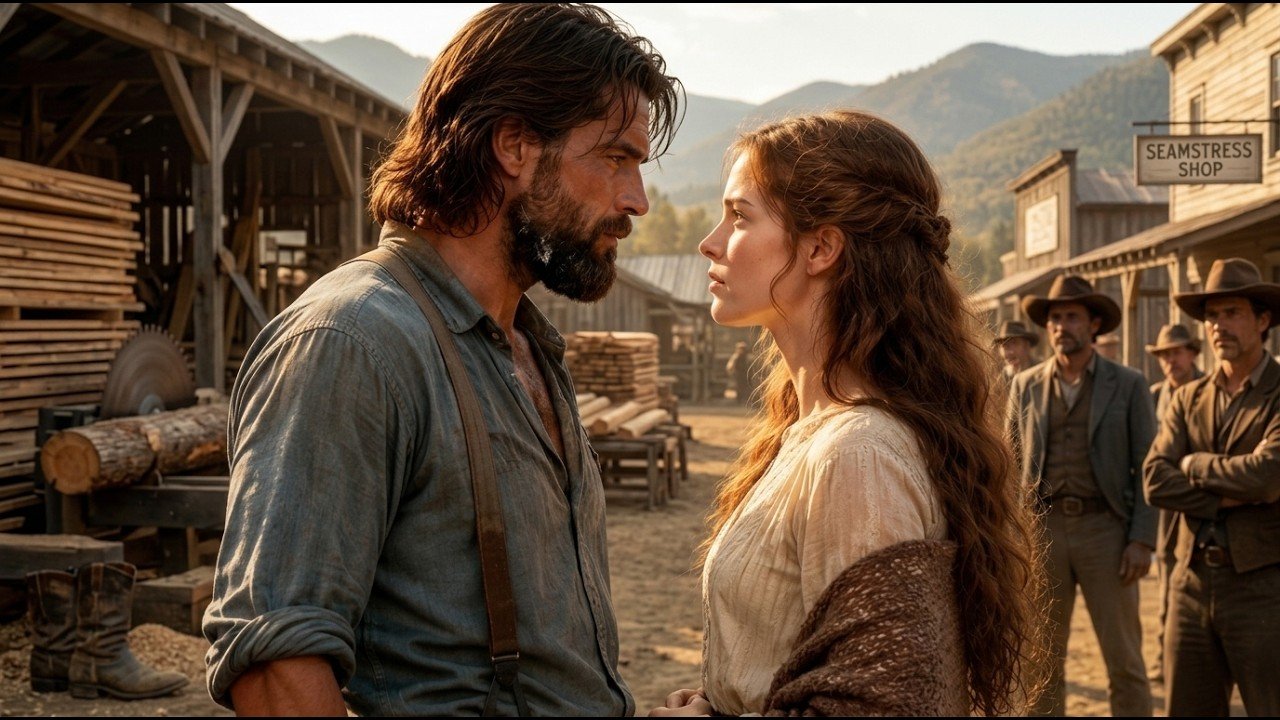
Widowed at 20, She Inherited a Bankrupt Bakery—Behind the Brick Oven, a Letter Stunned Everyone
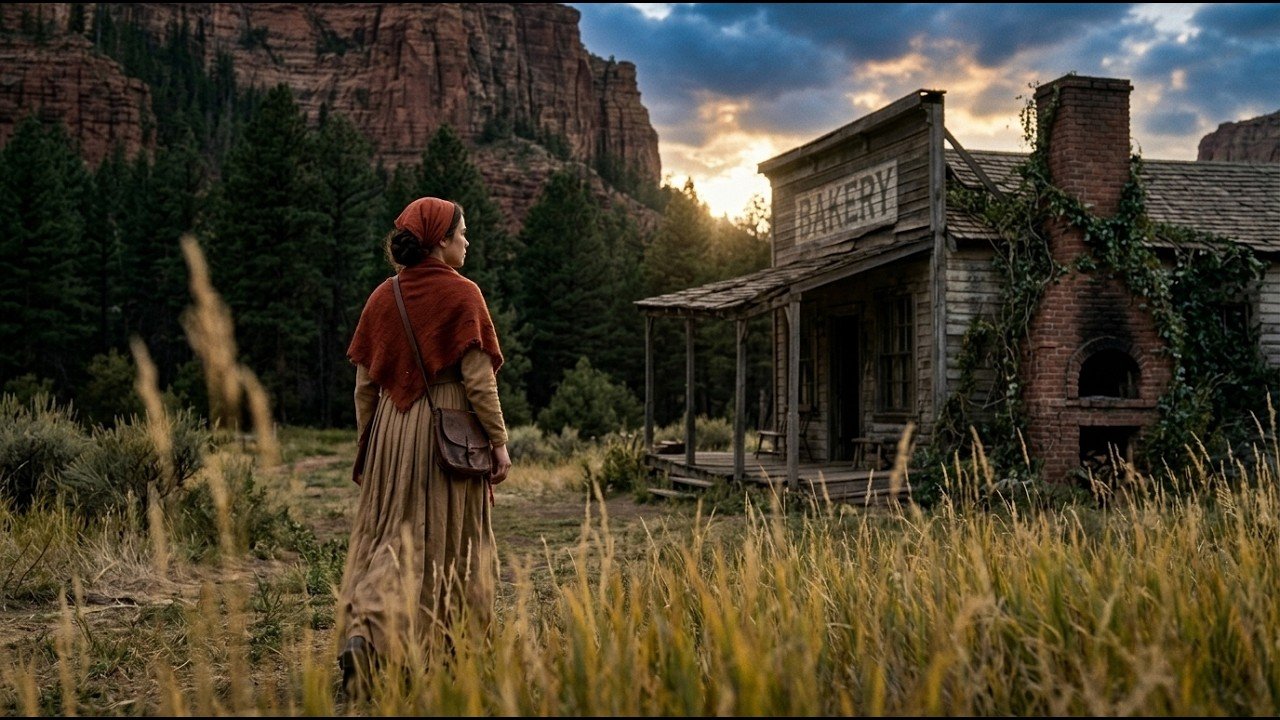
She was 20 years old, a widow of 11 days, and when Silas Pruitt set her trunk out on the boardwalk in the March wind, she had $11.40 to her name. Pruitt owned the bank in Larsburg Crossing, and he owned the rooms above the harness shop where she and her husband had lived, and he did not keep tenants who could no longer pay. So, Hattie Ashby walked down Front Street with her trunk on a borrowed handcart, and at the county clerk's window, she counted out nine of those $11 to pay the back taxes on the one thing her husband had left her. It was a bakery. It was bankrupt. Its windows were boarded. Its debts were larger than the building was worth, and nearly everyone in town said a sensible girl would have signed it over and caught the next stage eaSt. But behind the cold brick oven, sealed in clay for months, a letter was waiting. It would stun a whole town, and it would give back what one terrible winter had taken from all of them. Settle in, and let us tell you the story of Hattie Ashby. If you're watching from a place that feels forgotten, tell us where in the comments. We'd like to know who is listening. She was born Hattie Lund in a sod-roofed house on the Minnesota prairie in the winter of 1867, and the first warmth she ever remembered came from an oven. Her grandmother, a small, straight-backed Swedish woman named Signe, had carried a set of bread paddles and a crock of sourdough starter across an ocean and half a continent. She built a domed oven of field stone and clay behind the house with her own hands, and when Hattie was 4 years old, Signe began teaching her to bake. The teaching was not done with recipes. Signe had never written a recipe in her life, and she distrusted anyone who needed one. She taught with the hands, the nose, and the ear. She would take Hattie's small palm and hold it flat inside the oven mouth, counting slowly in Swedish, and when the girl pulled away at fem, Signe would nod and say the oven was ready for rye. If Hattie could bear it to atta, it was cooler, fit for the sweet cardamom braids they made at Christmas. She taught her to knock on the bottom of a loaf and listen for the hollow note that meant it was done. Most of all, she taught her to listen to the oven itself. On cold mornings when the fire was first laid, Hattie would sit on an overturned bucket with her ear near the stones while her grandmother explained that an oven talks. A good oven ticks evenly as it warms, like a clock settling. A cracked oven pops and hisses in one place more than others. A hollow behind the bricks sounds different from solid wall, the way a drum sounds different from a stone. "Everything that holds heat holds secrets, too." Signe used to say, brushing flour from her apron. "You only have to be patient enough to hear them." There was a second lesson, and in later years Hattie would decide it had been the more important one. Signe kept a slate by the door of the stone oven. When a neighbor came by and could not pay for bread, which on that hard prairie happened often, Signe chalked their name on the slate and handed over the loaf all the same. Hattie once asked whether those neighbors ever paid. Her grandmother laughed and said some did and some did not, and that this was not the point. "Bread is not for the ones who can pay." She said. "Bread is for the ones who are hungry. The slate is only so they keep their pride." Hattie's parents died of diphtheria in the spring she turned 11, within a week of each other. After that, it was only Hattie and Signe and the stone oven until Signe too grew frail. In her last winter, Signe could no longer lift the paddles. So, she sat by the fire wrapped in a gray shawl and called out instructions while Hattie did the work. The day before she died, she pressed the old starter crock into Hattie's arms and told her to keep it alive no matter where she went. "As long as this is alive," she said, "you can make a home out of any four walls." Hattie was 16. She sold the little farm to a neighbor for barely enough to cover her grandmother's debts, packed the crock in straw inside a wooden box, and took work as a kitchen girl at a railroad hotel in St. Paul. That was where 2 years later she met Thomas Ashby. He was a tall, quiet young man with a freight driver's sunburned neck and a slow, careful way of speaking, as though every word cost him a little and he wanted to be sure it was worth the price. He had come east to deliver a load of hides and was waiting for a return contract. He took his supper in the hotel kitchen because it was cheaper than the dining room and he praised Hattie's bread so earnestly every single night that the cook began to tease her about it. Thomas told her about Wyoming Territory, about the long grass that turned silver in the wind and the mountains standing blue at the edge of the world, and about his uncle Elias, who kept a bakery in a cattle town called Larkspur Crossing. "Best bread between the Missouri and the Pacific," Thomas said, "until I tasted yours." Hattie told him that was flattery. He said with perfect seriousness that he did not know how to flatter anyone. They were married in the spring of 1886 in a little Lutheran church with the hotel cook as their witness. They went west together on the Union Pacific, the starter crock riding on Hattie's lap the whole way. Larkspur Crossing sat where the old emigrant trail forded a shallow, willow-lined river. It was a single street of false-fronted buildings, a church with a bell that had cracked in its first winter, a grange hall, a stockyard, and a dozen ranches scattered across the benchland for 30 miles around. Thomas drove freight between the town and the railhead at Rawlins, and he and Hattie rented two small rooms above the harness shop from the man who seemed to own half the street, a banker named Silas Pruitt. Elias Ashby, Thomas's uncle, was everything Thomas had promised. He was a broad, white-whiskered man of nearly 70 with forearms like fence posts. His bakery stood at the end of Front Street, a narrow building of whitewashed planks with a great brick oven at the back that he had built himself in 1871 when the town was nothing but tents. He was famous through the valley for his salt rising bread and his molasses cakes. And on the first morning Hattie walked in, he handed her an apron without a word. When she slid a tray of her grandmother's cardamom braids out of his oven that afternoon, he tasted one, closed his eyes for a long moment, and said, "Well, I suppose I'll have to retire now." It was the first time Hattie had laughed since Signy died. That was the summer of 1886. It was hot and dry. The grass burned brown by August, and the old cattlemen began looking at the sky with worried faces. Then the winter came, and it was the worst anyone in the territory had ever seen. It began with snow in November that never melted. In January, a Chinook wind blew warm for a day and thawed the top of the drifts, and then the cold came down behind it so hard that the whole range froze into a crust of ice too thick for cattle to paw through. The herd starved standing up. The thermometer on the Grange Hall porch read 46 below zero, and then simply stopped. Its mercury curled into the bulb. Freight could not get through from Rawlins for 7 weeks. The mercantile ran out of flour, and the town began to go hungry. Hattie remembered that winter as a long gray tunnel of work. Elias kept his oven lit day and night. He had laid in a store of flour in the fall, far more than he could sell, because he had read the sky as well as any cattleman. When that ran low, he bought what remained at the mercantile at whatever price was asked, and when he had no more cash, he went to the bank and borrowed. He baked, and he gave the bread away. Ranch families came in on horseback with frost in their eyebrows, and he loaded their saddlebags. Widows came and children, and the men from the stockyards who had lost their wages along with the cattle. Elias chalked every name on a great slate by the door, just as Signy had once done, and he never asked a single soul for a penny. By spring, the whole valley owed him its life, and Elias Ashby owed Silas Pruitt's bank more than $2,000. The thaw came at last and the town buried its dead cattle and counted its losses and for a little while things seemed to steady. Hattie and Thomas saved what they could. They talked about the day Elias would retire and they would take the bakery over. But Elias was never quite the same after that winter. Something in his chest had been worn down by those months of heat and smoke and cold and in the autumn of 1887 he began to cough. By Christmas he could not stand at the oven. In February of 1888 he died in his narrow bed in the back room and the bakery passed by his will to his nephew Thomas along with every dollar of its debt. Hattie remembered sitting with Elias in his last days. He seemed troubled, more troubled than a dying man ought to be about money. Twice he tried to tell her something. His big hand gripping hers, his eyes going to the kitchen and the oven beyond it. Each time the coughing took him before the words came. On the last afternoon he said only, "The oven, Hattie. Keep the oven." She thought he was wandering and she promised she would. Three weeks later Thomas took a freight wagon across the river at the old ford. Spring was early that year and the ice was rotten underneath where no one could see it. The team broke through. The men who pulled him from the water said he had gone back in for one of the horses. He lived two days with a fever and then he was gone, too. Hattie buried her husband beside his uncle in the little cemetery on the hill. She stood in the thin snow with the wind pulling at her black shawl and afterward the lawyer came to the rooms over the harness shop to tell her where things stood. The bakery was hers now. So was the note at the bank, $2,100 due in full on the 1st of June, 90 days away. If she could not pay, the bank would take the building and the lot. There were also $9 in county taxes unpaid since the autumn and if those were not settled by the end of the month, the county would seize the deed and she would not even have have right to try. "Mrs. Ashby," the lawyer said gently, my advice is to let it go. Mr. Pruitt has made it known that he would give you $50 for a quitclaim. With the railroad survey coming through, he wants the lot. Take the $50, go home to Minnesota." There was no home in Minnesota. Hattie said she would think about it. Silas Pruitt did not wait for her thinking. He came to the rooms himself the next morning. He was a lean, neatly made man in his 50s with a gray waistcoat, a gold watch chain, and a voice that never rose. And he explained with perfect courtesy that the rent was 2 months behind. He was sorry for her loss, he said, deeply sorry, but he was a businessman and a room was not a charity. He had a new tenant waiting, a surveyor for the railroad, who could pay in advance. He would be grateful if she could be out by noon. So, at noon, Hattie Ashby stood on the boardwalk beside her trunk and the wooden box that held her grandmother's starter crock. She had $11.40 in her purse, and the March wind cut through her morning dress like a blade. People passed her and looked away. They were not unkind people, most of them. They were tired people, still worn down by the winter, and they did not know what to say. She borrowed a handcart from the livery. She walked to the county clerk's office and paid the $9 in taxes, coin by coin, while the clerk watched with an expression somewhere between pity and disbelief. Then she pushed her trunk down Front Street to the boarded bakery at the end of the row, took the key from around her neck, and let herself in. It was dark and bitterly cold. Dust lay over everything. The counter where Elias had stacked his loaves was bare, and the great slate still hung by the door. Every name from that terrible winter chalked on it in his heavy hand, a little faded now. Hattie stood in the middle of the room and let herself cry for the first time since the funeral, for perhaps a quarter of an hour. Then she wiped her face, rolled up her sleeves, and went to the back to look at the oven. It was a beautiful oven. Elias had built it to last a century. A deep vaulted chamber of red brick set into the back wall with a cast iron door and a flue rising through the roof. It was the biggest oven Hattie had ever seen. She ran her hand along its cold face and felt something loosen in her cheSt. Here, at least, was a thing she understood. There were $2.40 left in her purse. With them, she bought a sack of flour from the mercantile, a little salt, and a lamp's worth of kerosene. There was firewood still stacked behind the bakery, and in the morning, before the sun was up, she laid a fire in the oven for the first time since Elias had died. She knew almost at once that something was wrong. An oven like this one should have warmed evenly, the heat creeping through the brick in a slow, steady tide. This one did not. As the fire caught and the bricks began to tick and settle, Hattie sat on an upturned flour keg with her ear near the side wall, the way her grandmother had taught her lifetime ago, and she heard it. Low on the back wall of the chamber, on the left side, the sound was different. Everywhere else the brick ticked solid and dense, but there it had a faint hollow ring, a note that echoed, as if there were air behind it where there should have been only mortar and stone. When the fire had burned down and she raked out the coals, she held her hand flat in the oven mouth and counted. On the right side, she pulled back at fem, just as she should. On the left, near that back corner, she could hold her palm steady all the way to neo. That part of the wall was not heating as it should. Something behind it was stealing the warmth, or something there was not brick at all. Hattie baked her first loaves that morning on the right side of the oven. They came out well, crusted and fragrant, and she sold all 12 of them through the half-open door before 9:00 to people who stopped, startled, at the smell drifting down Front Street. She made 60 cents. She bought more flour. And that night, when the oven had gone cold again, she took a lamp and a chisel from Elias's toolbox and crawled into the chamber on her hands and knees. The brick in the back left corner looked like every other brick, blackened with soot. But when she wrapped it with a handle of the chisel, it rang hollow. And when she brought the lamp very close, she saw that the mortar around four of the bricks was a slightly different color from the rest, paler and finer. It was not mortar at all, she realized. It was river clay packed in carefully and smoothed with a thumb. Her hands were shaking a little as she worked the chisel into the seam. The clay was dry and brittle and came away in flakes. The first brick loosened, then the second, and behind them her lamp showed a hollow space no larger than a bread box built into the thickness of the wall and lined with flat river stones to keep out the heat. Inside it sat a squat tin box of the kind tea came in, its lid wired shut, its paint scorched to a dull brown. Hattie carried it out into the front room and set it on the counter beneath the lamp. For a long moment she only looked at it. She thought of Elias in his last days, gripping her hand, his eyes moving toward the kitchen. The oven, Hattie, keep the oven. She cut the wire with the chisel and opened the lid. Inside lay a thick fold of papers wrapped in oilcloth. On top was an envelope sealed with a smear of red candle wax and addressed in Elias Ashby's big square hand to whoever next lights this oven to bake bread, no one else. Hattie sat down on the flour keg. Outside, the wind moved along Front Street and rattled the boards on the windows. She broke the seal. The letter was long, written over several evenings by the look of it, the ink changing from black to brown halfway through and the hand growing shakier toward the end. It began plainly. If you are reading this, then I am dead and someone has thought this old oven worth lighting again. I am glad of it. I put this here instead of in a bank box or a lawyer's safe because I do not trust the bank and I am not certain of the lawyer and I know that no thief or banker will ever crawl inside a cold oven. Only a baker would and a baker I think will understand what I am asking. Then Elias told the story of the winter as Hattie already knew it and then he told her the part she did not know. In April of 1887 after the thaw, the ranchers of the valley had met at the Grange Hall. Every one of them knew what the baker had done. They were ruined men, most of them. Their herds dead on the range, but they were not ungrateful. Old Abel Crane of the Box C who had lost 900 head that winter stood up and said that no man in that room would let Elias Ashby be broken for feeding their children. They passed a hat. Over the following months as stock was sold and debts were squared, they added to it. $10 here, 50 there, 200 from the Box C. By September they had raised $1,840. Elias did not want it and he told them so. So the Ranchers Association did not give it to him. They gave it in trust to the bank that held his note to be applied against his debt so that the bakery would stand clear. The money was handed over to the bank's president in the Grange Hall in front of witnesses and he signed a receipt for it. The president of that bank was Silas Pruitt. "I believed it was done," Elias wrote. "I believed the note was nearly paid and I thanked God for my neighbors and I thought no more about it. But in December when I was already sick, Pruitt sent me a demand for the full amount, every dollar and interest besides. I went to the bank and asked about the association's money. He looked me in the face and told me there had been no such deposit. He said I was an old man confused by fever. He said if I spread such a story he would have me before the judge for slander. I am not confused. Mr. Crane gave me a copy of the receipt the same day for my own records and I have it still. It is with this letter. Also with this letter is the list the association made of every man who gave and what he gave written out by Mr. Crane himself. I meant to take these to the circuit judge when the court came through in the spring, but I am dying and I am afraid that if I give them to anyone in this town, Pruitt will find a way to make them disappear. He holds paper on half this valley. Men are afraid of him. So, I am putting them here in my oven and trusting that whoever finds them will be the right person. Hattie unfolded the other papers with care. There was the receipt on a printed form of the Larkspur Crossing Savings and Loan, the very bank whose name was painted in gold on Pruitt's window. It acknowledged the deposit of $1,840 from the Larkspur Valley Stock Growers Association to be applied in trust against the obligation of E. Ashby, and it was signed in a neat narrow hand, S. Pruitt, President. Two witnesses had signed beneath it. One was Abel Crane, the other was the Reverend Jonas Whitlock who had led the Lutheran Church until he went back east the previous fall. Then there was the list, 31 names in Abel Crane's spidery script, each with an amount beside it. Hattie read the names slowly by lamplight and realized she knew nearly every one. They were the same names chalked on the slate by the door, but the letter was not finished and the last page was what made her put her hand over her mouth. There is one thing more, Elias had written, his hand very unsteady now. Whatever becomes of the association's money, I want it known that no one in this valley owes me anything. Every name on my slate is forgiven. Every loaf, every cake, every sack of flour I sent out that winter was a gift and I would not take a penny for any of it if I lived 100 years. Tell them so. Tell Tell the baker said it was the best bread he ever made. And if the money can be got back from Pruitt, I do not want it to go to me or my heirs as a fortune. Let it pay what the bakery owes, and let whatever is left go back to the town. The church bell has been cracked since the first winter. The school has no stove. Let it do some good. That is all. Keep the oven lit. Elias Ashby, February the 2nd, 1888. Hattie read the letter three times through. Then she sat in the dark bakery until the lamp burned low, thinking. She understood what she had. She had proof in the banker's own hand that the man who had put her trunk out on the boardwalk had taken $1,800 of other people's money and kept it, and was trying to collect the same debt twice. With that receipt, the bakery's debt would shrink from $2,100 to less than 300. With that receipt, she might keep her home. She also understood the danger, because Elias had understood it. A receipt was only paper, and a widow of 20 with no family and no money was only a widow. If she walked into the bank and laid it on Silas Pruitt's desk, she did not think she would walk out with it again. The circuit court, she knew, would sit in Larkspur Crossing in the third week of May, 9 days before the note was due. Judge Amos Holloway rode the circuit from Cheyenne, and people said he was a hard man but an honest one. So, Hattie would wait. She would bake, and she would keep the papers safe, and she would find Abel Crane. In the morning, she wrapped the letter, the receipt, and the list back in their oilcloth and returned them to the tin. She did not put the tin back in the oven, though. She sewed it into the lining of her grandmother's starter box under the straw, beneath the crock that had come across an ocean. Then she relit the fire and baked bread, because Elias had asked her to keep the oven lit, and because people were hungry. The town began to come back to the bakery that spring, a few at a time. The smell did it. People who had walked past the boarded windows for a month found themselves turning toward the door. Hattie baked salt rising bread from Elias's method, which she had learned at his elbow, and rye from her grandmother's starter, and on Saturdays the cardamom braids. She took down the boards from the front windows. She swept and scrubbed and polished the counter until it gleamed. A boy named Danny Quill, an orphan of 11 who slept in the livery loft and ran errands for pennies, began turning up at 5:00 each morning to haul wood and water. She paid him in bread and in a warm corner by the oven, and before long he was shaping rolls nearly as neatly as she did. She left the slate on the wall. People looked at it when they came in at their own names in Elias's faded chalk, and some of them looked quickly away. Abel Crane, it turned out, was not easy to reach. The Box C lay 22 miles up the valley, and the old man had been laid up since the thaw with a broken hip from a fall on the ice. Hattie sent a note up with the mail writer, carefully worded, saying only that she had found papers of her late uncle's concerning the association and begged a word with him. Two weeks passed with no answer. Silas Pruitt, however, came to her. He came on a bright morning in late April, stepping into the bakery with his hat in his hand and his gold watch chain catching the light, and he looked around at the clean counters and the stacked loaves with an expression of mild surprise. He bought a rye loaf and paid for it with a silver dime and told her the town was pleased to have the bakery open again. Then he laid a paper on the counter. "I am prepared to improve my offer, Mrs. Ashby," he said. "$200 for a quitclaim on the property. It's a generous sum, more than generous, given the state of the note. You could go anywhere you like." Hattie said she was grateful for his kindness, but she meant to try to keep the bakery. Pruitt smiled very slightly. "On 60 cents a morning," he said, "the note is due the 1st of June, $2,100. I'm sure you understand that the bank cannot extend it. I'd hate to see you lose everything when you might walk away with something." She thanked him again. He left the paper on the counter. A week after that, Hattie noticed that her flower order from the mercantile was late. The next week, the mercantile told her apologetically that they could no longer give her credit and that the wholesaler in Rawlins had raised his prices to her particularly. The mercantile's building, she learned, was mortgaged to Pruitt's bank. Then the livery owner, who had always let Danny sleep in his loft, turned the boy out and Danny came to the bakery's back door with his few belongings in a flour sack, his face set hard to keep from crying. Hattie made him a bed by the oven and did not ask whose paper the livery owner was carrying. She began to hear things in the street. People said the Ashby girl was half out of her head with grief, that she was talking about her uncle's money as if there were some hidden fortune, that old Elias had been raving at the end and she had caught it from him. Hattie had told no one about the papers except in the vaguest words Abel Crane. She realized, with a cold feeling in her stomach, that the mail writer must carry more than letters for the bank. Then one night in the second week of May, she woke to Danny shaking her shoulder and the smell of smoke. It was the wood pile behind the bakery. Someone had set it alight. The flames had climbed the back wall and were licking at the eaves when Hattie and Danny got outside with buckets. They fought it for half an hour, hauling water from the trough in the dark, until neighbors came running from up the street in their nightshirts and helped them beat it out. When it was over, the back wall was charred and blistered and the whole winter's wood pile was ash. The bakery itself still stood. Inside, the starter box sat untouched beside the oven where Hattie had left it. Nobody saw who had done it. In the morning, the sheriff, a weary man named Coyle, looked at the charred boards and said a spark from the flue must have blown into the wood. Hattie looked at the flue, which was on the opposite side of the building, and said nothing. That afternoon, a wagon came down the valley road, driven by a young ranch hand, and carrying an old man propped on a feather tick in the back, his leg in a splint, and his face gray with pain. It was Abel Crane. He had not received a single one of Hattie's notes. He had come because his granddaughter heard talk in town of a fire at the Ashby bakery, and the baker's widow raving about association money, and the old man had put two and two together faster than anyone expected. Hattie brought him inside and gave him coffee and a slice of warm rye, and then she brought out the tin box. Abel Crane read Elias's letter with his lips moving, and when he came to the receipt, he put his finger on his own signature and held it there a long time. When he looked up, his old eyes were wet and furious. "I knew Elias was in trouble," he said. "I heard he'd been dunned, but I thought it was the intereSt. I never dreamed. I was laid up all winter, and then Elias was gone." He shook his head slowly. "$1,840. Half those men sold their last horses to give it." The circuit court opened in Larkspur Crossing on the 21st of May. It sat in the Grange Hall because the town had no courthouse, and the hall was full to the walls. Word had traveled up and down the valley that Abel Crane meant to bring a complaint against Silas Pruitt, and every rancher who had put money in that hat a year before had ridden in to hear it. Pruitt came with a lawyer from Cheyenne in a black frock coat. When the complaint was read, the lawyer rose and said, calmly and at length, that the bank had no record of any such deposit. He produced the bank's ledgers to prove it. He suggested that the so-called receipt was a forgery, cooked up by a grieving and impoverished widow with an obvious motive to escape a just debt, and that an elderly rancher in poor health had been led astray by sentiment. The second witness, the Reverend Whitlock, was in Pennsylvania. "It was," the lawyer said with a regretful spread of his hands, the word of a desperate young woman against the word of the most respected man in town. Judge Holloway, a gaunt, white-bearded man with a voice like a dry creek bed, looked at Hattie over his spectacles and asked if she had anything to say. Hattie stood. Her heart was pounding so hard she could feel it in her throat. She had never spoken in front of more than a dozen people in her life. But she had thought, during those weeks of waiting, about what Elias had written and about the slate on the bakery wall, and she knew what she needed to do. "I have only one thing, Your Honor," she said, "and it is not mine. It belongs to everyone in this room. My uncle asked that it be read to them. May I?" The judge nodded. Hattie unfolded Elias Ashby's letter and read it aloud, all of it, from the first line to the last, in the plain, clear voice her grandmother had taught her to use when calling across a windy farmyard. She read about the winter. She read about the meeting at the Grange Hall in that very room. She read about the receipt and Pruitt's face when Elias asked him about it and the threat of slander. Then she read the last page, the part about the slate. Every loaf forgiven, every name. "Tell them the baker said it was the best bread he ever made." When she finished, the Grange Hall was so quiet that she could hear the wind in the cottonwoods outside. Then a rancher near the back stood up. He was a big, raw-boned man named Gus Teague, and he said, without being asked, that he had put $40 in that hat in April of '87, money from the sale of his wife's milk cow, and he could name the day. Another man stood, and another. A widow named Ottilie Brant, who kept the boarding house, said she had given $12 and still had the note her husband wrote about it. One by one, up and down the benches, people rose and said their names and their amounts. And Able Crane, propped in a chair at the front, read along on his list and nodded at everyone. There were 31 names on that liSt. 26 of those men and women were in the room, and every one of them stood. The Cheyenne lawyer was no longer spreading his hands. Judge Holloway called for the bank's ledgers to be laid on the table. He sent for the clerk of the court and a territorial bank examiner, who happened, as luck would have it, to be traveling with the circuit that spring. He adjourned until the following morning, and that night Silas Pruitt's lawyer took the late stage back to Cheyenne without him. The examiner spent two days in the bank. What he found was a second set of books in Pruitt's private safe. In them, the association's deposit was recorded to the penny, along with the fact that it had been moved within a week into an account in Pruitt's own name and used to purchase the railroad lots along Front Street. The very lots, as it turned out, beside the bakery. Judge Holloway ruled that the trust deposit was to be applied against the Ashby note at once, with interest from the date it was received. The bakery's remaining debt came to $211. The bank, now under the examiner's supervision, was ordered to restore the full amount of the truSt. And since the money had already gone into those railroad lots, the lots were ordered sold and the proceeds turned over. When the sale was done and Elias's debt was paid in full, more than $900 remained. The judge asked Hattie what she wanted done with it. She did not hesitate. She had known the answer since the night she first read the letter by lamplight. She read Elias's last lines aloud again. Let it go back to the town. The church bell has been cracked since the first winter. The school has no stove. And so, in the summer of 1888, a new bell was cast in St. Louis and freighted up from the railhead, and an iron stove was set in the Larsburg Crossing schoolhouse in time for the first froSt. What was left went into a fund administered by Abel Crane and Ottilie Brandt to buy seed and stock for the families who had lost everything in the great die-up and had never recovered. Hattie kept $211 worth of nothing for herself. What she kept was the bakery, free and clear. As for Silas Pruitt, there was no great scene, no mob in the street. That was not the kind of town Larkspur Crossing was. He was removed as president of the bank by order of the territorial examiner. His name was taken off the gold-painted window. The mercantile, the livery, and the harness shop all quietly paid off their notes with a new bank in Rollins and never did business with him again. He kept his house on the hill for a time, but people stopped tipping their hats when he passed. Within 2 years, he had sold it at a loss and moved to a rented room in Cheyenne. The story goes that years later, in the hard winter of 1893, when the panic swept the banks across the West, a thin, gray-haired man in a worn waistcoat came through Larkspur Crossing on the stage and stopped at the bakery at the end of Front Street. He stood a long while in front of the counter without speaking. The young woman behind it recognized him, of course. She did not say a word about the paSt. She wrapped a warm rye loaf in brown paper and handed it across the counter. And when he fumbled in his pocket for a coin, she shook her head and went to the slate by the door. She wrote his name there in chalk beneath all the others and smiled at him and said that bread was not for the ones who could pay. She was 20 years old, a widow of 11 days with $11.40 in her purse when Silas Pruitt set her trunk out on the boardwalk in the March wind. She spent nine of those dollars on a bankrupt bakery that everyone told her to walk away from. And they were right, in a way. If you counted it the way a banker counts, it was a foolish thing to do. But Hattie Ashby had been raised by a woman who could hear the secrets inside an oven and who had taught her that the value of a thing is not always written on its ledger. Elias Ashby had hidden the truth in the one place he believed only the right kind of person would ever look, inside the cold heart of a brick oven waiting for someone who meant to bake bread. He trusted that whoever lit that fire again would care more about feeding people than about what was owed. He was right. She kept the oven lit for 41 years. The bakery at the end of Front Street outlasted the railroad depot, two fires, and the bank that had once tried to take it. Danny Quill grew up shaping rolls at her elbow, and when Hattie was too old to lift the paddles, he lifted them for her while she sat by the oven wrapped in a gray shawl and called out instructions just as her grandmother had done. The starter in her grandmother's crock never died. It is said that a little of it is still alive somewhere in Wyoming today, fed and passed down from baker to baker. And the slate stayed on the wall by the door. Hattie never wiped Elias's names off it. She only added new ones year after year, the ones who were hungry and could not pay. She said it was the most valuable thing in the building. When people asked her why, she would point to the old brick oven and tell them that everything that holds heat holds secrets, too. And that the best of those secrets is this: What we give away in the hard times is never really loSt. Sometimes it comes back a year or a lifetime later when the people we fed stand up one by one and say our names. That is the story of Hattie Ashby. Thank you for spending this time with us and for listening all the way to the end.