He Built the House Before He Sent for a Mail Order Bride — She Walked In and Called It Home
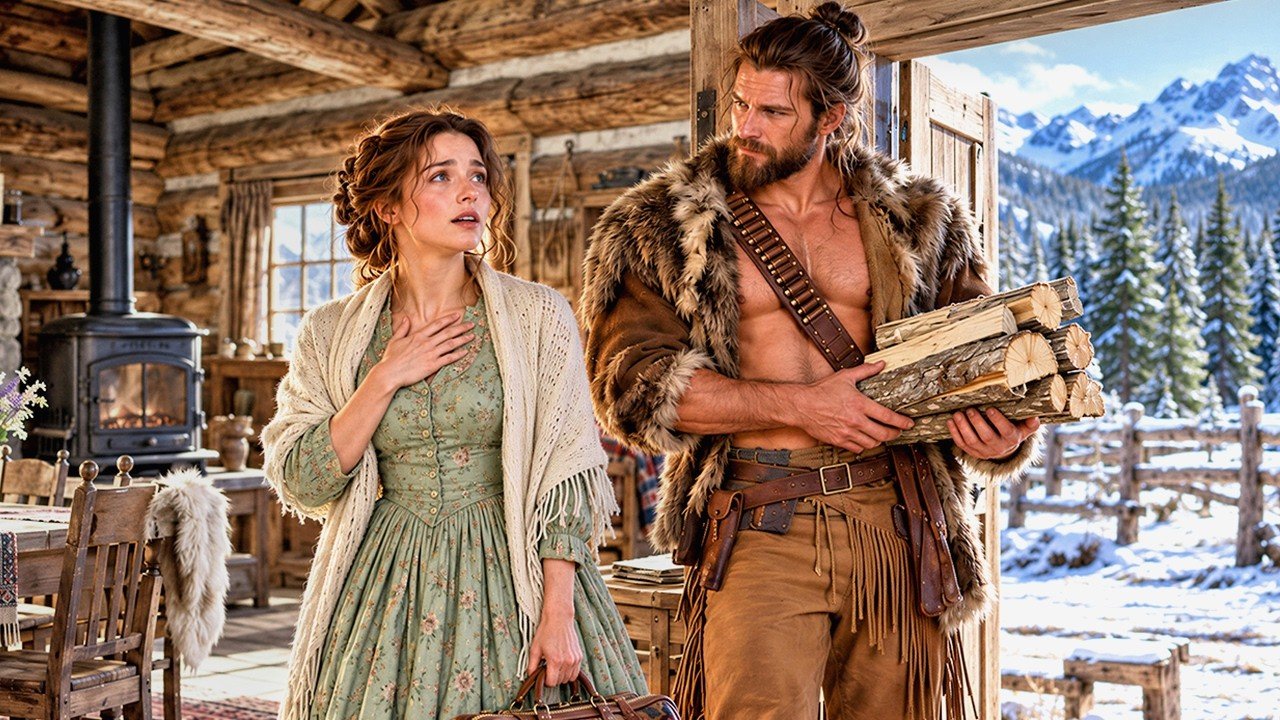
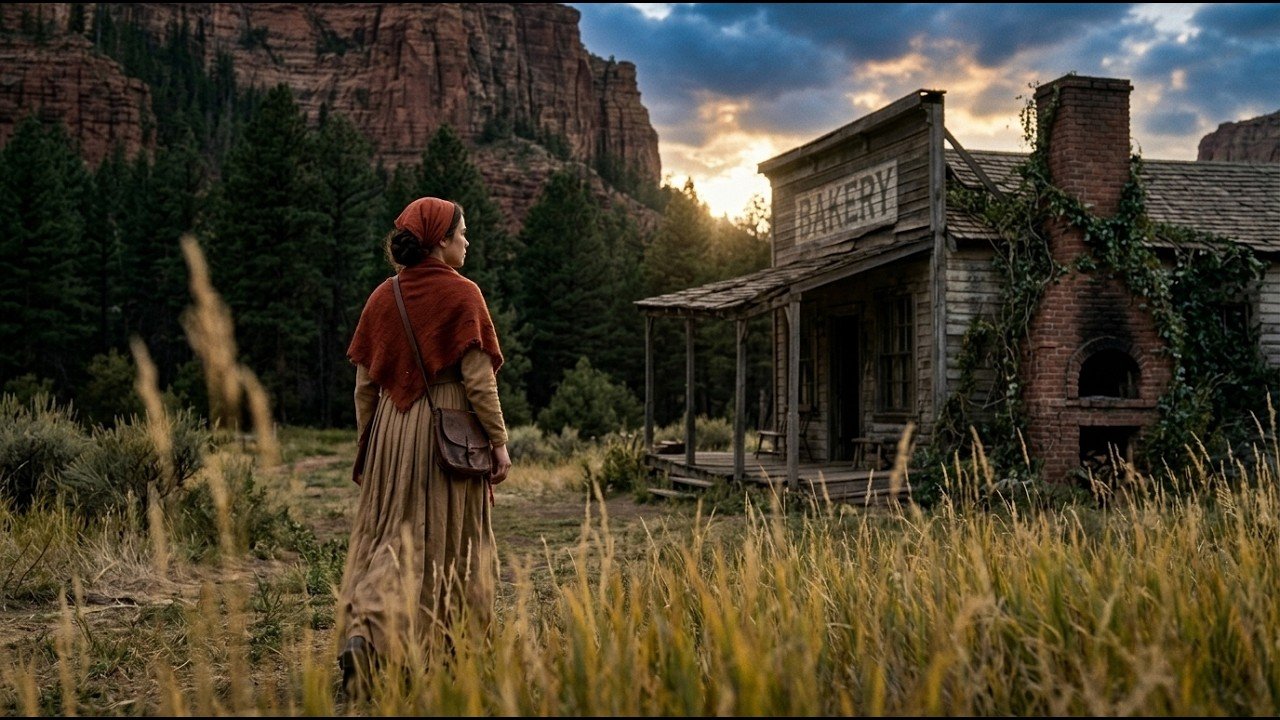
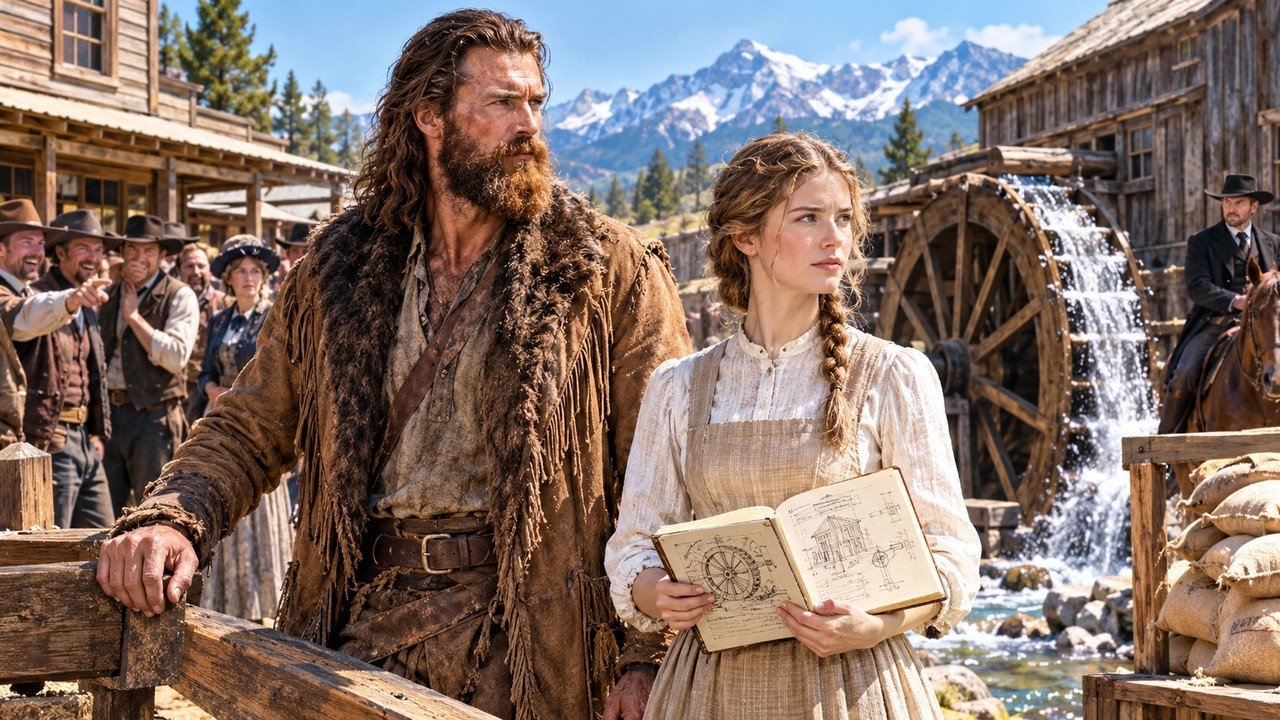
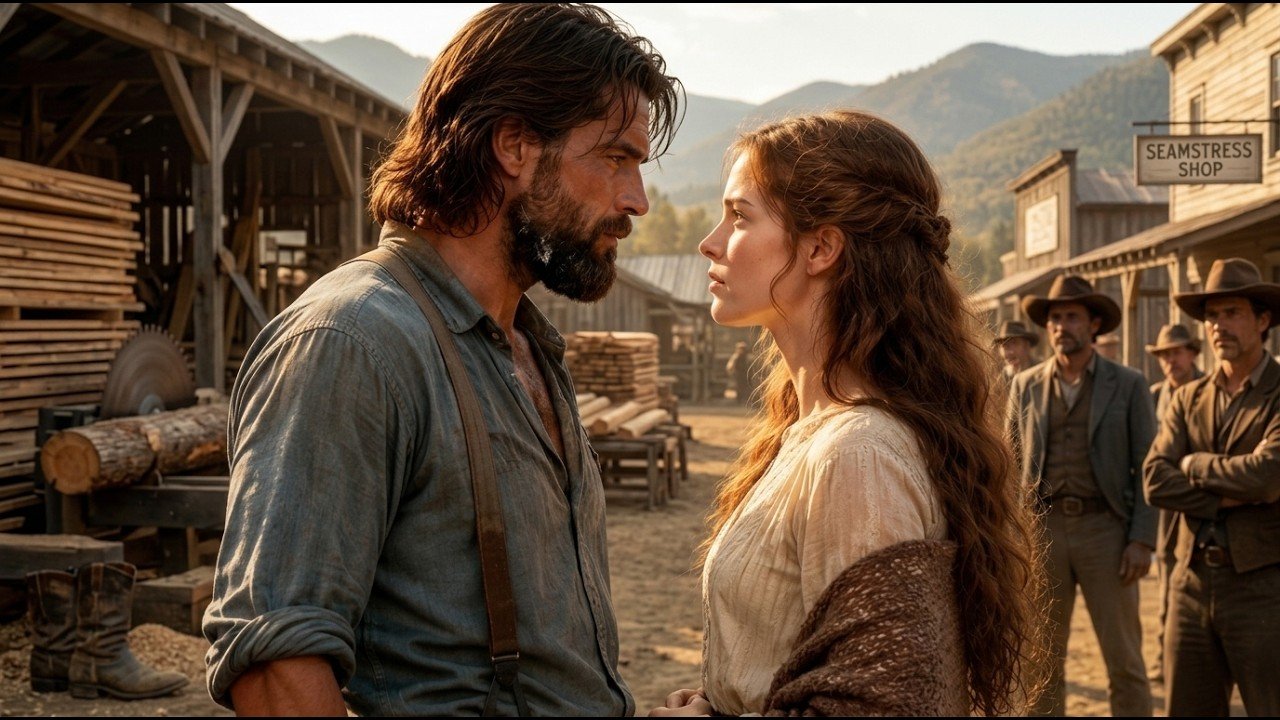
A man doesn't fell 80 lodgepole pines with his bare hands just to sleep alone in the dirt. He builds a house firSt. He lays the hearth. He sands the floorboards until his knuckles bleed, making sure no rough edge catches a woman's hem. Henry did the work before he ever knew her name. He paid the agency, signed the paper, and waited. He expected a survivor. He didn't expect the woman who walked through his door and breathed life into the timber. The mountain did not care if a man lived or died. Henry knew this in his marrow. The Rockies were a jagged, indifferent spine of rock and ice, and they tolerated his presence only because he had learned when to bend and when to strike. He was 34 years old. The last 10 had been spent pulling a living from the high country, trapping beaver until the market dried up, then hunting elk and mule deer to sell the meat to the silver camps down in the valley. He lived a life of brutal, quiet routine. He woke in the dark. He worked until the light bled out of the sky. He ate what he killed. He slept in a one- room dugout carved into the side of a ridge smelling of wet earth and old blood. It kept the wind off him. It kept him alive. But survival had slowly stopped being enough. It wasn't a sudden revelation. It was the creeping weight of the silence. It was the winter of 76 when the snow drifts piled 10 ft high and trapped him in the dugout for 42 days. He had read the same almanac 16 times. He had listened to the wind shriek through the pines until the sound started to sound like human voices. When the Thor finally came, Henry stepped out into the blinding white sun and realized that if he died up here, his bones would turn to dust before another human soul ever found them. He needed a wife. He didn't harbor any soft illusions about love. Romance was a luxury for people who didn't have to chop ice to get their morning water. He needed a partner. Someone to tend the fire when he was tracking. Someone to sort the meat, to mend the wool, to speak a word in the evening just to prove the silence hadn't won. But Henry was a practical man. He looked at his dirt floor dugout at the greasy pelts hanging from the ceiling and knew no woman would survive it. A woman needed walls. She needed a floor that didn't turn to mud in the spring. So before he wrote the letter, he built the house. He chose a clearing on a south-facing slope surrounded by a thick stand of aspen that would break the northerly winds. In the spring, the meadow exploded with Indian paintbrush and wild coline. A creek ran crystal clear 50 yard away, never freezing completely even in the dead of January. The labor took him a year. He didn't hire help. He felled the lodgepole pines one by one, the heavy thack of his double-bitted ax echoing across the empty valley. He stripped the bark. He notched the joints with a draw knife, fitting the logs together so tightly a knife blade couldn't slide between them. He hauled flat riverstones on a handmade sled to build a chimney that rose broad and straight, pulling smoke like a lungs taking a breath. He worked with a quiet, relentless intensity. His hands, already calloused, grew thick with new scars. He split cedar shakes for the roof. He planained raw pine for the floorboards, spending entire evenings on his hands and knees by lantern light, running his bare palms over the wood to find any splinter that might catch a soft foot. He didn't know who was coming, but as the cabin rose from the dirt, it stopped being just a structure and became a promise. He built a heavy oak table. He built two chairs. He traded three prime elkhides in town for a cast iron cook stove, hauling it up the mountain in pieces on the back of his pack mule. In the corner, he built a bed frame. He pegged the joints instead of using nails, stringing it tight with rawhide webbing. When the cabin was finished, it smelled of fresh sap, wood smoke, and clean earth. It was solid. It was unyielding. Only then did Henry ride down to Denver. He walked into the matrimonial agency with dirt under his nails and coin in his pocket. The agent, a slick man in a striped suit, pushed a catalog across the desk. Henry didn't look at it. I don't need a picture, Henry said, his voice raspy from disuse. I need a woman who knows what work is. Someone who isn't afraid of the quiet. Tell her the winters are long, the town is 2 days ride, and there's no neighbors. Tell her I have a good house. He paid the fee. He signed his name. He rode back up the mountain to wait. For 2 months, he kept the cabin clean. He chopped three cords of wood and stacked them by the door. He smoked trout and cured venison. Every evening, he sat on the porch, looking down the valley trail, smoking his pipe, wondering what kind of desperation it took for a woman to answer a letter like his. The stage coach station at Bitter Creek was nothing more than a weathered clapboard building, a corral, and a permanent cloud of duSt. Kora stood on the platform, her grip on her canvas carpet bag so tight her knuckles were white. She was 26 and she felt ancient. The journey from Lowel, Massachusetts had stripped away whatever small reserves of energy she had left. 6 days on trains smelling of coal smoke and unwashed bodies, followed by 3 days in a jolting stage coach that bruised her ribs and coated her throat in grit. Her dress, once a respectable navy wool, was stiff with alkali duSt. Her throat was parched. But as she looked around at the desolate, sunbaked landscape of the foothills, she felt no regret. Regret was for people who had left something good behind. Kora had left 14-hour shifts at the textile mill. She had left a damp boarding house room and a cough that wouldn't clear from her lungs. She had left a future that ended in a porper's grave before the age of 40. She had answered Henry's letter because it was devoid of poetry. I have a good house. I have meat for the winter. I need a wife who will work. It was a transaction. Kora understood transactions. She sold her labor, he provided the roof. If he was ugly, if he was mean, it didn't matter. She had dealt with mean men all her life. At least this one had promised her a door she could lock. The stage coach rattled away, leaving her in the heavy afternoon heat. The station master spat tobacco into the dirt and pointed with his chin. That'll be him. Kora turned. A wagon pulled by two massive draft horses stood at the edge of the corral. The man standing beside it was not a town man. He was tall, broadshouldered, and deeply weathered. He wore canvas trousers tucked into worn leather boots, a flannel shirt faded by the sun, and a buckskin veSt. His beard was dark and trimmed close to the jawline, but his hair curled over his collar. He didn't rush toward her. He walked with a heavy, measured stride. Kora straightened her spine. She willed her hands to stop shaking. She was a small woman, but she knew how to take up space when she had to. He stopped a few feet away. His eyes were a startling pale gray. They didn't sweep over her with the learing appraisal she was used to in the city. They looked at her squarely, assessing her the way a man assesses a piece of land. Looking for faults, looking for strength. I'm Henry, he said. His voice was deep, scraping like stone on stone. I am Kora. Her voice was from the dust, but it held steady. He looked at her carpet bag. Is that all you brought? It's all I have. He nodded once. He didn't offer empty platitudes. He didn't ask about her trip. He just reached out and took the bag. Wagons this way. We have a 5-hour climb before dark. Cora followed him. The relief was a sudden physical weight dropping off her shoulders. He wasn't trying to charm her. He wasn't pretending this was a romance. He offered her a hand up onto the wagon bench. His palm was rough as a rasp, his grip firm, but completely impersonal. Once she was seated, he walked around, climbed up beside her, and took the res. He clicked his tongue, and the heavy horses leaned into their collars. The ride was agonizingly slow. As they left the flatland and began the ascent into the foothills, the road narrowed into a ruted track. The heat of the planes gave way to a biting, clean chill. They didn't speak. For the first hour, Kora sat rigid, waiting for the interrogation. Why did she come? What were her skills? Was she a good Christian woman? But Henry just watched the road, his hands steady on the leather ribbons. The silence wasn't hostile. It was just dense. By the third hour, they were deep in the timber. The pine trees rose around them like the pillars of a green cathedral blocking out the sun. The air smelled sharp, a mix of pine needles and damp earth. Cora shivered, pulling her thin wool shawl tighter around her shoulders. Henry noticed. He didn't say a word, just reached behind the bench with one hand, pulled up a thick woolen blanket, and dropped it across her lap. Thank you, she murmured. Mountain gets cold when the sun dips, he said, keeping his eyes forward. Air is thinner up here. Might make you headache. I'll manage. He glanced at her from the corner of his eye. It was a fleeting look, but Kora felt the weight of it. You haven't complained once, he noted. Does complaining make the wagon go faster? A small, quiet huff of air escaped his nose. It took Kora a moment to realize it was a laugh. No, Henry said it don't. They climbed higher. The world fell away below them, the vast plains turning purple in the twilight. Kora felt the isolation settling over her. Back in Lel, there was never a moment of silence. Even in the dead of night, the city breathed. Dogs barking, drunks shouting, the rumble of carts. Here the silence was absolute, broken only by the rhythmic strike of the horse's hooves and the creek of the wagon axles. It was terrifying, and it was deeply, profoundly peaceful. "Almost there," Henry said as the last light drained from the sky. Kora braced herself. She knew what bachelor trappers lived in. She had heard the stories on the train. Squalid shacks, dirt floors crawling with fleas, drafty walls patched with mud and old newspapers. She tightened her jaw. She could scrub a floor. She could patch a roof. She would make it liveable. She was a worker. The wagon crested a ridge and the horses pulled them into a wide clearing bathed in the silver light of a rising moon. Henry pulled back on the res. Whoa. The horses stopped, blowing hard in the cold air. Henry set the brake. Corora stared. It was not a shack. Nestled against the treeine, sheltering under the shoulder of the mountain, sat a cabin. It was large, built of massive, perfectly matched logs that glowed dark and rich in the moonlight. The roof was pitched steep to shed the heavy snows, covered in neatly laid cedar shakes. A wide covered porch spanned the front, supported by thick timber posts. At the far end, a stone chimney rose broad and proud, already puffing a thin, lazy ribbon of white smoke into the night sky. It looked rooted. It looked as permanent as the mountain itself. Kora sat frozen on the wagon bench. She had expected to fight for survival from the moment she arrived. She had not expected this quiet, undeniable dignity. Henry climbed down from the wagon. He didn't look at her immediately. He went to the hor's heads, stroking their muzzles, murmuring low words to them. He was giving her a moment. When he finally stepped to her side of the wagon, he reached up. Kora placed her hand in his and let him help her down. Her legs were numb from the cold and the rattling journey, and she stumbled slightly as her boots hit the earth. Henry's hand tightened on her arm, steadying her. He let go the instant she found her balance. "I'll see to the team," he said, his voice low in the quiet night. "Go on inside. Doors unlocked. Fires banked in the stove. Just needs a stir." He pulled her carpet bag from the wagon bed and set it on the bottom step of the porch. Then he led the horses toward a sturdy lean-to barn at the edge of the clearing. Kora stood alone in the moonlight. The silence pressed against her eardruMs. She looked at the cabin, then walked slowly toward the steps. She picked up her bag. It felt lighter somehow. She climbed the three wooden steps. The porch floorboards didn't creek. They were solid. She reached for the door handle, forged black iron, heavy and cold, and pushed. The heavy door swung open smoothly on oiled leather hinges. Kora stepped over the threshold and stopped. The air inside was warm, holding the residual heat of a fire, and it smelled of seasoned pine, wood ash, and a faint sweet trace of dried sage. She struck a match from a tin box on the wall and lit the kerosene lantern sitting on a small table near the door. Yellow light bloomed, pushing back the shadows. Cora let out a slow, trembling breath. The floor beneath her feet was wood. Real wood. Plained smooth and fitted so tightly together it looked like a ship's deck. The walls were chinkedked cleanly with mortar, not stuffed with mud and rags. The logs were peeled clean, the natural grain of the wood shining with a low rubbed luster. To her right was a living area. A heavy oak table stood in the center, flanked by two chairs that looked sturdy enough to hold a bear. Against the stone hearth sat a single rocking chair, worn but well-made. To her left was the kitchen. Open shelving held neat rows of tin goods, sacks of flour and sugar, and neatly stacked iron skillets. The cast iron stove was a beauty, blacked and polished, radiating a gentle heat. A copper kettle sat on the back burner, and in the far corner, separated by a heavy canvas curtain pulled back on a rod, was a bed. A thick, colorful wool quilt was folded neatly at the foot. Cora dropped her carpet bag. It hit the floor with a soft thud. She walked slowly to the center of the room. She reached out and ran her fingertips across the surface of the oak table. It was smooth as glass. She looked at the joints of the chairs. No nails, only wooden pegs hammered tight and sanded flush. She walked to the walls and touched the logs. She could see the faint rhythmic marks of a draw knife. The hours of labor etched into every square inch of the room. He didn't just throw this together. A man didn't build a house this solid, this careful, unless he intended to stay forever. And he didn't build it for himself. The second chair at the table, the width of the bed, the copper kettle. He had built it for her. He had built a home, assuming a woman he had never met would be brave enough to fill it. Tears pricricked the corners of Kora's eyes, sudden and hot. She blinked them away angrily. She hadn't cried when the factory foreman docked her pay for a jammed loom. She hadn't cried when she boarded the train out of Massachusetts, knowing she would never see the ocean again. She would not cry now. But a hard, cold knot that had sat in her chest for a decade, began to loosen. The door opened behind her. A rush of cold air swept in, making the lantern flame jump. Henry stepped inside, carrying an armful of split firewood. He kicked the door shut with his boot and walked over to the stove. He didn't look at her as he opened the firebox, stirred the glowing red coals with an iron poker, and laid three pieces of wood inside. The fire caught immediately, crackling and casting dancing orange light onto the floorboards. He closed the stove door, stood up, and wiped his hands on his trousers. Only then did he look at her. She was standing in the middle of the room, looking very small in her dusty dress, but her chin was high. "It ain't a mansion," Henry said quietly. He shifted his weight, looking suddenly unsure of himself in his own house. "But the roof don't leak, and the stove draft's good." Cora looked at this large, rough man. She looked at his scarred hands. She thought about him sanding these floorboards in the dead of winter, waiting for a stranger. "It's a fortress, Henry," she said. Her voice was soft, but it carried clearly in the quiet room. Henry swallowed. He looked at the floor, then back up at her. "There's fresh water in the bucket, bacon and beans in the ladder. I'll take the bed roll by the fire tonight." Cora shook her head slowly. She walked over to her carpet bag, picked it up, and carried it past him to the bed in the corner. She set it on the quilt. I didn't travel 2,000 m to make you sleep on your own floor, Kora said. She turned to face him, her eyes steady. We are married, aren't we? By proxy. The paper is signed. Henry's jaw tightened. But I don't expect I know what you don't expect, Kora interrupted, not unkindly. You expect a worker. You expect someone who won't break when the snow flies. She reached up and began to unpin her hat, the dust falling from the brim. I expect a man who keeps his word, a man who builds a house before he asks a woman to live in it. She set her hat on the table. She looked around the cabin one last time, feeling the warmth of the stove soaking into her bones, the terror of the journey, the exhaustion, the cynicism she had worn like armor. It was still there, but it felt irrelevant inside these walls. "I'll start the coffee," Kora said, rolling up her dusty sleeves. She walked to the stove, and just like that, she called it home. The mountain did not care that they were married. The mountain only cared if the wood was chopped and the meat was smoked before the first heavy froSt. Their life together began not with a honeymoon, but with a bloodletting. On their third morning, Henry brought down a bull elk in the high meadow. He hauled it back in pieces, the mule staggering under the weight of the quarters. He dumped the meat on the heavy wooden table on the porch, his hands stained dark to the wrists. He looked at Kora, expecting her to pale. He had seen town women faint at the sight of a plucked chicken. "Ka didn't blink. She rolled up her sleeves, tied a canvas apron over her skirt, and picked up a bon knife. "Show me the cuts you want," she said. Henry watched her for a long moment. Then he nodded, picked up his own blade, and stood beside her. They worked for 10 hours. The work was visceral, slippery, and exhausting. Cora learned the smell of raw sew it and the heavy metallic tang of marrow. She learned how to slice the meat thin for the drying racks, and how to render the fat in the iron kettle over the fire until it popped and hissed. Her back screamed. Her hands, already calloused from years at the textile looms, developed new angry blisters where the knife handle rubbed. She didn't stop. She didn't complain. When the knife slipped and opened a shallow gash across her thumb, she wrapped it tightly in a strip of rag and went right back to the haunt she was breaking down. Henry noticed. He noticed everything. He noticed that she didn't waste a single scrap of usable meat. He noticed that she moved around the tight space of the porch with an economy of motion, never bumping into him, anticipating when he needed the wet stone or an empty bucket. They were two gears in a machine, grinding away the edges to find a fit. The silence between them stretched for hours, but it wasn't the crushing, hollow silence Henry had lived with for a decade. It was a populated quiet. It was the sound of the knife against the bone, the crackle of the fire, the steady rhythm of a woman breathing as she worked beside him. It anchored him to the earth. Nights were a different kind of labor. The bed in the corner of the cabin was wide, but the space between them felt like a canyon. Every night, Henry would go out to the barn to check the mules, giving Cora time to wash in the tin basin and change into her linen night gown. By the time he returned, she was under the heavy wool quilts facing the log wall. He would strip down to his long johns in the dark, blow out the lantern, and slide into the bed. He lay rigidly on his back, his hands folded over his chest like a corpse. He was acutely aware of her. He could feel the heat radiating off her small frame. He could smell the lie soap on her skin and the faint dusty scent of the dried lavender she had unpacked from her carpet bag. He wanted to touch her. The ache of it was a physical pressure in his chest, but he remembered the rigid set of her shoulders at the stage coach station. He remembered the transactional nature of his letter. I need a wife who will work. He hadn't bought a companion. He had contracted a partner. He would not take what wasn't freely offered. He was a mountain man, rough and unpolished, but he was not a brute. So he lay awake, listening to the wind tear at the cedar shakes, and waited for her breathing to slow into sleep before he allowed himself to close his eyes. For Kora, the darkness was a reprieve. Her body was a map of new aches, but her mind was strangely quiet. In Lel, she had lain awake, calculating pennies, terrified of the landlord's knock, terrified of the damp cough in her lungs. Here, the terrors were simple and honest, the cold, the wolves howling on the ridge. She could fight those. She could lock the heavy timber door. She knew Henry was awake beside her. She felt the tension in his large body, the careful way he kept his weight on the far edge of the mattress so he wouldn't roll into her. She respected his restraint. It made her feel safe. But as October bled into November, and the frost on the windows grew thick as a thumbnail, the distance between them began to feel less like a courtesy and more like a stubborn wall. She was beginning to know him. She learned that he took his coffee black, boiling hot, and strong enough to strip paint. She learned that he had a deep, rumbling laugh that he used sparingly, usually when the mules did something stubborn. She learned that he meticulously cleaned his Winchester rifle every Sunday morning, a ritual of survival disguised as a chore. He was a good man, hard as granite, but good. One evening, as she was darning a hole in one of his heavy wool socks by the light of the stove, she looked up to find him watching her from his rocking chair. He was smoking his pipe, the sweet smell of burly tobacco filling the cabin. "Your hands," Henry said, his voice a low gravel scrape in the quiet room. Cora paused, looking down at her hands. The knuckles were raw from washing clothes in freezing creek water. The cut on her thumb was healing into a raised pink scar. "They're fine," she said, resuming her stitches. "There's a tin of badger balm on the top shelf," he said, pointing with the stem of his pipe. "Rended it myself. Smells like dirt, but it'll fix the cracking." Cora tied off the thread, and bit the end. She stood up, found the small tin, and opened it. It did smell like dirt mixed with pine pitch. She scooped a little out and rubbed it into her knuckles. The relief was immediate, a soothing warmth sinking into her battered skin. She looked at him. "Thank you." Henry didn't look away. I didn't bring you up here to work you to death, Kora. I know. She sat back down, holding the tin. But the winter doesn't care why I'm here. The work has to be done. It does. He agreed. He tapped his pipe against his palm. But you don't have to carry it all in one day. You're allowed to reSt. Cora offered a tight, cynical smile. Rest is how people freeze, Henry. He stared at her, his pale gray eyes catching the firelight. He saw the iron core of her, the absolute refusal to be weak. It was the same iron that kept him alive up here. He understood it. Not in this house, he said quietly. In this house, the fire stays lit. Kora looked away, a sudden sharp lump rising in her throat. She wasn't used to being protected. She was used to surviving. She put the lid back on the tin of balm, the soft click echoing in the warm room. I'll remember that, she whispered. They didn't speak of it again. But that night, when Henry slid into the bed, Kora didn't turn her back to the wall. She lay on her back, staring up at the dark ceiling. And when Henry settled his heavy frame onto the mattress, his shoulder brushed against hers. He stiffened, preparing to pull away. Cora didn't move. She let her shoulder rest against his. A point of contact, a silent treaty in the dark. Slowly, the tension drained out of Henry's muscles. He let out a long, quiet breath, his arm resting warmly against hers. They fell asleep that way, tethered together against the vast, icy dark of the mountain. Winter didn't arrive, it ambushed them. In the second week of November, the sky turned a bruised, ugly purple. The temperature plummeted 30° in a matter of hours, freezing the mud in the yard into jagged ruts. The wind stopped howling and settled into a low, continuous roar, like a train rushing through a tunnel. Henry had gone out before dawn to check the trap line along the northern ridge. He had promised to be back by noon. It was now 3:00 in the afternoon, and the light was failing faSt. Cora stood by the window, scraping a circle in the frost with her fingernail, peering out into the swirling white chaos. The snow wasn't falling. It was driving horizontally. A blinding curtain of ice that erased the treeine, erased the barn, erased the world. Panic, cold and sharp, clawed at the edges of her mind. She pushed it down. Panic was useless. She pulled on her heavy wool coat, wrapped a thick scarf over her head and face, and grabbed the iron bar used for the stove door. She forced the cabin door open against the wind. The sheer force of the gale nearly knocked her backward. The cold was a physical blow, stealing the breath from her lungs. She fought her way to the wood pile, blindly loading her arms with frozen split logs. She made three trips, stacking the wood inside the door until there was a wall of timber high enough to last a week. Then she took the bucket and pushed through the white out to the creek. She had to smash the ice with the iron bar, the freezing water splashing up and instantly crystallizing on her skirt. She hauled the water back, her arms trembling, her face numb. She checked the ladder. They had meat. They had flour. They had wood. The cabin was a fortress, but the fortress felt like a tomb without him. By 4:00, the sun was entirely gone. Cora lit every lantern in the cabin, placing one in the window as a beacon. She stoked the stove until the cast iron glowed dull red. She paced. She picked up her sewing and put it down. She made coffee and let it boil dry. He is a mountain man, she told herself. He knows this land. He knows the snow. But the mountain was indifferent to knowledge. A broken ankle, a misstep, a sudden white out. That was all it took. At a quart 5, she heard it. It wasn't a knock. It was a heavy, dull thud against the heavy porch timbers, followed by the frantic, high-pitched braaying of a mule. Cora lunged for the door, throwing back the bolt and hauling it open. The wind shrieked, blowing a pile of snow onto the clean floorboards. Through the swirling white, she saw a dark shape struggling near the bottom of the porch steps. It was the pack mule, wildeyed and thrashing in the deep drifts, still hitched to a small drag sled. Behind the mule, a man was on his knees in the snow. Henry. He was trying to stand, using the sled rope to pull himself up, but his movements were sluggish, clumsy. Cora didn't think. She grabbed his heavy winter coat from the peg and plunged off the porch into the kneedeep snow. The cold bit through her skirt instantly. She reached him, grabbing him under the arm. "Henry!" She screamed over the wind. He looked up. His beard was caked in ice. His face was gray. He had a deep, ugly gash across his forehead, the blood frozen in a thick red streak down his cheek. "Barn," he gasped, his voice barely audible. "Get the mule to the barn. I'm getting you inside," Cora yelled, hauling on his arm. He was dead weight, his large frame suddenly uncooperative. "No!" Henry barked, a sudden, desperate strength in his voice. He grabbed her coat, pulling her close. His eyes were wild. Not safe. It followed the blood, followed the sled. Cora froze. She looked past him into the white out. The swirling snow played tricks on the eyes, making shadows dance. Then she saw it. 20 yard away, crouched low in the driving snow, a massive shape detached itself from the gloom. It was a mountain lion, gaunt and desperate, driven mad by the storm and the smell of the fresh deer carcass strapped to Henry's sled. Its long tail twitched. Its yellow eyes were fixed on the panicked mule. It hadn't noticed Cora. Henry fumbled at his hip for his revolver, but his hands were too stiff, his fingers thick and useless from the cold. He couldn't clear the leather flap of the holster. The cat hissed. A terrifying guttural sound that cut through the howl of the wind and gathered its hind legs to spring. If it hit the mule, the animal would drag Henry, tangled in the sled ropes, straight into the slaughter. Cora didn't scream. Her factory-trained mind, used to the split-second crises of snapping belts and jammed machinery, bypassed fear and went straight to action. She dropped Henry's arm, spun around, and clawed her way back up the porch steps. She threw herself through the open doorway. The Winchester rifle was mounted on two wooden pegs above the door frame. Henry had showed her how it worked a month ago. Lever down, lever up, sights on the target. Pull. She smashed the rifle from the pegs. It was heavy, the blued steel freezing against her bare hands. She spun back onto the porch. The lion was airborne, launching itself at the mule's neck. Cora didn't bother aiming down the sights. She didn't have time. She jammed the stock of the rifle against her hip, levered the action with a sharp, violent wrench, pointed the barrel at the massive flying shadow, and pulled the trigger. The roar of the gun in the enclosed porch was deafening. The recoil slammed into her hipbone, knocking her backward a step. She missed the cat, but the massive blast of fire, smoke, and noise ripping through the snow just inches from its head shattered its focus. The lion twisted in midair, landing awkwardly in the deep snow beside the mule. It snarled, looking toward the porch. Cora jacked the lever again, ejecting the smoking brass casing into the snow, and fired a second time, deliberately shooting the ground right in front of the cat's paws. Snow and frozen dirt exploded upward. That was enough. The beast's survival instinct overrode its hunger. With a furious yowl, the lion spun and vanished back into the white out, a ghost returning to the storm. Kora stood on the porch, the rifle smoking in her hands, her ears ringing violently. Down in the yard, the mule was still kicking, but the immediate threat was gone. Henry was staring up at her from the snow, his face a mask of shock. Cora laid the rifle gently on the porch table. Her hands were shaking so violently she could barely feel her fingers. She walked back down the steps, moving with terrifying purpose. She unclipped the mule from the heavy sled, slapped it hard on the rump, and sent it bolting toward the open doors of the barn. Then she grabbed Henry by the lapels of his frozen coat. "Get up!" She snarled. "It wasn't a requeSt. It was an order from a woman who had just stared down the wild and won." Henry hauled himself up, leaning heavily on her small frame. Together, they staggered up the steps, crossed the threshold, and slammed the heavy timber door behind them, throwing the iron bolt into place. They collapsed onto the floorboards. The sudden warmth of the cabin hit them like a physical blow. The silence after the roar of the wind and the gunfire was absolute. They sat on the floor for a long time, breathing hard, listening to the storm hurl itself against the thick logs. The cabin held steady. It didn't shudder. Henry leaned his head back against the door, his eyes closed. The ice in his beard was beginning to melt, dripping down his neck. The gash on his forehead was sluggishly bleeding again, a dark line tracking down his pale face. Cora forced herself up. Her hip throbbed violently where the rifle stock had kicked her, and her hands were still trembling, but the frantic adrenaline was receding, leaving behind a cold, sharp focus. She fetched the tin basin, filled it with hot water from the stove reservoir, and grabbed a clean linen rag. She knelt beside him on the floor. "Let me see," she said quietly. Henry opened his eyes. He didn't argue. He let her gently tilt his head forward. She wiped away the crusted blood and ice. The cut was deep, likely from a low-hanging branch he hadn't seen in the white out, but it wouldn't require stitches. I lost the trail, Henry said. His voice was hollow. It was a profound admission of failure for a man of his pride. The snow came down so fast it wiped out the landmarks. I hit a deadfall, sled tipped. I hit my head. Wandered for 2 hours before I found the creek line. "You made it back," Cora said, rinsing the rag in the basin. The water turned a pale pink. I brought the cat right to the door. Henry swallowed hard. He looked at her, his gray eyes stripped of all their usual guarded stoicism. It tracked the blood. I couldn't get my gun out. My hands. He held up his hands. The fingers were white, stiff as wood. Cora took his massive frozen hands in hers. She didn't rub them. She knew that would damage the tissue. Instead, she pressed them flat against her own stomach, wrapping her arms around his wrists, using her core body heat to slowly thaw his flesh. "You're safe," she murmured. "You shot it," he said, staring at her as if seeing her for the first time. "You didn't even flinch, Cora. You just pulled the gun and fired." "I missed," she pointed out dryly. "You saved my life." Cora looked down at his hands. The color was slowly creeping back into his knuckles. "You built a good house, Henry. I wasn't going to let a stray cat ruin it." A sound escaped Henry's throat. It took a moment for Cora to realize it was a dry, breathless chuckle. He leaned his head back against the door again, staring at the ceiling. "When I was out there," Henry said softly, his voice dropping into the quiet room. When I couldn't see my own hands in front of my face and the cold was putting me to sleep. I wasn't thinking about the mountain. I wasn't thinking about the traps. He stopped. The silence stretched. The wind hammered the roof. Cora kept her hands securely over his, anchoring him. What were you thinking about? Henry looked down at her. The distance that had separated them since the day she arrived. The careful politeness, the transactional boundaries cracked and fell away. I was thinking about the light in the window, he said. I was thinking that if I died out there, you'd be trapped in this house alone. You'd have to wait till spring for someone to find you. I couldn't bear it. His jaw tightened. I didn't bring you here to make you a widow. Cora felt a hot tear slide down her cheek. She didn't brush it away. And I didn't come here to be one. She released his hands. They were pink now, flushed with returning blood. She reached up and gently touched his cheek, her thumb grazing his beard. It was the first time she had touched him purely for the sake of comfort. Henry didn't pull away. He leaned into her palm, a deeply weary man, surrendering to the shelter he had built. He closed his eyes, his breathing shaky. "Let's get you out of this wet coat," Cora whispered. She helped him stand. He was unsteady, exhausted to his marrow. She stripped off his heavy coat, his soden vest, and his boots. She led him to the bed in the corner. He sat on the edge, watching her as she fetched him a dry woolen shirt, and poured him a mug of scolding black coffee. He drank it in two long pulls. The color finally returned to his face. Cora took the empty mug and set it on the table. She walked back to the bed. The tension that usually governed this space was gone. The storm outside was a wall of ice and fury, but inside the air was warm, smelling of wood smoke, wet wool, and the sharp tang of copper. Henry looked up at her. He didn't lie down and turn to the wall. He reached out and took her hand. His grip was weak, but his intention was absolute. "Kora," he said, her name sounding like a prayer in his rough throat. "Why did you stay? When you saw the house, when you saw how isolated this is, you could have turned around. The stage was still there." Kora looked down at their joined hands, the scarred fingers of a mountain man and the blistered tough hands of a factory girl. "In the city," Kora said slowly, "I was surrounded by thousands of people, and I have never felt more alone. I was a gear in a machine, replaceable. If I coughed blood and died in the street, they would step over me to get to the mill." She met his gaze, her dark eyes fierce and clear. When I walked through that door, I saw the floorboards. I saw the pegs in the chairs. I saw the work of a man who didn't want a machine. He wanted a partner. You built a home for me before you even knew my name, Henry. A woman doesn't walk away from that. She earns it. Henry pulled her gently by the hand. She stepped into the V of his legs. He wrapped his thick arms around her waist, burying his face in the soft wool of her dress right over her stomach. He let out a long shuddering sigh, the last of his guarded stoicism breaking against her solid presence. Kora rested her hands on his shoulders, feeling the heavy, dense muscle beneath the shirt. She stroked the thick hair at the nape of his neck, comforting him, claiming him. "You earned it the day you got off that wagon," Henry murmured into her dress. He pulled back, looking up at her. The pale gray eyes were warm, filled with a quiet, burning reverence. "You're my wife." "I am," Kora said. She leaned down and pressed her lips to his forehead right beside the cut. Then she moved her mouth to his. It wasn't a hesitant, polite kiss. It was grounding. It was a seal. Henry's hands tightened on her waist, pulling her flush against him, returning the kiss with a desperate, crushing relief. He tasted of black coffee and survival. She tasted like the absolute end of his solitude. When they finally broke apart, the fire in the stove was burning low, casting long, dancing shadows across the log walls. Henry pulled the heavy quilts back. He didn't slide to the far edge. He waited for her. Cora blew out the lantern. She slipped out of her shoes and joined him in the dark. This time, there was no canyon between them. Henry pulled her against his chest, wrapping his arms around her, tangling his legs with hers. Kora rested her head on his shoulder, listening to the steady, powerful thud of his heart. Outside, the mountain raged, throwing wind and snow against the timber. It didn't matter. The walls held faSt. The fire burned hot. And in the dark, tethered together in the bed he had built with his own two hands, Henry and Kora finally slept. The winter did not break quietly. It shattered. In late April, a southern wind swept over the jagged spine of the Rockies, carrying the smell of wet dirt and rain. The ice on the creek gave way with a sound like a rifle shot, breaking into jagged crystalline plates that ground against the muddy banks. The 10-ft snow drifts began to slump and weep, turning the clearing around the cabin into a thick, sucking mire. For the first time in 5 months, they left the heavy timber door standing open. Henry stepped out onto the porch, his boots sinking into the wet earth of the yard. He took a deep drag of the thin, sharp spring air. The mountain was waking up. The mu deer would be moving to higher ground soon, and the beaver would be repairing their daMs. The cycle of brutal, backbreaking labor was about to begin again. He didn't dread it. For the first time in 10 years, he welcomed it. He turned and looked back through the open doorway. Kora was at the stove pulling a cast iron skillet of cornbread from the oven. She had survived the freeze. She was thinner. The long winter diet of salted meat and dried beans pulling the baby fat from her cheeks, leaving her face sharply defined and striking. Her skin had lost its pale, sickly factory palar, baked by the intense reflection of the snow and the heat of the stove into a healthy, ruddy brown. She caught him watching her and paused, wiping her hands on her canvas apron. Mud getting too deep for you out there? Henry smiled. It was a slow, easy expression that reached all the way to his gray eyes. Just checking the joints on the porch, seeing how the house settled. "It didn't budge an inch," Cora said, setting the skillet on the heavy oak table. "You overbuilt it." "I built it exactly right." He walked back inside, scraping his boots meticulously on the iron grate he had forged for the threshold. He walked up behind her, wrapping his arms around her waist, resting his chin on the top of her head. Cora leaned back against his chest, covering his thick, scarred hands with her own. Her knuckles were no longer raw. The badger bomb and time had healed the cracking, leaving her skin tough, capable, and completely her own. "I'm riding down to Bitter Creek tomorrow," Henry said quietly into her hair. "Trail is finally clear enough for the wagon. We need flour, salt, and coffee. We're down to the dregs." "I know," Cora murmured. "I've been boiling the same coffee grounds for 3 days." "I noticed." He chuckled, the sound vibrating through his chest into her back. You need anything from the merkantile? Need you to make a list? Cora turned in his arMs. She looked up at him, her dark eyes reflecting the morning light spilling through the open door. She thought about the catalog she had seen in the matrimonial agency. She thought about the lace collars and the polished leather boots the city women wore. Seeds, Kora said. Carrots, potatoes, bush beans, and a shovel with a short handle. If we're going to live here, I'm not eating salted elk all summer. I'm putting in a garden by the creek. Henry looked at her, seeing the absolute unshakable permanence in her eyes. She wasn't just surviving his life anymore. She was planting her own roots in the dirt. Grounds full of rocks, he warned softly. Then I'll dig them out," she replied, her chin rising in that familiar, stubborn tilt. "Unless you're afraid a few rocks will break your new plow." Henry's grip tightened on her waiSt. He leaned down and kissed her, tasting the sweet, rough grit of the cornbread and the absolute certainty of his future. It was a fierce, proprietary kiss, the kind a man gives when he knows exactly what he possesses and exactly what it is worth. The next morning, Henry hitched the team. Kora stood on the porch, watching him load the empty crates into the back of the wagon. The sun was cresting the eastern ridge, catching the dew on the cedar shakes of the roof, making the whole cabin gleam. He climbed up onto the bench and took the res. He looked down at her. He didn't say goodbye. Out here, words were saved for things that needed them. I'll be back by tomorrow night, Henry said. Keep the rifle loaded. Bolt the door. I will, Cora promised. She crossed her arms against the morning chill. Don't forget the seeds, Henry. And maybe two yards of blue calico. The curtains are looking grim. He tipped his hat, a rare gesture of pure affection, and clicked his tongue at the horses. Cora watched the wagon disappear down the muddy trail, listening to the heavy axles creaking until the sound was swallowed by the dense stands of pine. She stood alone on the mountain. The silence rushed in to fill the space he left behind, but it wasn't terrifying anymore. It was just quiet. She turned and looked at the cabin. The logs were dark with sap, the mortar tight and flawless. It was a fortress against the indifference of the wild. She walked up the steps, her boots sounding solid and heavy on the floorboards. She walked inside, closed the heavy timber door, and went to work. It was finally exactly where she belonged.