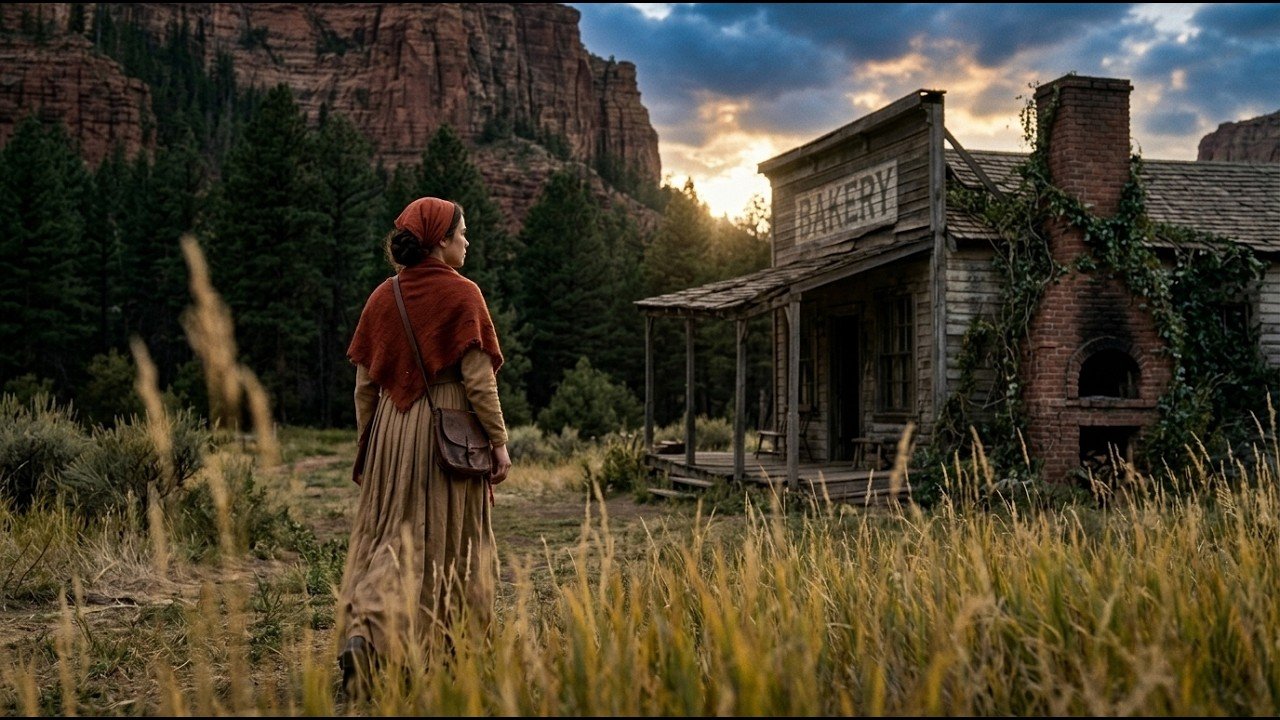
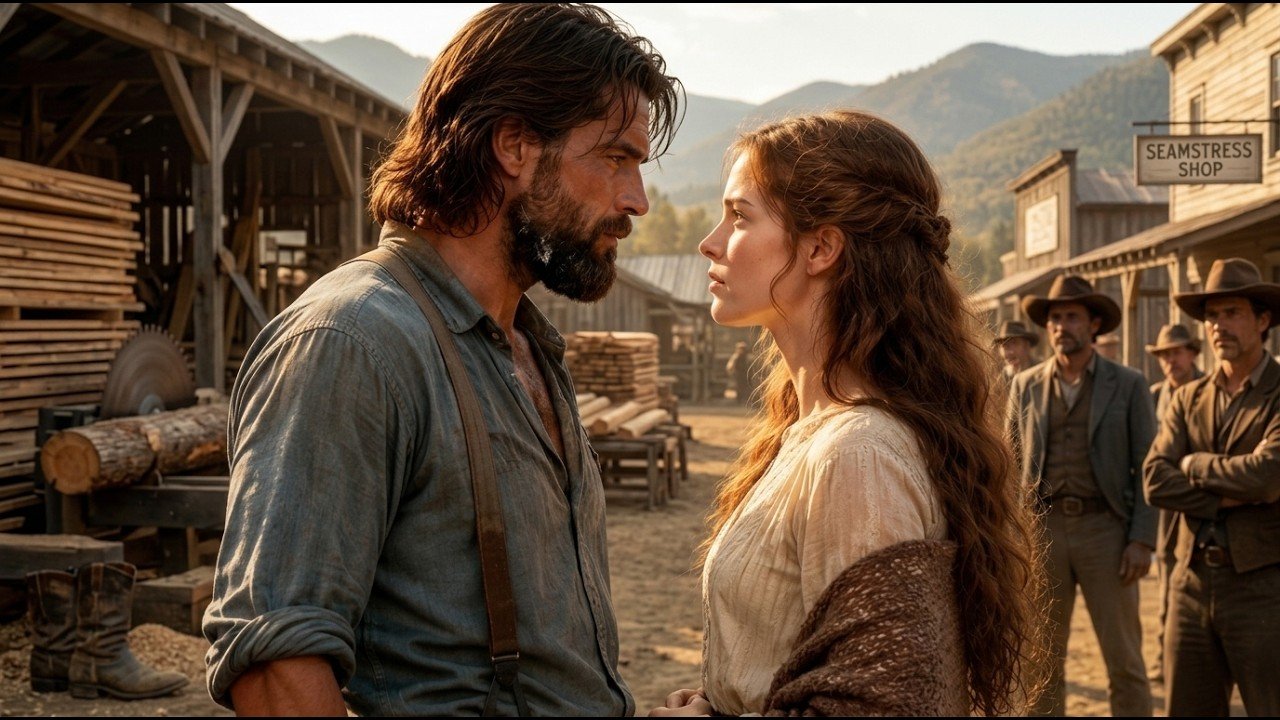
He Pushed Her Toward a Younger Cowboy—But She Whispered, “I Only Want You”

He watched her smile at another man and felt nothing but relief. That was the lie Gideon Mercer told himself every single morning as he hammered leather in his shop, listening to Clara Winslow's laughter drift across the dusty street like smoke from a bakery that always smelled of cinnamon and everything he'd never let himself have. For 2 years, he kept his distance, kept his hands busy, kept his mouth shut, and the moment she finally told him she wanted him, he handed her away to someone else. This is the story of the most stubborn kind of fool. The one who destroys his own happiness with both hands, convinced he's doing it out of love. If this story speaks to you, hit that like button. Drop a comment with the city you're watching from. I want to see how far this story travels. Now, settle in. This one's going to take a while. The sign above the shop door read, "Merc Sadlery and leather goods." And the letters were beginning to fade. Gideon had repainted that sign three times in 14 years. He kept meaning to do it again. He kept not doing it. That was the thing about Gideon Mercer. He took care of everything that mattered to other people. His own affairs had a way of sliding to the bottom of the list where they gathered dust alongside the intentions he never got around to completing. It was a Tuesday morning in late October when the story that had been quietly assembling itself for 2 years finally lurched into motion. Though Gideon wouldn't recognize it as a story until much later. Stories in his experience were things that happened to other people. People with cleaner histories and better faces and two legs that worked the way God designed them to. He was at his workbench at 6, already into his second cup of coffee, already elbow deep in a set of custom bridles he owed a rancher named Holt by Friday. The light coming through the window was the weak apologetic kind that October morning specialized in. Pale gold, thin as paper, barely committing to being light at all. Ash Hollow was just beginning to wake up across the street. Old Pete Gity was sweeping his barberh shop steps with the grim efficiency of a man who had performed the same ritual for 40 years and had long since stopped expecting anything interesting to come of it. The Deloqua brothers were loading their wagon outside the feed store, arguing about something with the half-hearted energy of siblings, whose disagreements had been so thoroughly rehearsed that neither side required the other to actually be paying attention. Mrs. Callaway was walking her arthritic old hound along the boardwalk, letting him stop every few feet to investigate whatever mysteries the previous night had deposited there. Ash Hollow, Nevada Territory, 1883. Population 400 and some change depending on who you counted and what day of the week it was. Not small enough to be forgotten and not large enough to matter to anyone who hadn't been born there or buried someone they loved there. The kind of town that didn't appear on maps that were trying to impress anybody. Gideon had been here for 14 years. He'd arrived at 32 with a busted leg that had healed badly, a skill set that translated cleanly to saddle work, and a determination so deep it had calcified into something that looked from the outside almost exactly like contentment. He was not content. He had simply stopped expecting to be. He was punching holes in a leather strap when the bell above Clara Winslow's bakery door rang across the street and she stepped out onto the boardwalk to hang her open sign on the hook beside the door. Gideon didn't look up. He was very good at not looking up. Clara Winslow was 33 years old, medium height, with the kind of face that didn't stop you in your tracks, so much as make you want to stay in whatever room she was standing in. Her hair was a deep warm brown that she kept pinned up during working hours, and there was always, always a trace of flowers somewhere on her that she hadn't noticed yet. That morning, it was her left cheek, a white smudge that caught the light when she turned her head. She was carrying a small crate of something, day old rolls probably, because it was Tuesday, and she always took day old rolls to the widow Hennessy on Tuesdays. She did it quietly, the way she did most things, without making an announcement about it or expecting anyone to notice. Gideon had noticed. He'd been noticing for 2 years, which was the source of a considerable portion of his current difficulties. Morning, Gideon. He looked up. He always looked up when she called his name. He'd accepted that as one of his limitations. Morning, Clara? His voice came out even, which he was grateful for. Rolls for Margaret. She shifted the crate to her hip and squinted at him across the street with that look she had, half amused, half something more careful. She's been having a hard week, knees giving her trouble. A pause. You could come with me sometime, she asks about you. Margaret Hennessy asks about everyone. It's her primary occupation. Clara laughed. It was an honest laugh, the kind that didn't negotiate with dignity. She just laughed when something struck her as funny, full, and genuine, and over quickly, and then she was back to whatever she'd been doing. Fair point, but she specifically asked if you'd fixed the loose board on her porch yet. I'll get to it. You've been saying that for 3 weeks. I've been busy. She looked at the bridal work spread across his bench, then back at him, and something in her expression softened slightly. "Not pity exactly, something more complicated than pity." "I know you have," she said quietly, and then she stepped off the boardwalk and headed down the street toward Margaret Hennessy's house, and Gideon watched her go for exactly 3 seconds before forcing his eyes back to the leather in his hands. That was the shape of it. That was how it had been for 2 years. Gideon had not always been a careful man. There had been a time a long time ago in a different town when he was younger and stupider and had not yet learned the particular lessons that life apparently felt he needed when he had been the kind of man who reached for things, who wanted things openly without apology. Her name had been Alice. He did not think about Alice much anymore. He thought about her in the way you think about a scar, not with active attention, but with a background awareness that never entirely went away. Alice had been 24 and beautiful in a way that had made 26-year-old Gideon feel like he'd been handed something by mistake. Like the clerk at the general store had given him the wrong package, and he was just waiting for someone to come back and correct the error. He'd loved her with the entire unguarded, slightly terrifying love of a young man who has never been properly hurt before. The accident had happened 8 months into their courtship. A horse spooked by a rattlesnake. A fall that had shattered his right leg in three places and left it, despite the doctor's best efforts, permanently shortened and unreliable. He walked with a limp that was most pronounced when he was tired, which these days was most of the time. He'd spent 6 weeks bedridden. Alice had visited every day for the first 3 weeks. Then Robert Callahan had arrived in town, tall, whole limbmed, employed in a bank, in possession of a future that looked like something from a catalog, and the visits had tapered off. Gideon had understood. He'd told himself he understood. He'd even, in his more generous moments, meant it. What he'd carried forward from that experience quietly and without examining it too carefully, was a certainty. He was the kind of man a woman chose when she couldn't do better. He was the bench on the porch, useful and solid and absolutely not what anyone dreamed of when they dreamed of love. That certainty had served him well for 20 years. It had kept expectations manageable. It had kept the ache at a tolerable level. It had not apparently prepared him for Clara Winslow. Clara had come to Ash Hollow 18 months before their morning routine began. Arriving on the stage from Reno with two trunks, a locked box that she carried herself and never explained, and the kind of composed expression you wear when you have recently survived something and are not ready to talk about it. Her husband, James Winslow, had died 8 months earlier. Gideon learned this in pieces, the way you learn most things in a small town. A sentence here, a hint there, the particular silences that people left around certain subjects. James Winslow had been, from everything Gideon gathered, a man who was magnificent at beginnings. He'd swept Clara off her feet at 22 with the sort of courtship that people talked about for years. Grand gestures, beautiful words, a wedding that the whole county attended. He'd had plans. He'd always had plans. A hotel in San Francisco, a cattle operation in Montana, a shipping concern that would have made them wealthy enough to retire at 40. None of the plans had come to anything. What James had left behind when his heart gave out at 38 was a considerable collection of unpaid debts, a wife who had quietly kept the household running on almost nothing for the last 3 years of their marriage, and a deeply practical understanding of the difference between what a man said and what a man did. Clara had used the last of her savings to buy the vacant bakery space on Main Street, and she'd been open for business within three weeks of arriving. Gideon had watched her carry flower sacks that first morning, struggling with the weight, and had crossed the street to help without thinking much about it. "I've got it," she'd said immediately. "I know you do," he'd said. "I'm just here." She'd looked at him for a moment, assessing, wary, the expression of a woman who had learned to be careful about men who showed up offering things. And then she'd handed him the flower sack. "Other two are in the wagon." That had been the beginning. It was the kind of friendship that built itself in the margins, in the 5 minutes before her morning rush, when he'd lean against the doorframe of his shop and she'd call something across the street. In the brief exchanges on the boardwalk, in the way she started leaving a coffee on his workbench window ledge. On morning, she noticed he'd run out, which happened more often than he'd like to admit. He helped her without making it a performance. When the oven ran badly, he didn't claim to know how to fix it. He found the man who did and arranged for him to come. When the delivery boy she'd hired turned out to be unreliable, Gideon mentioned it to Mrs. Gity, whose nephew was looking for work and who turned out to be the most punctual 16-year-old in the territory. When the window latch broke in November and the cold was getting in, he replaced it while she was at the market. And when she came back and asked who'd done it, he said he'd noticed it was loose and it seemed like a simple fix. He did not say, "I spent 45 minutes on that latch because I couldn't stand the thought of you being cold." He did not say a lot of things. What Clara said to him, to the women who bought her bread, to the regulars who stood at her counter and talked while she worked, was that Gideon Mercer was the finest man in Ash Hollow. She said it casually the way you state facts. Gideon fixed Mrs. Hennessy's porch last weekend. Have Have you seen it? Solid as a rock. I don't know what I'd have done without Gideon when the stove was backing up smoke. Old Pete Gity, who was approximately 110 years old and had earned the right to say whatever he wanted, told Gideon directly, "That woman is in love with you. She's grateful." Gideon said, "There's a difference." "There certainly is." Pete said. One of them I'm looking at right now, and it ain't gratitude. You're going to stick to cutting hair, Pete. I'm going to mind my own business, Pete agreed. Right after I tell you you're a fool, Gideon had gone back across the street and punched leather until his hands hurt. The conversation that changed everything happened on a Thursday in November, 2 weeks after the exchange with Pete. Clara came by the shop just after she'd closed up for the afternoon. She didn't usually come to him. She tended to let things happen naturally at their own pace without forcing moments. The fact that she'd come on purpose was something he registered without quite knowing what to do with. She was still wearing her work apron, which told him she'd come straight from the bakery without stopping to change, which told him she'd been thinking about this long enough that she'd decided not to wait. Can I talk to you a minute? Of course. He set down the all he'd been working with and turned on his stool to face her properly. His shop was cramped and smelled of leather and oil and the particular dusty warmth of a wood stove doing its job. He'd never thought about how it might look to someone else. He thought about it now briefly and then told himself to stop. Clara sat down on the three-legged stool he kept near the window for customers, and she folded her hands in her lap, and she looked at him with the direct patient expression she used when she decided to say something true and was going to say it, whether it was comfortable or not. I need you to understand something, she said. All right. I've been trying to figure out how to say this for about 3 months. A pause. I'm not naturally good at just saying things. I think you know that. You seem to be managing. The corner of her mouth lifted. Barely. She took a breath. I care about you, Gideon. He was very still. Not as a neighbor, she said. Not as a friend, though you are one. I care about you in the way that she stopped, started again. In the way that I think about you when something good happens and want to tell you about it. In the way that I think about you when something goes wrong and wish you were there. In the way that she looked down at her hands briefly. I haven't felt this way about anyone since before James. Maybe not even then. I'm not sure James and I were ever. She stopped again. That's not the point. Gideon said nothing. His throat had closed. "The point is," Clare said, looking back up at him, "that I'm not confused about this. I'm not grieving and reaching for something to hold on to. I'm not lonely and settling for what's available. I've been careful. I've taken my time, and I know what I feel." The silence in the shop was absolute. Outside, the street was doing its usual late afternoon things. A wagon going past, voices from the direction of the saloon, the distant sound of somebody's dog. Clara, Gideon said, and his voice came out wrong. Too careful, too controlled. The voice of a man managing something rather than responding to it. You deserve don't, she said. Someone who doesn't walk with a limp at the end of every long day. Someone who can give you, Gideon, stop the kind of future you should have had. Someone younger than 46. Stop telling me what I deserve, Clara said. And there was a sharpness in her voice now. Not anger exactly, but the edge that comes from feeling unheard. I've had people telling me what I deserve my whole life. My mother, James, everyone in the county who had an opinion about who I should be and what I should want. She stood up from the stool. I came here to tell you how I feel because I decided it was better to know than to wonder. I didn't come here to be told I'm wrong about my own heart. I'm not saying you're wrong, he said. I'm saying you're saying I don't know my own mind. I'm saying I'm not what you you're not what I think you are. Her voice was measured, but her eyes were doing something that made his chest hurt. Because I've been watching you for 2 years, Gideon Mercer. I have watched you fix things and carry things and show up and pay for things quietly and never once ask for any credit or any thanks. I've watched you be kind to people who couldn't do anything for you in return. I know exactly who you are. A pause. The question is whether you're too scared to let anyone love you for it. That landed somewhere he hadn't armored properly. He looked at her. Really looked at her, which he tried not to do too often because it made everything harder. And he felt two things simultaneously. The overwhelming terrifying pull of what she was offering and the cold, reliable certainty that had kept him safe for 20 years. The certainty won. It almost always did. There's a man, Gideon said, Lucas Barrett. He's coming to Ash Hollow next month. William Tate over at the assay office mentioned him. He's a banker from Carson City looking to open a branch here. Young, successful, no baggage. He paused. He'd be good for you. Clara stared at him. Clara, you're not serious. He's exactly the kind of you're telling me, she said slowly, to go court a man you haven't met who doesn't exist to me yet because you've decided he'd be better for me than you. She shook her head. The expression on her face was not angry. It was something worse. Sad. Genuinely, quietly sad. "You know what the most frustrating thing about you is?" He waited. "You do anything for anyone in this town," she said. "Anything, except let someone do something for you." She picked up her apron hem, smoothed it flat, and moved toward the door. "I'm going to go home and not say anything I'll regret. But I want you to know she stopped at the door without turning around. I'm not going to wait indefinitely, Gideon. I'm not built for that. The bell above his shop door had never sounded quieter. Lucas Barrett arrived in Ash Hollow on a cold Monday in December, driving a well-maintained buggy with matching bays, wearing a coat that had been made by someone who knew what they were doing, and carrying the easy confidence of a man who had grown up being told he was impressive, and had found little evidence to contradict this. He was 36. He had a strong jaw and a full head of dark hair and the kind of forthright handshake that men's magazines at the time would have described as commanding. He laughed easily and spoke well and had within 48 hours introduced himself to every person of consequence in Ash Hollow in a way that felt entirely natural and not at all calculated, which was itself a considerable skill. Gideon disliked him immediately, which he recognized as both unfair and irrelevant, and which he kept entirely to himself. Lucas set up his banking operation in the vacant space next to the assay office and was open for business within 2 weeks. He was good at his work from what Gideon could observe, organized, efficient, quick to understand the particular financial concerns of a frontier community. He wasn't a fraud. He wasn't a villain. Gideon had hoped at some level that Lucas Barrett would turn out to be obviously wrong in some way that would make everything easier. He was not obviously wrong. He was in fact apparently genuinely interested in Clara Winslow, which Gideon discovered when he came into the bakery on a Wednesday morning and found Lucas at the counter, leaning on it with the relaxed posture of a man who had nowhere more important to be, telling Clara about a restaurant in Carson City, where they apparently baked bread in a French style she'd probably appreciate. Clara was listening with polite attention. She glanced at Gideon when he came in a quick careful look and then back at Lucas. "Morning," Gideon said to both of them and moved to the far end of the counter to wait for his coffee. "Gideon Mercer," Lucas said, turning with an open smile. "Just the man I wanted to see. Heard from three different people this morning that you're the one to talk to if you need anything actually done in this town." Those people were being generous, Gideon said. Three separate sources, Lucas said. I tend to believe it when it's three. You're a saddler. Leather work mostly. Some woodwork. I may need some custom work done for the office. Mind if I come by? Anytime, Gideon said, and meant it and hated that he meant it and decided to stop examining his own reactions and just drink his coffee. Clara handed him his cup with a look that said, approximately, I see what you're doing. I'm not impressed by it." And then she went back to the oven and Lucas said something that made her laugh. A small laugh. Polite, not the real one. And Gideon drank his coffee and left without finishing it. The following weeks proceeded in a pattern that from the outside probably looked like progress. Lucas came to the bakery most mornings. He sent flowers twice, actual roses, imported at what must have been considerable expense. He invited Clara to dinner at the hotel dining room, which was the closest thing Ash Hollow had to a formal restaurant, and Clara accepted because Clara was not the kind of woman to reject experiences out of hand simply because they were being offered by the wrong person. She told Gideon about the dinner the next morning briefly without looking at him while she said it. And he asked before he could stop himself. He's pleasant, she said. He He talks well. Does he? Eloquent even. She was wiping down the counter. Reminds me a bit of James, actually. Gideon caught something in her voice. A flatness just barely perceptible. The vocal equivalent of a closed door. Clara, he's very charming, she said and smiled at him, and the smile was fine and correct and utterly impenetrable. You were right about him. He had not been right about anything. He felt it in his back teeth. He started doing what he always did when things became complicated in ways he couldn't fix. He worked. He finished Holtz bridles and took on a new saddle commission and repaired three wagon harnesses for the Delic brothers and built a new set of shelves for the Merkantile. He replaced the broken step outside the barber shop that Pete had been complaining about. He quietly, without mentioning it to Clara, built a solid wood bench, and installed it outside her bakery front, bolted into the boardwalk, brought enough to hold three people comfortably, because he'd noticed that elderly customers sometimes had to stand while they waited for their order, and that bothered him. He did this on a Sunday morning before she arrived to open, and when she came by and saw it, she stood in front of it for a long moment without saying anything. It was needed, Gideon said from across the street, not looking up from the morning's first task. She looked at him across the dusty, empty street for a moment. Something moved across her face that he couldn't identify. "It's beautiful work," she said quietly. "It's just a bench." "It's not just a bench. He went inside. She went inside." The bench sat on the boardwalk outside her door, solid and unambiguous, and said everything he refused to say out loud. The nights were the hardeSt. During the day, there was always something to do, something to focus on, some practical problem that demanded his hands and his attention, and left insufficient room for the other thing. But the evenings were long and ash hollow in December, and Gideon's shop was warm and quiet, and there was only so much leather he could work by lantern light before the eye strain got to him. He thought about Alice less than he used to. That surprised him, actually. He'd expected that whatever was happening with Clara would reactivate those memories, rub them raw again. Instead, he found himself thinking with more clarity than he was comfortable with about the architecture of the choice he'd made. He told himself it was sacrifice, the giving up of what he wanted because it was better for Clara. Noble, even the kind of thing a good man did. Pete Gity had used a different word. The problem with Pete's word was that it required Gideon to consider the alternative. That Clara meant what she said. That she'd watched him for 2 years and arrived at her conclusion through the same careful, unhurried process she applied to everything else. That she was in fact a grown woman of 33 who had already been wrong about a man once, and was perhaps more rather than less qualified to evaluate the difference between genuine worth and surface charm. He sat with that thought long enough to feel it, which was probably a mistake. He thought about Lucas Barrett at the hotel dining room, saying smooth and gracious things across a table with a white cloth on it, and Clara across from him with her hair down and that careful smile, the polite one, not the real one. And it occurred to him that he was perhaps not doing Clara any particular favors by pointing her toward a man whose primary currency was language, given what he knew about her history with men whose primary currency was language. He went to bed at 9:00 and stared at the ceiling until 11:00. And that was the night he started to be afraid that he'd gotten everything wrong. H not that he changed course. That was the thing about Gideon Mercer. He could be wrong about something and know he was wrong about it and still proceed as though he was right because changing course required a kind of vulnerability he hadn't successfully practiced in 20 years. He started helping Lucas. He did it quietly, the way he did everything. And he told himself it was because he wanted what was best for Clara. And that was partially true. But there was something else underneath it. A self-punishment that dressed itself up as generosity. A way of hurting himself that he'd gotten so good at it no longer felt like what it was. Lucas needed someone to recommend him to the ranching community. Gideon mentioned his name to Hol and two other men he respected, men whose opinions carried weight. Lucas asked Gideon casually what kind of gift a woman like Clara might appreciate. He'd said he had no experience with practical women, only with women who wanted expensive things. Gideon, standing in his own shop with a cold feeling spreading through his chest, told Lucas that Clara had mentioned once that her mother used to grow lavender and that she missed the smell of it, and that there was a general store in Bridgeport that stocked lavender sachets from somewhere back eaSt. Lucas sent to Bridgeport. The sachets arrived the following week. Clara had held one to her face and closed her eyes, and Gideon had happened to be walking past the bakery window when it happened, and he had kept walking without breaking stride, and he had gone back to his shop and sat at his workbench for 20 minutes without picking up a single tool. "You absolute idiot," he said out loud to nobody. The stove popped and settled. The leather on his bench waited. It was old Pete who finally said it plaineSt. The old man came into Gideon's shop on a Friday afternoon in January, ostensibly to ask about the strap on his razor case, which needed replacing. He sat on the customer's stool while Gideon worked on it and said nothing for about 10 minutes, which was unusual for Pete, who treated silence as something to be fixed. "You know what I watch from my shop door?" Pete said eventually. "Not particularly interested in knowing," Gideon said. "I'll tell you anyway. I watch you every morning. I watch you not look at Clara Winslow's door, which takes considerable effort, and which you put into it every single day, same as a man carrying a load uphill. He picked up a leather offcut from the bench and turned it over in his hands. And I watched that banker fellow walk in there with his flowers and his fine coat, and I watched Clara smile. That smile. She smiles at customers. Pete, not the one she gives you. Pete, set the leather down. She gives you a different smile. I'm 90% sure she doesn't know she does it. Gideon said nothing. I've been cutting hair in this town for 40 years, Pete said. I've seen every manner of human stupidity that it's possible to witness from a barberh shop window, but you might be. He tilted his head, genuinely considering you might be in the top three. That razor strap's done. Gideon handed it across. Pete took it, stood up slowly, the way old men did, taking inventory of each joint. She ever find out you told Barrett about the lavender, it's going to go hard for you. Gideon looked at him sharply. Son, this is a town of 400 people. Pete tucked the razor case under his arm. Bridgeport order gets mentioned at the general store. General Store tells the merkantile. I hear everything that comes through the merkantile. He moved toward the door. You armed that man with the thing she loves most about her mother. You sent him in there with her heart and called it doing her a favor. He left. The bell above the door made it sound. Gideon sat at the bench for a long time after that and did not pick up any tools. Oh. The evening in late January that made everything worse or maybe better depending on how you track these things started with a dinner that Clara apparently attended at the hotel dining room for the second time. Gideon didn't know about it beforehand. He found out the way. He found out most things he hadn't been told. He was walking past the hotel after delivering a saddle to the stable next door. And through the warm-lit window, he saw Clara and Lucas at a corner table. And he saw Lucas reach across and cover Clara's hand with his. And he saw Clara look down at their hands. She didn't pull away, but she didn't turn her hand over to hold his back either. Gideon walked home. He sat in his shop in the dark for a while, didn't light the lamp, just sat and had an honest conversation with himself, which was a thing he tried to avoid because he was not good at lying to himself in complete silence. She's going to marry him, some part of him said. "And you built this. You carried the lumber for it yourself. You told him about the lavender. You put his hands flat on the workbench. The leather was cold under his palMs. She told you. She came to your shop and told you exactly what she felt, which is a thing that cost her something. And you handed her a name, a stranger's name. You handed her away like she was a problem you were solving. He pressed his palms harder against the bench. The grain of the wood had imperfections he could feel through his skin. She's not settled. She's not making do. She looked at everything you are and she chose it. And you told her she was wrong. Something shifted that night. You couldn't have said exactly what it was. Not resolve, not yet. More like a crack in the wall of the certainty he'd been living behind for 20 years. A cold draft coming through from the other side. He didn't do anything about it. He went to bed. He got up the next morning. He made coffee and opened his shop and started working on a harness that needed both buckles replaced. And Clara hung her open sign across the street. And he watched her for 3 seconds and then looked down at the leather. But the crack was there now. And the thing about cracks is that they have their own schedule. February came in cold and stayed that way. The nights dropping to temperatures that made the wood of every building in Ash Hollow contract and grown in the dark like something in pain. Gideon's bad leg achd in a way he'd learned to live with, but never exactly gotten used to. A deep, reliable ache that lived in the bone and got worse when the cold settled in. He never mentioned it. There was no point in mentioning it. It wasn't going to change. Clara noticed though. She noticed the way she noticed most things quietly without making a production of it. He came in for his morning coffee on a particularly bad day and she had something new sitting next to his cup on the counter. A small ceramic container. What's this? He asked. Arnica Salv Martha Keller's recipe. She was already at the oven. Back to him. She uses it for her husband's shoulder. He says it helps with deep aches. He looked at the container. My leg's fine. I know. She didn't turn around. Just take it. He took it. He used it that evening and the next morning, and it helped, which he didn't report to her, and she didn't ask. That was 2 weeks before the storm. That was the last ordinary thing, more or less, before everything changed. The weather had been doing something wrong all week. Not wrong in any particular way that could be pointed to specifically, just the atmospheric equivalent of a bad feeling. The sky had a yellowish tint at dusk that the old-timers in Ash Hollow associated with weather coming, and the wind had been unsettled, shifting direction three times in a single afternoon, never quite committing to anything. Old Max Southerntherland, who'd been ranching in the valley for 30 years and claimed to read weather the way most men read newspapers, had told anyone who'd listened that there was something building in the mountains, and it was going to come down hard. Most people had listened with the polite skepticism you extend to very old men with strong opinions. Gideon, who'd spent enough time in mountain country to have some respect for unsettled skies, had quietly put an extra cord of wood against the side of his shop, checked the fastenings on his shutters, and made sure his tools were organized in case anything needed emergency attention. He hadn't thought to check Clara's roof. He would think about that later, about the specific finite thing he'd failed to do, and it would bother him in the way that only the preventable things bother you. The storm hit Ash Hollow at 11:00 on a Thursday night in late February, and it hit with the particular fury of weather that has been gathering patients for several days and has finally run out of it. Gideon woke to the sound of it, not the wind itself, which had been building for an hour, but the specific high straining sound of something structural under stress. He lay in the dark for 2 seconds, identifying what he was hearing, and then he was out of bed. He was pulling on his boots when he heard from somewhere across the street the crack of something giving way us. He didn't stop to think about it. That was the truest thing about Gideon Mercer and maybe the thing that nobody saw clearly, including himself, until that night. He didn't calculate. He didn't weigh options. When something was wrong and something needed doing, his body was already moving before his mind caught up. He grabbed his coat, his tools, the tarp he kept folded near the door for weather emergencies. He was across the street in 45 seconds in the rain that had arrived with the front edge of the storm, and the sound was coming from Clara's bakery, and the sound was bad. The rear section of her roof, older than the front section, built with cheaper materials by whoever had originally constructed the building, had partially given way. A beam had cracked under the load of ice and wind, and two sections of roofing had separated, leaving a gap through which the rain was now pouring directly into what Gideon knew was Clara's storage area, where she kept flour and sugar and the preserved goods she used through the winter. Clara was already there. Of course, she was. She was standing in the storage area in a coat thrown over her night gown, trying to drag a heavy barrel of flour away from the water, her face white and focused. She looked up when he came in. Gideon, get the flower covered. He was already moving past her toward the back, assessing the ceiling. Anything you can throw over it, aprons, anything. I'm going up. You can't go on that roof. It's I know. He was already outside again, pulling the ladder from against the back wall where he'd helped her store it after a job last spring. His bad leg complaining bitterly about the wet cold and being ignored. Cover the goods. Keep the lantern where I can see it from above. Gideon, her voice had something in it he didn't have time to parse. Be careful always, he said, which was not entirely true, and started up the ladder. The roof was slick with ice and rain and everything that could go wrong with the damaged roof in a mountain storm. The wind up there was a different creature than it was at street level. It had teeth and it had opinions, and it wanted him off the roof badly enough to make a genuine effort. He worked with the economy of motion that 20 years of physical work had built into him. No wasted movement, no drama, just the sequence of what had to happen and then doing it. He braced the cracked beam with the spare lumber he'd hauled up. He stretched the tarp over the gap and secured it with the fasteners he carried, hammering in the anchors by feel and lantern light in the wind. His leg gave out once, just once for about 3 seconds, on a particularly slippery section near the damaged edge. He went down on one knee hard, felt the cold through his pants immediately found his balance, kept going. He did not fall. He was on the roof for 40 minutes. When he came down the ladder, his hands were shaking from the cold, and his leg was sending signals he chose not to decode, and Clara was standing at the bottom of the ladder with a lantern and an expression he had never seen on her face before. Not gratitude, not relief. Something older and quieter than either of those things. Storage is covered, she said. The flowers probably saved most of it. A pause. How's your leg? Fine, Gideon. It's fine, Clara. He was wrapping his hands, which had taken some damage from the rough lumber in the cold. I'll come back in the daylight and do the repair properly. Tarpel hold till morning. She was quiet for a moment. The storm was still going, but the worst of it had moved east, and the rain had settled into the steady, purposeful kind that didn't care about drama. "Lucas lives two blocks from here," she said. He looked at her. I know because he told me very specifically when he was walking me home two weeks ago. She looked up at the tarp, then back at him. He never came tonight. Gideon said nothing. Maybe he didn't wake up, she said. Maybe he slept through it. That's possible. People sleep through things. She met his eyes, and there was something direct and final in her look. The expression of a person who has made a decision and is done carrying it around as a question. But I know who was here. The rain came down. The lantern threw its unsteady light. Gideon looked at Clara Winslow standing in the back alley of her damaged bakery in the middle of a winter storm with flower on her coat and wet hair and an expression on her face like someone who has stopped arguing with themselves and felt the crack in the wall of his certainty go from a hairline fracture to something he could put his hand through. He didn't say anything. Not yet. But for the first time in a long time, he didn't look away. The tarp held through the night. Gideon knew because he didn't sleep. He lay in his bed, listening to the storm work its way east, cataloging the sounds the way a man does when he has a reason to listen. The shift from hard rain to steady rain to the particular quiet that follows weather when it's finally spent itself. Around 4 in the morning, the wind dropped off almost entirely, and the silence that replaced it felt enormous. He was back at Clara's bakery at first light with lumber and proper roofing materials he'd pulled from the back of his storage. His leg was stiff from the cold and the previous night's work. The kind of stiff that required 10 minutes of movement before it started cooperating. He didn't give it 10 minutes. He started up the ladder at 6:15 and by 8 he had the damaged section properly repaired. Not perfect. The original beam would need full replacement come spring, but solid enough to hold through the rest of winter without argument. Clara brought him coffee at 7:30 without being asked, standing at the base of the ladder and holding it up until he climbed down far enough to take it. She didn't say much. Neither did he. The morning was cold and clear the way mornings are after storms, like the sky had been scrubbed clean and was showing off about it, and steam rose from the wet street below, and the coffee was good, and that was enough. He finished the repair. He climbed down. He gathered his tools and started loading them into the carry bag he'd brought. Moving with the efficient, slightly automatic quality of a man who has done physical work long enough that cleanup happens without much conscious direction. What do I owe you? Clara asked. Nothing. Gideon, it's a repair, Clara. Forget it. Get. She was quiet for a moment. He could feel her looking at him the way he could always feel her looking at him, which was a problem he'd never found a solution to. I want to pay you for the materials at leaSt. We'll settle it later. He buckled the bag. Have someone look at that original beam before spring. I can do it or you can hire apprentice. He does good work. I'll have you do it. He looked up at that briefly, and she met his look with the steady open expression she'd had last night in the alley. The one that said she'd stopped pretending. He looked back down at the bag. I'll be around, he said, and picked up the bag and walked back across the street. He was aware, with the particular precision of a man paying more attention than he should, that she watched him all the way to his door. The crack in the wall was still there. He'd spent the night hoping the cold would seal it back up, and it hadn't, and now he was walking around with it, and not entirely sure what to do. He went inside and started his day. Lucas Barrett came by the bakery at 10 that morning. Gideon heard him, heard the voice, not the words, through the wall of his shop, and did not look up from the harness buckle he was replacing. He heard Clara's voice in response, shorter than usual. He heard the exchange go on for about 5 minutes and then heard the bakery door close. At 10:30, Clara appeared in his shop doorway. "He brought flowers," she said. Gideon sat down the buckle. "Good carnations." A pause from Hetty Marsha's greenhouse. She overcharges by about 40%. She came inside without being invited, which she'd stopped doing about 8 months ago, stopped waiting for permission, and just walked in, the way people do when they've decided a space is partly theirs. She sat on the three-legged stool. He apologized for not coming last night. He said he didn't hear the storm. It was loud. It was extremely loud. She was looking at her hands, which were folded in her lap. He said he feels terrible about it. I'm sure he does. Something in Gideon's voice must have had an edge he hadn't intended because she looked up at him sharply. You're being careful, she said. I'm being honeSt. Same thing with you. He picked up the buckle again because he needed something to do with his hands. What do you want me to say, Clara? That I don't think he should feel terrible. He's a decent man. He probably does feel terrible. That doesn't change what happened. No, she said quietly. It doesn't. She was quiet for a moment. Outside the street had come back to its regular rhythm. Wagon wheels, voices, the particular shuffle of a town resuming its business after a disruption. He asked me to dinner again Saturday. Gideon kept his eyes on the buckle. You should go. The silence that followed had a texture to it. You should absolutely go, he said more evenly. He's If you say he's good for me, Clare said, I'm going to throw something. I wasn't going to say that. What were you going to say? He didn't answer because he didn't know which was the truest answer and also the one he was least willing to give. Clara stood up from the stool. She didn't leave, though. She walked the two steps to his workbench and stood beside it, looking at the tools laid out there. The organized row of alls and needles and edge tools that he kept in order because disorder costs time and time cost money and also because he couldn't think clearly when things were scattered. You know what I keep thinking about? She said what James used to bring me flowers every time he'd done something wrong. She said it flatly, not with grief or anger, just as fact. Not every time, just enough that I started to notice the pattern. Big bunch of something expensive and a story about why the thing that had happened wasn't quite what it looked like. Beautiful flowers. She picked up an edge tool and turned it over, examining it without any particular purpose. I got so I hated flowers, she set it back down. I don't hate carnation specifically, but Gideon said nothing. But, she said again and left it there. She left the shop about 3 minutes later without the conversation having resolved into anything clean. That was the thing about talking to Clara. She didn't manufacture conclusions. She just said what was true and let it sit. And if you weren't comfortable with something sitting unfinished, that was your problem to manage. He managed it badly for the rest of the afternoon. The town, meanwhile, had developed opinions. This was not surprising. Ash Hollow had the social ecology of any small community. Everyone's business being in practical terms everyone's business, but it had a particular investment in the Claragidian situation that went beyond ordinary nosiness. People liked them both. People could see with the clarity available only to observers who are not emotionally implicated exactly what was happening. And people had the maddening tendency of the comfortable to offer their observations to those who had not asked for them. Ruth Callaway, who ran the Merkantile with her husband and had therefore a front row seat to most of Ash Hollow's daily movement, pulled Gideon aside on a Wednesday while he was picking up lamp oil. She was a direct woman in her late 50s who had outlived two hard winters, one difficult husband, and any remaining patience for circumlocution. "You're going to let that banker take her," she said without preamble. "Good morning, Ruth. It's afternoon, and I'm serious." She was stacking bolts of fabric with the brisk efficiency of someone who intended to keep working while she talked. I've been watching this town for 30 years. I've watched people miss things, but this she shook her head. This is going to bother me when I'm old. You're already old, Gideon said mildly. Older then? Don't change the subject. He put his money on the counter for the lamp oil. Clara makes her own decisions, Ruth. She made one about 3 months ago, and you told her she was wrong. Ruth looked at him steadily. You know, she cried after she left your shop that day. Because Margaret Hennessy saw her walking home and she wasn't doing well. That landed in a place Gideon would have preferred it not land. "I didn't know that," he said. "I know you didn't," Ruth softened slightly. The edge coming off her voice, but not the intent. "You're not a cruel man, Gideon. You're just a scared one. And scared men don't usually know what they're losing until it's gone. She handed him the lamp oil. That's all I'm going to say. She said it and then said four more things, but they were all about the lamp oil and about the upcoming church social, and Gideon was only half listening because he was still on the part about Clara walking home. He fixed Margaret Hennessy's porch that weekend. He'd been putting it off in the vague, unexamined way that he sometimes put off things that reminded him of Clara, and he stopped doing that. He showed up on a Saturday morning with his tools and replaced two boards and reinforced the step and receated the railing post which had been working loose. Margaret sat in her chair by the window and watched him through the glass the whole time. And when he came inside for the coffee, she'd left for him on the porch. She said, "You're a good man." With the tone of someone issuing a correction. "I'm all right," he said. "You're a good man who's being stupid," she said, which is a waste. Margaret, I'm 90 years old. I say what I like. She wrapped her hands around her own cup. You know what I've learned in 90 years? The people who say they're sacrificing themselves are usually just afraid. Real sacrifice doesn't need an audience. Even an audience of one. He thought about that for a long time. Lucas Barrett, to his credit, was not doing anything wrong. That was the thing that made the situation genuinely uncomfortable. Gideon couldn't frame Lucas as an opponent without feeling the dishonesty of it. Lucas was courteous and diligent and brought Clara flowers and said things that were nice without being empty. He was building something in Ash Hollow genuinely with the focused energy of a man who' decided this was where he wanted to put down roots. The problem, the only problem really was that Lucas had beautiful words and excellent presentation and the kind of confident ease that came from never having had a reason to doubt his own value. He was in ways that mattered to someone who had been damaged by charm and promise. A man shaped from the same template as James Winslow, even if the specific contents were different. Clara knew this. Gideon knew she knew it. He suspected Lucas did not. What Gideon did not know, because he was very bad at reading himself with any accuracy, was that he had already passed some internal threshold. The moment in the alley, the rain, her face, and the lantern light, something had shifted that he hadn't successfully shifted back. He was still performing the same daily choreography of not looking, not wanting, not reaching. But the performance had developed a visible seam, and people who knew him well, which in Ash Hollow was more people than he'd have liked, were beginning to notice. Tom Holt noticed. Holt was a rancher, a man of few words and careful observation, and he'd been doing business with Gideon for 5 years. He came in for a saddle fitting in mid-March and watched Gideon work in silence for a while and then said, "You look like a man in the middle of making a mistake." Gideon said, "The fitting's fine." Didn't say anything about the fitting. A pause. What's it look like? Holt considered this with the deliberateness of a man who didn't waste words. Like the kind of mistake you make not by doing something wrong but by not doing something right. The kind that sits on you afterward. He shrugged. Just an observation. The Deloqua brothers were less subtle but equally consistent in their message. Though they delivered it mostly in the form of significant looks and elbowed each other when Gideon wasn't watching, which was not as discreet as they appeared to believe. Even young Dany, Clara's delivery boy, had apparently absorbed the situation through some teenage atmospheric osmosis because he told Gideon one morning with the oblivious directness of 16-year-olds, "Miss Clara smiles different when she's talking about you than when she's talking about Mr. Barrett." "Danny," Gideon said. "Yeah, go deliver your bread." "Yes, sir." A pause. "She does though." He went. Gideon stood in his doorway for a moment longer than necessary, looking at nothing in particular, and then went back inside. The days had a quality to them now that they hadn't had before, a loaded quality, like the air before weather, when everything is technically the same as it was an hour ago, but something fundamental has changed. March moved through Ash Hollow, and the snow started releasing its hold on the mountains above town, and the mud season arrived with its usual lack of apology, and Gideon worked and watched and did not move. He started noticing things he'd always technically seen, but hadn't let himself pay attention to. The way Clara moved through her shop, efficient, but never hurried, always with the sense that she had thought through what she was doing before she did it. The way she treated her customers, the same regardless of how much money they had, the same on a good morning as on a hard one. The way she sometimes stood in the door of her bakery in the late afternoon when business slowed, looking up the street at the mountains, just looking with an expression that was private and unperformed. He had been watching her for 2 years. He knew that. But there was a difference between the watching he'd done before, careful, controlled, the watching of a man keeping himself at a safe distance, and what he was doing now. Now it felt like something else, something that had gotten out past the careful management. On a Thursday evening in mid-March, he did something he hadn't done since moving to Ash Hollow. He went to Pete Gity's barber shop, not for a haircut. He just had one, but simply because Pete was there, and Pete was old, and Pete had been watching human beings navigate their own worst impulses for longer than moSt. Pete looked up when he came in, looked at Gideon's face, closed the book he'd been reading. "Sit down." Gideon sat in the barber chair. It felt faintly ridiculous. He sat in it anyway. "Talk," Pete said. "I don't know how to do this." "Do what?" "Any of it." A pause. Let someone I don't know how to let someone. He stopped. Try it again. Every time I get close to it, I hear Alice. I hear the way she stopped coming. And I know it's not the same situation. I know Clara is not Alice, but the knowing doesn't it doesn't fix anything. It's still there. Pete was quiet for a moment. How long ago was Alice? 20 years. 20 years, Pete repeated without judgment. And you've been carrying that around every day since. Yes, that's heavy. Yes. Pete leaned back against the counter. The shop was warm and smelled of bay rum and the particular combination of soap and old wood that Gideon associated with this room. You know what the difference is? Pete said between Alice and Clara. Gideon waited. Alice left when things got hard, Pete said. Clara, that woman has seen your limp every day for 2 years. She's seen you on the bad days. She saw you on that roof in a storm in February. He paused. She knows what she's looking at. She's not confused about it. She's not working with incomplete information. He tilted his head. Alice left because she was presented with a version of you that was harder than the one she'd signed up for. Clara is trying to sign up for the hard version specifically. Those aren't the same story. The clock on the barber shop wall ticked. The street outside was quiet. What if I'm wrong? Gideon said. What if I let this happen and I'm wrong and then you're wrong, Pete said simply. People are wrong. Things go badly sometimes. You survive it same as you survived Alice, same as you survived whatever put that limp in your leg. He looked at Gideon with the patient exasperation of a man who has watched a different version of this conversation about 30 times in 40 years. But Gideon, you know what? You don't survive. Silence. The version where you never tried, Pete said. That one stays. I've seen it stay on men their whole lives. It's a different kind of weight than getting hurt. It's heavier. He picked his book back up. That's all I got. Don't need a haircut, do you? It wasn't a question. Gideon got out of the chair and put his hat back on. Pete, he said at the door. Yep. Thank you. Pete waved a hand without looking up from his book. Gideon went out into the March evening, and the air was cold and smelled like mud and pine from the mountains. And somewhere across the street, a light was burning in the back room of the bakery where Clara did her late prep for the next morning, the way she did every Thursday. And he stood on the boardwalk for a moment and looked at that light. He did not go across, not that night, but he stood there longer than he ever had before, with his hands in his coat pockets and the cold working its way through his collar. And for the first time, he did not talk himself out of what he was feeling. He just stood in it, felt the full unmanaged weight of it without reaching for the familiar distance. It was uncomfortable. It was also, in a way he didn't have words for yet, something close to relief. He walked home through the mudsoftened street of Ash Hollow, his bad leg doing its complaint about the cold, and he thought about what Pete had said, about the version where you never tried, about the weight that stays. He thought about Clara standing in the alley with the lantern, rain soaked, looking at him with that look that was done pretending. He went to bed, and this time around midnight, he finally slept. Spring came to Ash Hollow the way it always did, grudgingly in pieces, like a man who's been told to apologize and keep stopping to reconsider. The snow on the upper ridges held through most of March, releasing in slow stages, sending cold water down through the valley that made the main street a misery of mud from the middle of the month until nearly April. The cottonwoods along the creek started budding and then stopped twice before committing. The mornings were cold enough that your breath still showed, but by early afternoon the sun had real intent behind it, and the quality of the light changed. Warmer, less apologetic. Gideon noticed all of it the way he noticed most things, without particularly meaning to as a byproduct of spending his days with his eyes open. What he noticed, more specifically, was that Clara had started accepting Lucas Barrett's invitations with a kind of resigned regularity that didn't look like enthusiasm, but did look like decision. Saturday dinners at the hotel, a Sunday afternoon walk up the creek road that Pete reported seeing from his barberh shop window with a neutral expression of a man filing information for later. A Thursday evening at the Callaway parlor, where Ruth apparently hosted a small gathering for some of the town's more established residents, and Lucas had been included and had conducted himself well by all accounts. Gideon heard about these things peacemeal and never asked questions about them, which was itself a kind of question. The thing he was sitting with, the thing he'd been sitting with since his conversation with Pete and the night he'd stood outside looking at Clara's light was not a plan. He didn't have a plan. He had for the first time in 20 years an honest acknowledgement of what he wanted, which was different from having any idea what to do with it. Knowing you want something and knowing how to reach for it are two different muscles. And Gideon had spent two decades making sure the second one atrophied completely. He still showed up. That had never stopped. It was probably the one thing about himself he couldn't alter. Even when he tried. He replaced the original cracked beam in Clara's roof in early April as promised, spending a Saturday on it with proper materials and the methodical care he brought to Things That Mattered. She brought him lunch at noon. Not coffee this time, but an actual plate of food, sliced ham and bread, and the pickled beets she knew he liked because he'd mentioned it once off-handedly months ago. He came down from the roof and looked at the plate. "You remembered the beets?" He said. I remember things," she said simply, and went back inside. He stood on the backst step of her bakery and ate his lunch and thought about a woman who remembered an off-hand comment about pickled beets from several months prior and then thought about Alice and then thought about what Pete had said. She knows what she's looking at." And then put the plate on the step and went back up to finish the beam. The completion of the roof was good work, clean, solid, better than original. He was satisfied with it the way he was satisfied with work done right, which was one of the few satisfactions in his life that had always been available and uncomplicated. Clara paid him for the materials. He let her this time. She handed over the exact amount counted precisely, no rounding up, because she was not a woman who expressed gratitude through overpayment. And he respected that. It'll outlast the rest of the building now, he said. I know it will. She folded her hands on the counter. "Gideian," he looked at her. "Thank you," she said. "Not expansively, just directly with the full weight of meaning it and nothing extra on top." "Of course," he said. The word sat there. He picked up his tool bag, put it down again. "Clara," he said. She waited. She was good at waiting. She didn't rush into silences the way some people did. Didn't try to fill them before they had a chance to become something. He looked at her across the bakery counter and felt the full specific ache of wanting to say something true and not having the architecture for it yet. I'm He stopped, tried again. I know I stopped again. Her expression didn't change. She just waited. I'm working something out, he said finally. I'm not I haven't got there yet, but I wanted you to know I'm working on it. It was possibly the least eloquent thing he'd said since he was 14. It was also completely honest, which was its only defense. Clara looked at him for a long moment. Something in her face shifted. Not relief, not quite, but something that moved in that direction. "Okay," she said. "Okay, I'm not going anywhere," she said, and then quieter. "But Gideon, don't take forever." He picked up the tool bag and left and made it all the way across the street before he let himself exhale. Lucas Barrett chose the second week of April to escalate. There was no other word for it that Gideon could arrive at, watching it unfold from across the street with the helpless clarity of a bystander. Lucas began appearing at the bakery not just mornings but afternoons, not just for a few minutes, but for stretches of time that suggested intention. He brought gifts with more frequency. Nothing as calculated as the lavender sachets, just small things, but consistently building a rhythm of attention that was impossible to miss. On a Wednesday afternoon, Gideon watched Lucas spend 40 minutes at Clara's counter, and he watched Clara wipe down the same section of counter three times, which was what she did when she was listening to something she was trying to figure out how to respond to. He made himself not stare. He mostly succeeded. What he could not make himself do the following Friday was ignore what he overheard through the open window of his shop. It was an accident. He wasn't positioned to listen. He was at his bench, the window open because April had finally delivered an afternoon warm enough to deserve it. And Lucas and Clara were on the boardwalk outside the bakery, which was directly across from his open window, and voices carried in warm air. He didn't catch all of it. He caught enough. Lucas's voice measured and confident. Don't think it should wait too much longer, Clara. I've been straightforward about my intentions. I think you know what I'm offering. Clara's voice careful. I know what you're offering, Lucas. And a pause. I think you're a good man. But another pause longer. I'm not sure yet. That's not a no. No, she said, and her voice had a tiredness in it that Gideon recognized. The specific fatigue of someone being pushed toward a decision they're not ready to make. It's not a no. Gideon sat down the leather he was holding. His hands were very still on the bench. I'll give you time, Lucas said. That's fine, but I want you to know. I'm serious, Clara. This isn't I'm not here for something temporary. I know that, she said. I'll think about it. The sound of footsteps moving away. The bakery door opening and closing. Gideon sat at his bench for approximately 5 minutes without moving. The warm April air came through the window and the street noise continued as if nothing particular had happened, which for the street it hadn't. He thought about what he told her. I'm working something out. I haven't got there yet. He thought about Lucas's voice that that's not a no. It wasn't a no. And Lucas was not wrong to hear that. And Gideon had no standing to object to any of it, because he had spent 5 months handing Clara toward this exact moment, tool by tool, and suggestion by suggestion, with his own two hands. He picked up the leather, set it down again, pressed both palms flat on the bench, and breathed through the feeling, which was unpleasant and fully deserved, and didn't care about either of those things. He got up. He walked to Pete's shop. Pete looked at his face and said nothing, which was wisdom. He asked her, Gideon said. What'd she say? Not yet. Not a no. He sat in the barber chair without being invited. He's not wrong for her. I need you to tell me if I'm wrong. He is not a bad man. Pete considered this. No, he agreed. He's not a bad man. So tell me what I'm doing. What you're doing right now or what you've been doing for 5 months. Gideon looked at the ceiling. Either right now you're sitting in my chair and looking like a man who swallowed something sideways. Pete pulled a stool and sat on it, elbows on knees. 5 months ago, you started doing the one thing that was going to guarantee you loSt. You made yourself the architect of someone else's happiness and called it love. He paused. It's not love, Gideon. It's avoidance with better manners. The clock ticked. A wagon went past outside. She said, "Don't take forever." Gideon said, "Smart woman." Yeah. He was quiet. How do I He stopped, tried a different direction. What do I even say to her? She told me how she felt, and I handed her a banker's name. She came to me in good faith, and I You tell her the truth, Pete said. "Not a performance of it. Not the version that sounds right. The actual thing," he tilted his head. "You know what the actual thing is? That I was scared. That you were scared. Pete agreed. Simple as that. Not flattering, but true. And in my experience, true outperforms flattering in the long run. Gideon stood up. His leg was stiff from sitting. He put his hat on. I need to I need a couple of days, Gideon. Not to talk myself out of it. He met Pete's eyes to figure out how to say it right. I owe her that much. Pete studied him for a moment and then nodded once the nod of a man releasing something to its own course. Don't let a couple days become a couple weeks. No, Gideon said, I won't. He went back across the street and worked until after dark, and for once the work was not avoidance. It was just work. He needed his hands busy while his mind did something harder. What he needed to say to her had to be honest in a way that cost him something, which was the only kind of honesty that mattered. He could not say it as a counter offer to Lucas. He could not say it as a pretty speech. He needed to say the true thing, which was also the most exposed thing, and he had not voluntarily exposed himself in 20 years, and it was going to be difficult. He was still thinking about the shape of it two days later when the situation removed the option of careful timing. It was a Saturday morning in midappril, clear and still cool, and Gideon was in the stable behind his shop, checking on the bridal he'd loan to Holt's man the previous week. He came back around the front of his building and found Clara standing at his shop door, and her face was wrong. Not wrong in the way of crisis. Her face was composed, the way it got when she was holding something in. But there was a tension in her jaw and a flatness around her eyes that he recognized as the expression of a person who has arrived at a decision and is moving through the aftermath. He asked me again this morning, she said without preamble. Gideon stopped in the street. He came to the bakery before I opened. He had she stopped gathered herself. He had a ring, Gideon. Something cold moved through his cheSt. He was very kind about it. She said he was respectful. He said he understood if I needed time, but he wanted me to know he was serious and that he thought we could build something real here. Her voice was steady, but it was the steadiness of effort. He's not wrong. He probably could. He's a reasonable man who is genuinely trying. Clara, that I told him I needed until Monday. She looked at Gideon directly. That's what I told him. Monday. The April morning was very quiet around them. 2 days. She'd given herself 2 days, which meant she'd given him two days, which both of them understood without saying it. "What do you need from me?" He said. "I need you to stop working something out in private," she said. "And say what you have to say out loud." There was no accusation in her voice. It was worn down past accusation, past the point where she had energy for that. It was just honeSt. I've been patient, Gideon. I've given you room. I don't regret that. But I'm not going to wait while you decide whether you can risk being loved and then watch you regret it when I've moved on. And I won't accept your blessing on it either. She exhaled. I deserve better than that. I think you know I do. You do, he said. You're right. So he stood in the street in front of his own shop in the April morning and made a decision. And the decision was simple. Even though it had taken him an embarrassing amount of time to arrive at it, he was going to stop performing consideration and start being honest right now. Even though he wasn't ready, because ready was a condition he was apparently never going to achieve on his own. "Come inside," he said. "Please, there's something I need to tell you." She followed him in. He didn't sit at his bench. He stood in the middle of the shop because sitting felt too much like hiding behind the work, and he'd been hiding behind the work long enough. He turned and faced her, and she was standing just inside the door with her arms at her sides, watching him with the careful patience of a woman who has been here before and is not going to make it easier by filling the space. 22 years ago, he started. There was a woman named Alice. Clara was very still. He told her, "Not the polished version, not the one where he came out looking like a dignified sufferer. Kishala, the actual version with the specific embarrassments intact. The way he'd loved Alice without any reservation, the accident, the weeks in bed, the visits that tapered. Robert Callahan, tall and whole and employed, the particular shape of watching someone chew away from you, and the story he'd built from it, the story that said he was the consolation prize, the bench, the useful thing that wasn't what anyone dreamed of. I carried that for 20 years, he said. And when you came across the street and told me what you told me, I I heard it. I heard every word of it and I believed you meant it. But believing someone means something and being able to accept it are two different things. And I couldn't I didn't know how to He stopped. I was afraid, he said. That's the plainest version. I was afraid and I made it look like sacrifice because sacrifice is easier to live with than fear. Clara hadn't moved from the door. I helped Lucas because I was punishing myself, he said. And I know that's I know that doesn't make it better. The lavender. All of it. He met her eyes. I'm not proud of any of it. The lavender, she said quietly. Pete told me he told you. He told me a month ago. Something moved across her face. Not anger, but the trace of something old that had already been processed. I wasn't sure if you knew I knew. I didn't. I do now. He held her look. I'm sorry for that specifically. That was It was the worst of it. The shop was very quiet. Somewhere outside, a horse went past at a slow walk. I don't have a speech, Gideon said. I don't have a plan for what happens after today. I have I know what I feel and I know I should have said it in November instead of handing you a stranger's name. And I know I don't deserve Stop, Clara said. He stopped. "Stop telling me what you deserve." Her voice was even, but her eyes were doing something complicated. You've been doing that since November, deciding for both of us what you're worth. She took a step into the shop. I know about Alice now, and I'm sorry that happened to you. I am. But Alice was 22 years ago, and she was not me. Another step. I am not choosing you because there's nobody else. I am not grateful. I am not confused. She stopped 2 ft from him. I know exactly who you are, Gideon. I've known for a long time. The question has never been whether you were worth choosing. The question has been whether you were ever going to let yourself be chosen. He looked at her. Really looked at her the way he'd been carefully not doing for 2 years. The flower that was already on her sleeve at 9:00 in the morning. The particular set of her shoulders when she'd made up her mind. The way she held his eyes without flinching. I want to let myself, he said. His voice came out rougher than he intended. I'm trying to. I don't know if I know how exactly, but that's enough, she said. That's all I needed. She reached out and put her hand on his arm. Not a dramatic gesture, not a sweep of feeling, just her hand on his arm, solid and real, the way she touched things she was sure of. He put his hand over hers. They stood in his leather shop in the April morning in the smell of oil and sawdust and coffee that had gone cold on the stove. And it was not a perfect moment. His leg achd. Her hair was coming loose from its pin on one side. The shop needed sweeping. None of that went away. But the thing that had been building for 2 years settled finally into something that didn't require managing. Monday, he said. Monday, she agreed. I'll talk to Lucas myself, he said. That's I should do that. She looked at him. You don't have to. Yes, I do. He meant it. Whatever he owed Lucas Barrett was not Clara's debt to carry. I'll do it right. Her hand was still on his arm. She nodded once and then she stepped back and the moment reoriented itself into something that could exist in daylight. "Come by tonight," she said at the door. I'm making soup. Nothing fancy. I'll be there, he said. She left. The bell above his door made its sound. Gideon stood in the middle of his shop for a while with his hand at his side where hers had been, and felt the particular quality of the silence. Not the heavy silence of things unsaid, but something cleaner. The silence after a long storm, when the air has finally stopped moving, and you can hear the creek again. He picked up the leather from his bench, set it back down. Back. He went to make fresh coffee and thought about what he was going to say to Lucas Barrett. And for the first time in a very long time, he wasn't afraid of the conversation ahead. Show more part four. The cost of being honeSt. The soup was vegetable with barley and it was good. Not remarkable, just solid and warm and exactly what a cold April evening called for. Clara had made a full pot, which meant she'd either expected him to eat two bowls, or she'd needed the act of cooking something to occupy her hands while she waited for the day to resolve itself. Probably both. That was Clara. They sat at the small table in the back room of the bakery, which served as her kitchen and eating area, and the general overflow space for a life lived mostly in a single building. It was cluttered in the specific way of a practical woman's working space. A shelf of preserves on one wall, a basket of mending she never seemed to get to, a stack of ledger books on the corner of the table that they'd pushed aside to make room for the bowls. The stove threw good heat. A lantern on the shelf made the room amber and clothes. Gideon ate his soup and didn't perform anything. Didn't try to make the evening into a statement. He was there and she was there and the food was good and for once that was sufficient. Clare asked him halfway through the meal whether he'd figured out what he was going to say to Lucas. Roughly, he said, "Are you going to be honest with him?" "Yes, good." She pulled a piece of bread apart. "He deserves that. He's been straightforward with me throughout. He's earned an honest conversation." She paused. "Don't be cruel about it. I wasn't planning to be. I know. I'm saying it anyway. She looked at him over the table. He's not the villain in this. He saw something he wanted and went after it. There's nothing wrong with that. No, Gideon agreed. There isn't. There was a silence that was not uncomfortable. Outside, Ash Hollow was doing its nighttime things. Someone's dog barking two streets over. The distant sound of the saloon finding its Saturday rhythm. The creek running high with snow melt somewhere below the edge of town. Can I ask you something? Clara said. Of course. The bench. She was looking at her bowl. Outside my door. You built it in what? October. November. October. He said end of that was before I came to your shop. She looked up. Before I said anything to you. Yes. So you she stopped, tried again. How long had you a while? He said, which was the honest answer, and also the one that required him to look directly at his bowl for a moment. Clara was quiet. He could feel her processing this, that's not with anger, but with the careful attention she brought to things that mattered. "You built me a bench," she said. "You did it without saying a word. And then when I came and told you how I felt, you pointed me at Lucas Barrett. Yes, that's She shook her head slowly. That's a particular kind of complicated. It's a particular kind of stupid, he said. She almost smiled. I wasn't going to say that. You were thinking it. I was thinking it. She put her spoon down. Gideon, I want to ask you something and I want you to answer it honestly. Even if the honest answer is uncomfortable. All right. Are you here tonight because you actually want to be because you've worked through whatever you needed to work through? Or are you here because Lucas put a ring in front of me and you finally felt the deadline? It was a fair question. It was the question he'd been asking himself since he'd walked across to her door that evening and he'd made sure he had a real answer before he knocked. Both, he said. And I think I think they're not as separate as they sound. The deadline made me move, but it didn't make me feel something I didn't already feel. It just it stopped me from having the option to wait indefinitely while I tried to get comfortable with being honeSt. He met her eyes. I was never going to get comfortable. I know that now. I was going to keep waiting for some version of ready that was never going to arrive. Clara looked at him for a long moment. That's an honest answer. You asked for an honest answer. I did. She picked up her spoon again. I appreciate that you didn't dress it up. They finished the meal without resolving everything because everything wasn't the kind of thing that resolved in a single evening. What they did was sit at a small table in a cluttered back room and talk the way two people talk when they've stopped pretending about practical things and inconsequential things and occasionally about the real things, moving between them without a particular agenda. He stayed until 9, which was later than he usually stayed anywhere. And when he left, she walked him to the front door and stood in the doorway while he crossed the street. And he turned once at his own door, and she was still there, and he went inside. He slept well for the second time in months. Sunday he spent on the new harness commission he owed by end of week, working steadily and without the restless distraction that had been making his output uneven for the past several months. The work felt different when his head was quieter, more present, more precise. He noticed he was doing better work, which was both satisfying and mildly irritating in the way that revelations are when they imply you've been doing worse than necessary for a long time. He thought about what he was going to say to Lucas. He wasn't going to apologize for being in love with Clara. That wasn't something he'd done to Lucas. It was just a thing that existed. But he owed Lucas honesty about the situation, delivered personto person, without drama, and without making it a bigger event than it needed to be. Lucas was an adult. He would handle it the way adults handled things. Monday morning arrived gray and damp, the sky doing something non-committal between overcast and actually raining, which was April's standard mode of operation. Gideon opened his shop, made coffee, and was at his bench for 40 minutes before he put his coat on and walked down to the bank. Lucas was at his desk when Gideon came in. The bank was not yet officially open, but the door was unlocked and Lucas looked up without surprise when Gideon appeared. He looked at Gideon's face, and something in his own face settled into a different expression. Not shock, more like a man who has been reading a situation correctly for some time and is now watching it confirm itself. Mercer, he said. Barrett. Gideon took off his hat. Do you have a few minutes? I think I probably do. Lucas gestured to the chair across the desk. Sit down. Gideon sat. He put his hat on his knee. He looked at Lucas Barrett at the strong jaw and the good coat and the forthright posture of a man who had done nothing wrong except want something that turned out not to be available. And he said plainly, "I'm in love with Clara Winslow. I have been for a while. I handled it badly for longer than I should have, and some of that handling made your situation harder than it needed to be, and I'm sorry for that. Lucas was quiet for a moment. The lavender, he said. Gideon held his look. Among other things, Lucas exhaled through his nose. He leaned back in his chair and looked at the ceiling briefly. "I wondered," he said after the fact. "At the time, it seemed like you were just being helpful. I didn't think to question it. He brought his eyes back down to Gideon. What changed? Nothing changed. I just stopped hiding from it. He paused. That's the truth. She didn't change. I didn't change. I just finally let myself say out loud what I already knew. Lucas looked at him for a long moment. She's going to choose you. It wasn't a question. Gideon didn't answer it as one. She hasn't told me anything. He said. That's her decision to make. I know whose decision it is. Lucas wasn't bitter exactly. His voice had the flat quality of a man absorbing something rather than reacting to it. I know what her face does when you come into a room, Mercer. I've known for a while. I just He stopped, compressed whatever he'd been about to say. I thought she'd get past it. I thought if I was patient and consistent, she'd he shook his head. That's not a criticism of her. She was honest with me throughout. She was, Gideon agreed. She told me once, just once, that she'd had a marriage built on beautiful words and that she trusted action more than language now. Lucas looked at his desk. I thought she was telling me to be patient. I think she was actually telling me something about you. He said it without pleasure, just with the accuracy of a man who'd had time to think and was good at being accurate. You built that bench outside her bakery. Yes. She told me about it once. She didn't tell me you built it. I didn't ask. He was quiet for a moment. I should have asked. The bank was very still around them. The town sounds came through the window. Wagon wheels. Someone calling across the street. The ordinary percussion of a Monday morning in Ash Hollow. I meant what I told her. Lucas said that wasn't performance. I genuinely I thought this could be something, he straightened in his chair. I'm not going to pretend otherwise. I believe you, Gideon said. And for what it's worth, she knows that, too. She never thought you were insincere. Just not what she needed. Just not who she stopped. I can't speak for her on that. No, Lucas said fair. He picked up a pen from his desk and set it back down. A small movement with his hands that betrayed the effort it was taking to keep his voice even. You're a decent man, Mercer. I want you to know I don't have any I don't blame you. The situation is what it is. He exhaled again. I'm going to be honest with you. I'm going to need some time to decide if I want to stay in Ash Hollow. The bank is doing well. I have no practical reason to leave. But he gestured vaguely. It might be uncomfortable for a while. I understand, Gideon said. Whatever you decide. I haven't decided anything. You met Gideon's eyes. Tell her. Don't tell her anything from me. She'll come and talk to me herself if she wants to say something. She's that kind of person. She is, Gideon said. He stood up, put his hat back on. Lucas didn't stand, which was fine. They weren't shaking hands on anything. This wasn't a transaction that called for ceremony. He walked to the door of the bank and then stopped with his hand on the frame. I am sorry, he said for the lavender specifically. That was I didn't think through what I was doing clearly enough. Lucas looked at him. No, he said, "You didn't." A pause. "But it seems like you're thinking clearly enough now." Gideon went out into the gray Monday morning and stood on the boardwalk for a moment. His leg achd. The air smelled like rain coming. He put his hat on straight and walked back up the street. Clare was at her counter when he came into the bakery. She was alone. The morning rush had subsided and the early afternoon quiet had settled in. She looked at his face when he came through the door and read whatever was there. "How did it go?" She said. "It went all right." He came to the counter. "He's a decent man." "I know he is." She was watching him carefully. "How are you?" The question surprised him, which it shouldn't have. Fine. That's not what I asked. He put his hands on the counter, just rested them there. "I feel like a man who's been carrying something uphill for 20 years and just put it down," he said, "and doesn't quite know what to do with his hands now that they're empty." Clara looked at his hands on the counter. Then she put both of hers over them. "You'll figure it out," she said. He looked down at their hands on the counter of her bakery. Her palms were warm and slightly rough from the work, and they covered his without hesitation. "Clara," he said. M I want to He stopped, breathed, tried again. I want to do this right. Whatever right looks like. I'm not I don't have all of it figured out. And I'm probably going to get things wrong in ways I can't predict. And I'm 46 and my leg is going to give me grief every winter for the rest of my life. Gideon. And I'm not good at saying things. You've noticed that. I'm better with my hands than my mouth. And Gideon. Her voice was firm, but her hands hadn't moved. Stop building your case for the defense. He closed his mouth. I know all of that, she said. I've known all of it for 2 years. None of it is news to me. She squeezed his hands once, brief and deliberate. Just tell me the simple thing, the one sentence. He looked at her. She waited with the patience that was specific to her. Oh, not performance, not strategy, just the genuine capacity of a woman who understood that good things sometimes needed a moment to arrive. I love you, he said. I've loved you for a long time, and I was too scared to say it, and I'm sorry it took me this long. That was two sentences. She didn't hold that against him. What happened to her face in the moment after he said it was not the dramatic expression he'd been braced for? It wasn't tears. Wasn't a wide smile, wasn't anything theatrical. It was quieter than that. Her face simply settled. Like something that had been held slightly tense for a very long time finally let go. She exhaled just barely. Okay, she said. Okay, that's all I needed. She pulled her hands back but slowly with no urgency. You big idiot. He laughed. It came out rough and slightly startled. The laugh of a man who hadn't expected to find himself laughing. And it was probably the most honest sound he'd made in years. Yeah, he said. I know. She was smiling. The real one, the one that didn't negotiate with dignity. You could have said that in November. I could have, he agreed. I'm aware you put that man through six months of I know flowers and dinners and Clara lavender sachets. I know he was still half laughing. I know you've made your point. She shook her head, but the smile was still there. Go back to your shop. I have work to do. All right. He didn't move immediately. Tonight? Tonight? What? Can I would you want to take a walk up the creek road evening? She considered this with the gravity of a woman being asked something that deserved consideration. Yes, she said. After 6. After 6, he said. He went back to his shop and sat at his bench and picked up the harness he'd been working on. And the leather felt the same as it always had under his hands. Familiar, honest material that did what it was supposed to do. But the quality of the room was different. The quality of the morning was different. He couldn't have described it precisely. It was just lighter in some way that had nothing to do with the actual light. The walk that evening was unremarkable in the way that good things often are. The creek road was muddy in patches, and the air was cold enough that their breath showed, and they walked side by side at the pace of people who have nowhere specific to be. They talked about things that were not significant. The creek running higher than usual. A hawk they both watched work a thermal above the ridge. The general opinion of the town regarding Pete Gered's new habit of closing early on Tuesdays, which everyone found suspicious. Clara put her hand through the crook of his arm at some point naturally without announcement, and he adjusted his pace slightly to match hers, and they walked like that until the light started going and they turned back toward town. My mother had lavender in her garden," Clara said as they came back down the road toward the lights of Ash Hollow. He didn't say anything. "Let it be a statement. She grew it in the window box first and then in the yard," Clara continued. "We'd cut it at the end of summer and hang it upside down from the kitchen beams to dry." She was quiet for a moment. "When those sachets arrived from Lucas, I knew right away someone had told him. He's not the type to think of something like that on his own." She glanced at Gideon sideways. I didn't know it was you at the time. No, when Pete told me. She paused. I was angry for about a day and then I thought about why you'd done it and I stopped being angry and started being sad instead. Because the only reason to do that is if you think you're not allowed to be the one who gives me things I care about. She said it without accusation. Just laid it down on the road between them like something she'd been carrying a while. That's the part that hurt Gideon. Not that you helped him, that you didn't think you were allowed to be the one. He was quiet for most of the remaining walk. When they reached the boardwalk at the edge of town, he stopped and she stopped with him. "I know," he said. "I'm sorry for that part specifically." She looked at him. The lights of ash hollow behind her threw a warm edge along her profile. "I know you are," she said. "I'm not holding it." She turned toward her door. Come in for coffee. He went in for coffee. He stayed until nearly 9 again. When he left this time, she stood on her front step, the bench he'd built visible to the right of the door, solid and unchanged, and she said, "Gideon." He turned. "Thank you for talking to Lucas yourself," she said. "You didn't have to do that." "Yes, I did," he said. She nodded once, accepting this. "Good night." "Good night, Clara." He crossed the street in the cool April dark, and his leg hurt, and the sky had finally committed to stars, and the bench outside her door was steady and exact, and exactly what it had always been, made without announcement, built to last, the work of a man who said things with his hands because his mouth kept failing him. He went inside and built up the fire and sat in the chair near the stove, and was for the first time in a very long time simply present in his own life without arguing with it. That was enough for now. It was exactly enough. Show more. Part five. What gets built and what gets left. Lucas Barrett left Ash Hollow on a Friday morning in early May, 6 weeks after the conversation in the bank. He didn't leave dramatically. That would have been out of character. He settled his accounts, transferred the banking operation to a capable man he brought up from Carson City, shook hands with the people he'd done business with, and loaded his buggy with the same organized efficiency he'd brought to everything he did in Ash Hollow. He came by the bakery the morning he left. Gideon watched from across the street without pretending he wasn't watching. The conversation between Lucas and Clara lasted about 10 minutes. Clara came outside to meet him on the boardwalk, which was a courtesy, not inviting him in, but not making him stand in the street either. They talked. Lucas said something. Clara nodded. At the end, Lucas took her hand briefly, not with any romantic claim, just the handshake of two people who had been honest with each other and were parting without ugliness. Then he climbed into his buggy and drove south on the main road without looking back, which was probably the right choice. Clara stood on the boardwalk for a moment after he'd gone. Then she went inside. Gideon stayed at his bench. About an hour later, she appeared in his doorway. "He said to tell you, he bears no ill will." "That's generous of him." "He's a generous man." She leaned against the doorframe. He said something else. Gideon looked up. He said, and I'm paraphrasing, that he spent 6 months in Ash Hollow trying to get a woman to choose him and that the experience taught him he'd been approaching the whole thing backwards. She paused. He said he'd been performing stability instead of actually being still. He said watching you was instructive. She said this last part with the careful neutrality of a woman relaying information she finds both true and mildly exasperating. Gideon didn't say anything for a moment. That's more credit than I deserve. Probably, Clara agreed. But he meant it. She pushed off the door frame. I'm making a real breakfast this morning. Come over in 20 minutes if you want food. He came over in 20 minutes and ate eggs and bread at her back table. And they talked about whether the mud season was finally over and whether Ruth Callaway's prediction about a dry summer was worth taking seriously. And Lucas Barrett's buggy was somewhere on the south road getting smaller. And that chapter of things closed with considerably less noise than it had opened with. Mayan Hollow was the best month. Everyone who'd lived there long enough agreed on that, even people who agreed on very little else. The cottonwoods were fully leafed by midmon, throwing the creek road into a cool green tunnel that smelled like moving water and new growth. The mud finally dried into something a person could walk on without losing a boot. The days stretched long, and the quality of the evening light turned warm and golden in a way that made even ordinary things look like they'd been arranged on purpose. It was into this May that Gideon and Clara, with the tentative and slightly awkward quality of two careful people learning a new way of being around each other, began the process of becoming something they could both name out loud. It was not seamless. He would not have trusted it if it were. The first argument happened on a Tuesday in the third week of May over something genuinely small. He'd replaced a broken hinge on her storage room door without asking. And she told him with the specific precision of a woman who had once had a husband who made decisions for her without consultation that she preferred to be asked, even for small things, even when the answer was obviously yes. He'd said he was just trying to help, and she'd said she knew that and that it wasn't the point. And he'd stood in her storage room holding a hinge and felt defensive and then after about 30 seconds understood. You're right, he said. I know I am. She held out her hand for the hinge. I'll put it in myself. Clara, I know how to fit a hinge, Gideon. I know you do. He handed it over. Do you want help? She looked at him. Yes, she said. I'd like your help. Thank you for asking. It was a small thing and also not a small thing. They both knew it. He learned to ask. It took some adjustment. Key. He'd spent 14 years in Ash Hollow as a one-man operation, solving problems on site without consultation. And the habit of acting first ran deep. But Clara was patient about it in the way she was patient about things she believed in, consistently, without dramatic reminders, just a steady expectation that he'd try and would generally get there. He got there. Not all at once, but in the incremental way of a man rewiring a habit that had been in place for a long time. What helped was that she was equally willing to be corrected on her own things. She had a tendency, she knew it, she'd mentioned it herself, to manage problems alone past the point where asking for help made sense out of an independence that had been practical necessity during 3 years of James' failing promises and had since calcified into something she had to actively work againSt. When her ordering system for the bakery got complicated enough that she was spending three evenings a week on the ledgers, Gideon mentioned carefully that she might consider a different approach, and she sat with that for a day and then told him he was right and asked if he had any thoughts about it. He didn't specifically, but he knew Ruth Callaway's daughter had done bookkeeping in Reno, and he mentioned it, and Clare worked out an arrangement, and the three evenings came back. "You asked before you did anything," she noted. "I'm learning," he said. You are," she agreed. And the way she said it was not patronizing, just true. Old Pete Ged observed the whole of May from his barberhop window with the satisfaction of a man whose prophecies have come in on schedule. He didn't say much about it, which was wisdom. He'd already said everything he needed to say in February and March, and people who say necessary things once and then let them stand are considerably more tolerable than people who remind you they were right. He just watched. And occasionally when Gideon came in for a legitimate haircut, he'd nod in the direction of the bakery across the street and say something like, "Looking about right over there." And Gideon would say, "Cut my hair, Pete." And Pete would cut his hair with the satisfied air of a man who has earned his opinions. The town adjusted without fanfare. Ash Hollow was practical in its social mechanics. It noticed changes, accommodated them, and moved on. The women who bought bread from Clara noticed that she seemed lighter somehow in the same way that people who've been carrying something invisible seem lighter once they've put it down. The men who did business with Gideon noticed that his turnaround time improved, which they attributed to various causes, and which was actually just the result of a man who was no longer spending significant mental energy on suppression. Ruth Callaway told Clara in the straightforward way Ruth told people things. I'm glad you didn't give up on him. I almost did, Clara said. I know, but you didn't. Ruth folded the cloth she'd been working with. Some men need someone to hold the line long enough for them to find their way to it. You held it. Clara considered this. He found his own way, she said. I didn't pull him. I just didn't leave. That's what holding the line means, Ruth said. Margaret Hennessy, who was 90 and had therefore seen approximately everything twice, told Gideon when he came to check on her porch. I knew from the first time she mentioned your name. What did she say? She said, "But Gideon Mercer is the most useful man I've ever met. But it was the way she said it." Margaret settled back in her chair. "Women say useful when they mean something else and aren't ready to say it yet. What do they mean? Margaret looked at him with the patience of a woman who has answered more questions than she can count. They mean irreplaceable, she said. There's a difference. Gideon thought about that on the walk home. He thought about it for a few days after. Actually, the way you think about something that's rearranging a belief you've held for a long time. He'd spent 20 years being useful. Being the bench, the fixed hinge, the early morning snow removal, the man who solved problems quietly and vanished before anyone could feel obligated to thank him. He told himself that was who he was, that usefulness was his particular currency, and he was lucky to have it. What he hadn't let himself consider was the difference between being useful and being irreplaceable. Useful was a category. Irreplaceable was specific. Useful meant he could be substituted. Any competent man with tools could have built the bench or cleared the snow or fixed the stove. Irreplaceable meant that Clara Winslow had looked at the full specific inventory of who he was, the limp and the age and the 20 years of scar tissue from Alice and the stubborn silence and all the rest of it and had arrived at a conclusion that had nothing to do with usefulness. He wasn't sure he'd ever actually believed that about himself before. He was working on believing it now. It was slow work, the kind that happened in small increments over time rather than in a single moment of clarity. He'd catch himself reverting, thinking he should be fixing something, doing something, earning his place in the situation rather than simply being present in it. And he'd notice it and correct the way you correct your posture when you realize you've been hunching. Clara noticed when he was doing it. She didn't always comment, but sometimes she'd look at him across whatever space they were in and say simply, "You're allowed to just be here, you know." And he'd exhale something he hadn't realized he was holding. The proposal, when it came, did not come the way he'd imagined it, primarily because he hadn't let himself imagine it, a habit he was still breaking. It came on a Sunday evening in midJune, sitting on the bench outside the bakery after the last customers had gone, and the evening was doing its June thing with the light, all gold and slow and longer than strictly necessary. He hadn't planned it. He'd planned in a general sense to find the right moment, to say it properly, to not make a mess of it. Then he was sitting on the bench he'd built, and Clara was beside him, and the light was falling across the mountains above Ash Hollow in the way that June light did. And the thought arrived without ceremony. This is it. This is the thing I was afraid to want. I'm sitting in the middle of it. Clara, he said. H marry me. She turned and looked at him. His heart was doing something irregular. That's all, she said. That's all. No speech. I don't have a speech. He met her eyes. I have the question. She looked at him for a moment with that careful, direct look she had, the one that saw through to whatever was actually there. Then she looked back at the mountains and he sat with the silence of that which was the hardest 6 seconds of the past several months. "Yes," she said. He exhaled. "Obviously, yes," she added. "I've been waiting for you to get around to asking since approximately November. You could have asked me. I could have. She leaned her shoulder against his. But you needed to be the one to ask. You needed to know you could reach for something. She paused. Did it feel different reaching for it? He thought about it honestly. Yes, he said. It felt terrible. And then it felt he stopped like putting something down. She nodded, accepting this. They sat on the bench in the June evening and the light shifted and the town moved around them at its ordinary pace and nobody watching from across the street would have seen anything dramatic. Just two people sitting on a bench outside a bakery, shoulders touching, watching the mountains. Pete Ged, who was absolutely watching from across the street, allowed himself one quiet nod and went back inside. They married in September when the aspens on the ridges above Ash Hollow had turned the particular gold that made everyone who saw it briefly forget what they were worrying about. The ceremony was small the way both of them wanted. The judge, Peter's witness because he'd earned it. Ruth and her husband, Margaret Hennessy in her chair because someone had thought to bring her. Dany the delivery boy because Clara had invited him and he'd shown up in a clean shirt with his hair freshly oiled which was endearing. Gideon had made Clara a ring himself. Not flashy, he wasn't a jeweler, and he knew his limits, but worked in silver with the same care he brought to his best leather work, twisted into a simple pattern that would wear well and not snag on things. When he put it on her finger, she turned her hand and looked at it for a long moment without saying anything, and he was briefly terrified he'd misjudged. And then she looked up at him, and her expression was the settled one, the one she wore when something was exactly right. It's perfect, she said. It's handmade, he said. There's a slight asymmetry on the Gideon. Yeah, it's perfect. He let it be perfect. The dinner afterward at Ruth's house was loud and comfortable and ran too long, which was how good dinners went. Pete told three stories that everyone had heard before, each slightly embellished from its previous version. Margaret Hennessy fell asleep in her chair, and nobody mentioned it. Dany ate an amount that seemed physiologically improbable for a 16-year-old and then looked mildly ashamed of himself, which was the correct response. Gideon sat at the table in Ruth Callaway's dining room and watched Clara across from him laughing at something Pete had said, the real laugh, the one she didn't moderate, and felt something in his chest that he didn't have a name for and didn't try to name. There was no need to name every good thing. The porch came later. He'd been planning it since May. Quietly, the way he planned things, in the back of his mind, working out the details in the margins of other work, sourcing the lumber over time so there was no large conspicuous purchase. He knew what Clara had wanted. She'd mentioned it once 11 months ago during a conversation about the bakery's future. She'd said almost to herself that she'd always thought about adding a wide front porch, somewhere people could sit in good weather, somewhere she could sit in the evening when the work was done and just look at the mountains. James had said he'd build it. James had said it more than once. Gideon had said nothing at the time because at the time he'd had no standing to promise her things. He just filed it. He built it in October while Clara was visiting Ruth for 2 days to help with the fall preserving, a tradition they'd apparently established at some point, which meant he had a clear window. He worked from early morning until dark both days, and what went up was not a quick job. It was a proper wideboard porch with two shallow steps and a solid railing and room enough for furniture and room enough to breathe. He set two chairs he'd made himself. Not matched. They'd been built separately, but they sat at the same height and were comfortable in the particular way of things, designed for actual sitting rather than for looking at. Clara came home on the evening of the second day driving the small wagon she used for market runs. And she turned on to Main Street and saw it before she'd fully registered she was looking for anything different. She stopped the wagon in the street. He was standing to the side, having heard her coming, trying to look like a man who hadn't spent 2 days in sustained, focused effort on this specific thing. He was not entirely successful. She got down from the wagon slowly, still looking at the porch. She walked up to it, put her hand on the railing, testing it the way she tested things, pressing with actual weight rather than just touching. It didn't move. He'd set the post properly. She went up the two steps and stood on the porch boards and looked out at the street and the mountains beyond the edge of town. And then she looked at the two chairs, and then she sat in one. She sat there for a long moment without saying anything. He came up the steps and sat in the other one. The October evening was cool and clear, the mountains going purple at the top, where the sun had already left them, the sky still pale gold above the ridge. The street in front was quiet at this hour. Just the occasional person heading home. A dog trotting purposefully nowhere in particular. James promised me a porch, she said finally. I know, he said. He promised it three times, different versions of the promise each time, like he'd forgotten he'd made it before. Her voice was even, just relaying facts. He was good at promises. He was genuinely good at them. Gideon said nothing. This is the thing about promises, Clara said. The beautiful ones fill you up for a little while, and then they don't happen, and you're standing there with the empty space where the thing was supposed to be, and somehow the space feels bigger than if the promise had never been made. She ran her hand along the arm of the chair. The wood was smooth, finished properly. "You never promised me anything." "No," he said. "You just" She gestured at the porch around her. "Built it?" Yes. She was quiet for a moment. Is it level? He almost smiled. Yes. How wide. Wide enough for four chairs if you want them. She nodded slowly, processing this with the practical care she gave everything. We should get a table, something small for coffee in the morning. I can build one. I know you can. She turned and looked at him, and the expression on her face was the settled one, the certain one. But there was something underneath it now, something older and quieter, the expression of a person who has survived disappointment and arrived finally at something solid. Thank you, she said. Of course, I mean it. I know you do. They sat on Clara's porch in the October evening until the cold drove them inside, and the mountains went from purple to black, and the first stars appeared above the ridge, and the street of Ash Hollow did its quiet nighttime things around them. Inside, while Clara put the kettle on, and he built up the fire, he thought about something Pete had said a long time ago back in the February that felt like a different life now. The version where you never tried, that one stays. It's heavier. He thought about the 20 years of being Alice's lesson, of carrying the weight of a story that had stopped being relevant long before he'd stopped telling it to himself. He thought about all the benches built in secret, all the mornings he'd looked up when Clara called his name and then looked back down. All the careful architecture of a man determined to protect himself from the only thing he actually wanted. What he'd lost by waiting, he couldn't recover. That was simply true. The 5 months he'd spent helping Lucas Barrett instead of being honeSt. The longer months before that of deliberate distance, those were gone. And he didn't have the facility for pretending they weren't. What he'd found eventually was that the truth is not time-sensitive in the way that fear tells you it is. Clare had meant what she'd said in November. She'd meant it in April when he'd finally said the real thing. She'd meant it in September when the judge had spoken and Pete had cried, which everyone pretended not to notice. She meant it now in the kitchen, telling him the kettle was ready. The fear had told him he was too late, too old, too damaged, too much of everything wrong. The fear had been wrong. That was the thing nobody told you about fear. Not that it was irrational, because sometimes it had its reasons, but that it worked by limiting the frame. It showed you Alice and said, "Here's what happens." It didn't show you Clara. It couldn't show you Clara because Clara was still ahead of you and fear only looked backward. You had to be willing to look forward with insufficient information. You had to be willing to reach before you were ready. Say the thing before you had the words exactly right. Walk towards something that might or might not hold your weight. There was no version of courage that didn't require the possibility of being wrong. He'd been wrong about himself for 20 years. Correcting that had taken a woman with the patience to hold a line and the honesty to tell him when he was full of it. A 90-year-old woman with a bad knee and a direct manner. A barber who read people the way other men read newspapers. And a storm in February that had taken the roof off and left him no place to hide. He was not fixed. That was important to understand. He still caught himself reverting. Still had mornings when the old weight tried to settle back in. When the habit of smallness pulled. He still said the wrong thing sometimes, did the wrong thing, moved without asking, hoarded difficulty rather than sharing it. Clara still managed things alone past the point of sense, still carried the ghost of James's beautiful empty words like a watchfulness she couldn't entirely set down. They were between them a reasonable amount of work, but the porch was real. The ring on her finger was real. The chair beside his in the October evening was real and warm and exactly the right height for sitting. He carried two cups of coffee out from the kitchen, one for each of them, and the porch held both their weights without difficulty, which was all that had ever been asked of it, and all that it had ever needed to do. The mountains were dark above Ash Hollow, and the stars were out in full. And somewhere down the street, Pete Ged was locking up his barber shop for the night. And somewhere below town, the creek was running. And Gideon Mercer sat on the porch he'd built with his wife beside him, and did not argue with any of it. That was enough. It had always been enough. He just needed finally to believe he was allowed to have it.