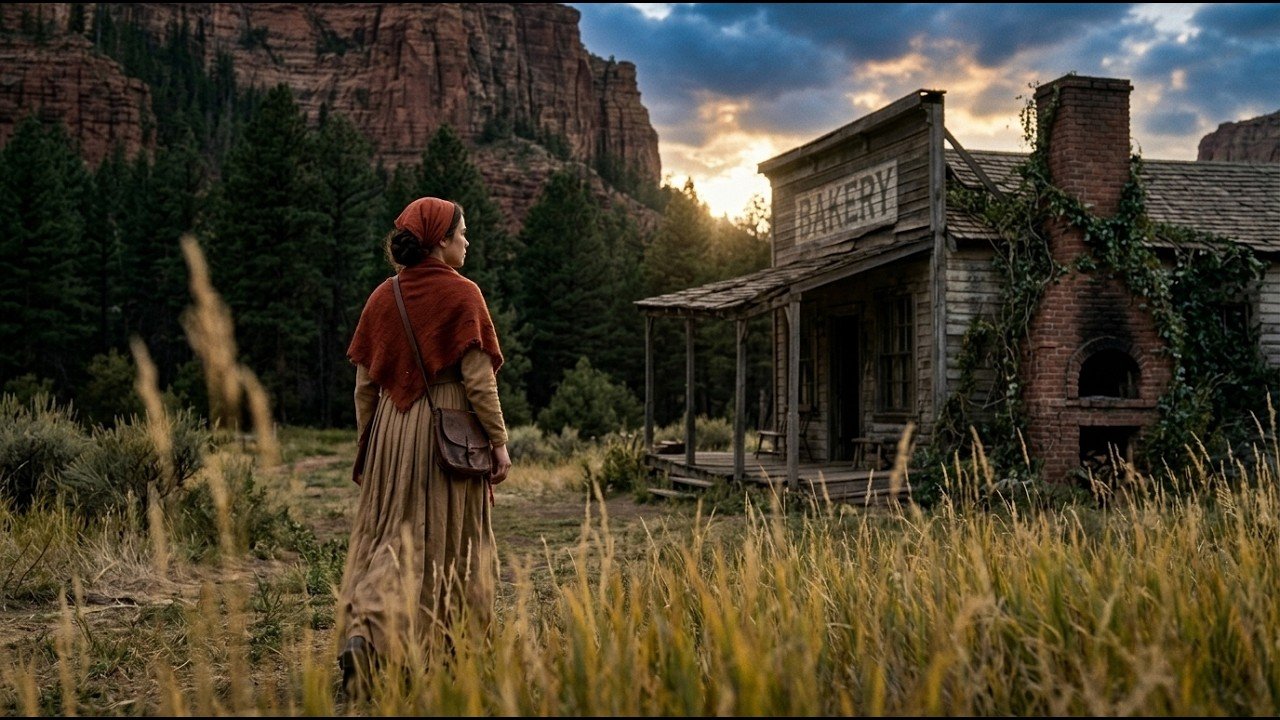
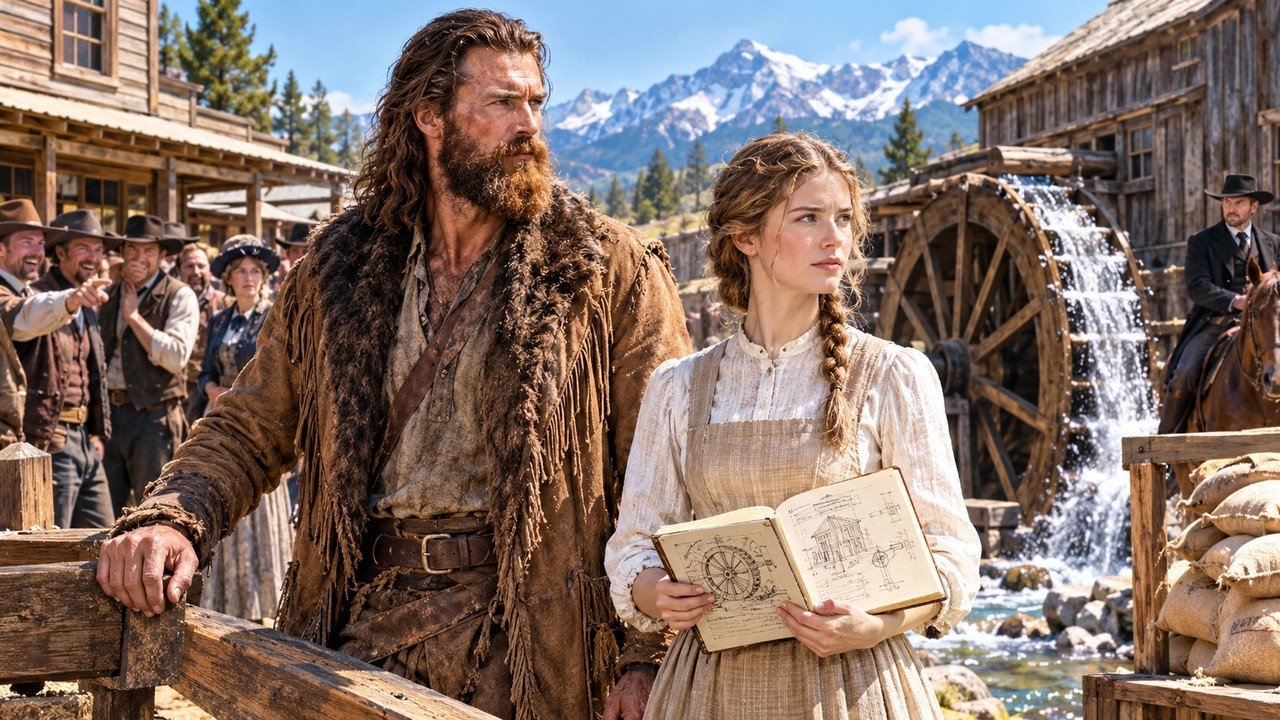
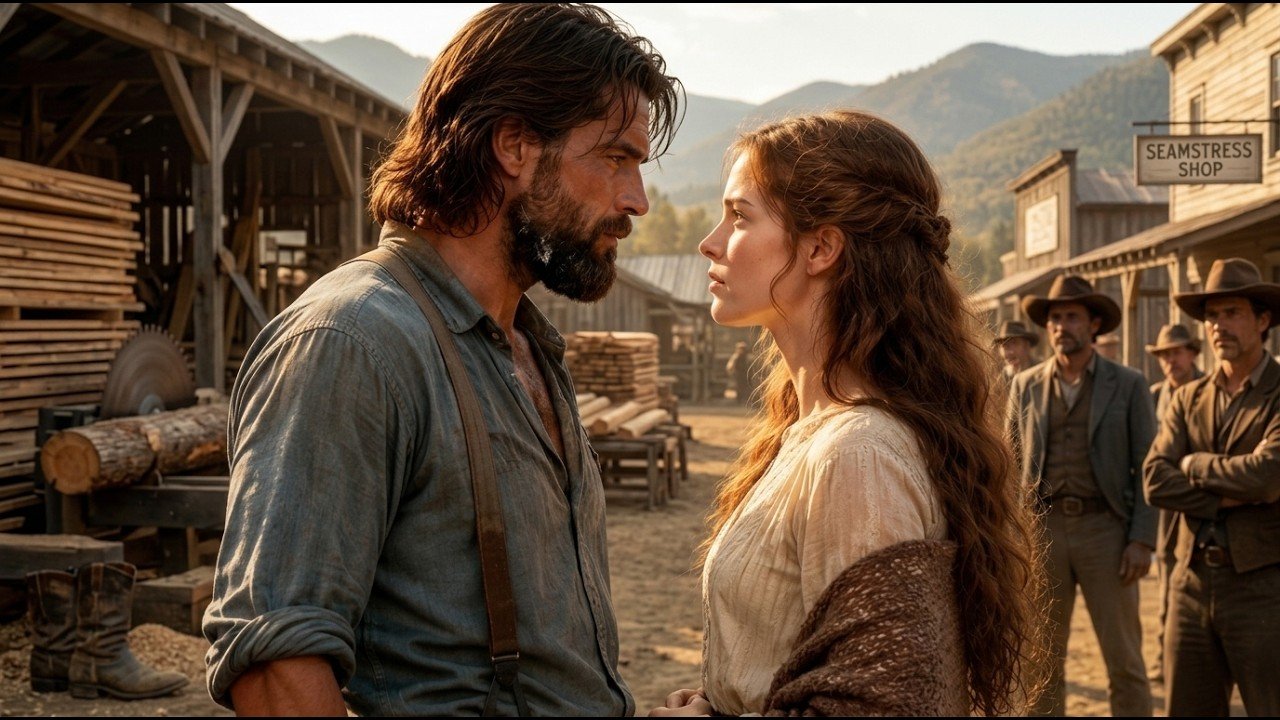
I Joked My Neighbor Should Winter at My Cabin… She Said “All Right” Like She’d Been Waiting
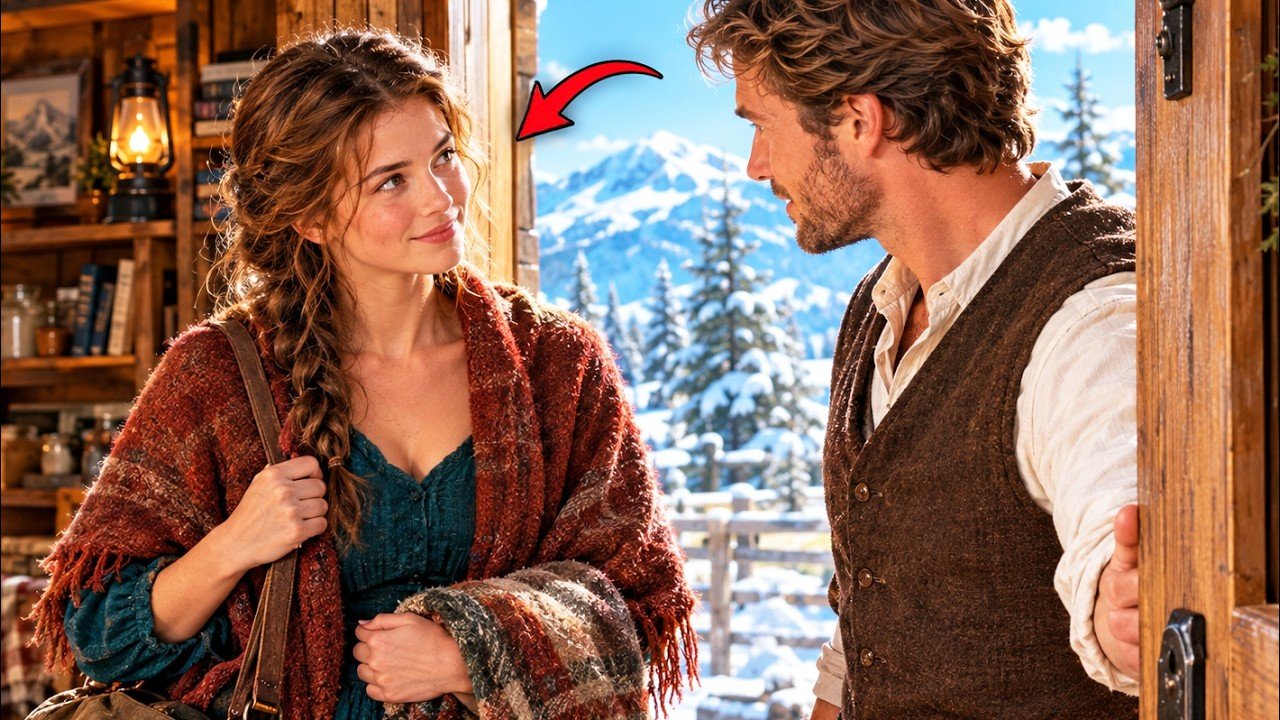
The trunk on Gideon Marsh's porch had been packed for weeks before he ever made the joke. He could see that much by lantern light standing in his own door yard outside Harlow Bend, Montana territory on the evening of the 12th of November, 1887. The strap across the lid had been buckled so long the leather had gone stiff in that shape and a pale line of dust lay along one side. The way dust settles on a thing that sits ready beside a door waiting. Gideon turned his hat in his hands and did the arithmetic a man does when the ground moves under him. He had made the joke at noon. It was not yet 7:00. And the trunk had plainly been packed since the first hard froSt. Which meant that somewhere in the weeks between that frost and that joke Nell Prentiss had known he was going to ask before he knew it himself. Hold there a moment. Leave him on the porch with his hat in his hands because to understand what that trunk meant, you have to know the two people it stood between. Nell Prentiss was 31 years old and she had built her life the way a careful woman builds a fire one dry stick at a time. Nothing borrowed, nothing owed. She had come out from Ohio at 24 with her brother Thomas and when Thomas caught the silver fever and drifted on to Idaho, she had stayed because by then she had a cow. The cow was a Jersey named Clover small and gold as a biscuit and from Clover had come a second cow and from the two of them had come the best butter in that corner of the territory. Nell worked it in a spring house she had dug with her own hands into the cold side of the creek bank and she stamped each pound with a wooden press carved with a wren because Prentiss butter was not like other butter and she wanted folks to know whose it was. Storekeepers in Harlo Bend paid her 2 cents above the going rate and were glad to do it. Ranch cooks sent for it by name. The Dancy children, who lived a mile down the creek, came every Saturday with a nickel and a pail, and Nell always cut the pat a little generous and always lost the same argument about whether the smallest Dancy, a round-cheeked boy called Pip, could carry the pail home himself. He could. He carried it the way a deacon carries the collection plate, beaming the whole mile, and his sisters walked behind him singing. And that was Saturday on Willow Creek. Every one of those pennies had a destination. In a tobacco tin under the third floorboard from her stove, Nell Printiss kept $241. Counted so often, the edges of the bills had gone soft. The money was for the Tillman place, the quarter section that ran along her east line, with its good bottom hay and its spring that never froze. Old man Tillman had died in the spring with no kin anybody could find, and the bank in Harlo Bend meant to sell his quarter at a flat $300, final, on the 1st of March. $59 short with a winter between her and the date, and winter was the season butter money ran thinneSt. She had done that arithmetic, too, more than once by candlelight, and it always came out the same. Close. Close enough to make a careful woman careless about everything except the money itself. Which is how she came to be living that November in a cabin with a cracked chimney and half a roof. The October storm had done it, the one folks later called the blue norther. Three days of wind that peeled her shakes back like the lid of a sardine tin and split the chimney stone top to bottom. A roof and a chimney together would cost $40 she did not intend to spend. Not with March coming. So she had stretched a tarpaulin over the gap, moved her bed to the dry corner, and told anyone who asked that she was snug as a cat. She had a rule, Nell Prentiss did, and the rule was this: She owed no one and she took no charity. Because a debt is how a person hands over their own life, one small piece at a time. And a gift from the wrong hands is just a debt wearing a ribbon. She could say no. And she said it the way other people say amen. Gideon Marsh now. Gideon was 42 and he owned the biggest spread on that side of the Teton country. And his reputation ran ahead of him like a dog that bites. It was not a fair reputation exactly. He paid honest wages and honest prices. But he spoke maybe 40 words on a good day, drove a bargain like a man driving a fence post, and had not been seen to smile in church in anyone's memory. His cabin was the puzzle of the neighborhood. Two full bedrooms, glass windows, a porch wide enough for dancing, built by one silent man with his own hands over two summers. Folks assumed he had built it for a bride who never came. Folks were wrong, but Gideon never corrected them. Because the truth cost more to say. He had built it for his brother Walt, for Walt's wife and their boy, who were to come up from Nebraska in the summer of 1881 and never did. There had been a quarrel between the brothers first, the kind that starts over cattle money and ends over pride. And there had been a hard letter Gideon wrote and mailed and regretted before the ink was dry. And then there had been a ford on the Marias River running high with June melt and Walt on the wrong side of it coming north, folks said afterward, to make his peace. Gideon kept the second bedroom swept and dusted and shut. In the dresser of that room lay a letter in Walt's hand postmarked four days before the river, delivered nine days after. In six years Gideon Marsh had not opened it. He called the way he lived discipline. It was not discipline. But a man can call a wound anything he wants if nobody is close enough to look at it. His foreman was the one man who was close enough and his foreman was Amos Teague. Sixty-some, dry as an August ditch. A bachelor who claimed he had been engaged once in Missouri and escaped, as he put it, with his life and one boot. Amos had opinions about his employer and shared them freely with the horses. The joke happened at the line fence at noon on the 12th with the first snow hanging in the air, not falling yet, just hanging. The way it does when the sky is making up its mind. Gideon had ridden his east line for no reason he could have sworn to and found Nell on her side of the wire hauling creek stones in her apron to brace a stove pipe that did not want bracing. He saw the tarpaulin shuttering on her roof. He saw her chapped hands. And out of him, sideways, in the tone a man uses for things he does not dare say straight, came the joke. He said it was a shame she was set on freezing to death out of stubbornness when he had a whole spare room going to waste. And that she might as well winter at his place and save the county the cost of a funeral. He had the next line ready, something about her cow eating less than his foreman. He never got to it. She said, "All right." She said it before he finished. Said it the way a door opens when the latch has been oiled and waiting. And then she stood there with creek stones in her apron looking at him. And Gideon Marsh sat his horse looking back. And if the snow made up its mind and began to fall between them soft as flour through a sifter. Neither of them smiled. Neither of them took it back. A joke, you understand, is just a question wearing its Sunday clothes. And both of them had heard the question underneath plain as a church bell. They simply agreed, without a word, to keep pretending otherwise for as long as they could stand it. "There will be paper," she said at laSt. "Terms written out. Two copies, both signatures. I pay board. I keep my own accounts." "Fine," said Gideon, who had just offered a woman his house and was being negotiated with across barbed wire and found, to his private astonishment, that he had no objection on earth. By dark the trunk was on his porch. She had not asked him to haul it. She had borrowed the Dan's wagon and the Dan's children had ridden over sitting on top of the trunk like three sparrows on a ridge pole singing a counting song. And Pip had held Clover's lead rope the whole way with the solemn joy of a boy promoted to drover. And when they rattled off home in the blue dusk laughing, their father let them each blow the tin whistle once and the sound hung in the cold air like something good promised. That was what Gideon came out of his barn to find. The trunk, the tilting lantern, the little gold cow already making herself at home in his corral as if she had read the contract herself. And Nell Prentiss on his steps with snow in her hair looking like a woman who had made up her mind long before anybody asked her anything. They wrote the paper that night at his table and Amos Teague witnessed it reading each clause aloud in a courtroom voice. Board, $2 a week payable in dairy work, cooking and butter at market rate. Account settled every Saturday evening. Amos signed his name with a flourish, looked from one of them to the other and announced that since neither party seemed capable of plain gratitude, he would be keeping his own ledger of every thank you exchanged in that house and settling the balance at Christmas. Then he took his supper plate to the bunkhouse chuckling at his own wit which was his habit and his main audience. She carried her candle to the spare room and Gideon stood in the doorway behind her. And that was when she saw what nobody in Harlow Bend had ever seen. The room was kept. Quilt squared, floor swept. Not a cobweb in the corners, not a season of dust on the dresser. A room tended the way you tend a grave. Nell set her candle down slow. She turned around. Gideon Marsh, she said quietly. Who did you build this room for? He did not answer right away. A man who has carried a thing six years does not set it down because somebody asks nicely. He looked past her at the quilt and his jaw worked once the way it does when words are climbing up and being pushed back down. And what he finally said was my brother. His wife and their boy. They never made it up from Nebraska. And then, because the whole truth was still too heavy, he added only The Marias took him at the Ford. June of '81. He said it flat, the way men recite weather. Nell Prentiss had buried a mother and watched a brother ride off towards silver and silence. And she knew flat when she heard it. Flat is what a voice sounds like when it is carrying all it can hold. She did not say she was sorry. She did not touch his arm. What she said was Then I'll thank you for the loan of his room. And I'll keep it the way you've kept it. And something moved behind Gideon's eyes. Some gate easing on its hinge. Because in six years every soul who learned about Walt had rushed to fill the silence with soft words. And this small chapped-handed woman had simply taken the weight he handed her, nodded, and not asked for more. He said goodnight. He went down the hall. He lay awake a long while listening to the strange, warm, forgotten sound of another person breathing under his roof. And down the hall Nell lay awake doing the same. And Clover, out in the corral, slept the untroubled sleep of a cow who has landed somewhere with better hay. The paper held them up like a trellis holds a vine. Which is to say it gave the thing growing between them something respectable to climb. She rose before him, which annoyed him into rising earlier. Which she then beat again, until by the 1st of December the two of them were colliding in the kitchen at 5:00 in the morning in the dark. Each pretending the other was the late one. She cooked. Lord, she could cook. Amos Teague, who had eaten his own cooking and Gideon's for 11 years, wept actual visible tears over her first pan of biscuits and asked her, in front of God and the hired man Dewey, whether she had a sister, a cousin, or a widowed aunt with low standards. Nell churned in Gideon's lean-to, warmer than her spring house by a mile, and her butter that winter came out so fine the storekeeper raised her another penny. Every Saturday evening they settled accounts at the table, her ledger and his, candle between them, and she counted out her board money to the exact cent, and he took it because he had learned by then that taking it was the gift. The tobacco tin, which had made the journey hidden in the trunk, grew by inches. $253 by the second week of December. $261 by the third. 47 weeks of work compressed into a number, and the number crawling toward 300. And the first of March standing out there in the distance like a fence post at the far end of a long field. Before we go on, a quick word about butter money. On the American frontier, dairy work belonged almost entirely to women, and the cash it brought in was known plainly as butter and egg money. By long custom, and sometimes by the only unwritten law a farm wife could claim, that money was hers to keep and spend, separate from her husband's or her father's accounts. Historians like Glenda Riley, in her study The Female Frontier, found that this income was no pin money. For many Western households, it was the steadiest cash the family saw. The crop money being yearly and uncertain, while the butter came every week. For an unmarried woman like Nell, a good dairy hand with her own cows could mean full independence. A rare and hard-won thing in the 1880s. Women guarded that income fiercely, and more than one frontier memoir records a wife who bought land, paid taxes, or saved a homestead outright with butter money. If you're enjoying this story, write in the comments where in the world you're listening from. On this channel, our stories do more than entertain. They teach us something true about what life was actually like. Now, back to Harlow Bend. The ritual that became the hinge of that winter started small, the way the important things do. The first Saturday after the Dancys learned where Nell was wintering, there came a knock, and there stood Pip with his pail and his nickel, having walked the extra mile and a half to Gideon's place without being asked, trailed by his two singing sisters, all three of them red-cheeked and delighted with themselves. Gideon Marsh opened his door on three children and did not know what to do with them. So, Nell did. And within a quarter hour, the Dancy children were installed at the big table with warm milk and the heel of a fresh loaf. And Pip was telling Gideon, man to man, about a fox he had almost seen. The next Saturday they came again, and the one after. It became the law of the place. Saturday afternoon, the children came for the butter. Nell cut the pat generous. Amos performed his one card trick, which never worked, which was the whole joy of it. And the girls sang whatever they were singing that week, while Pip supervised everyone. Gideon took to carving while they visited, just to have something for his hands. And on the fourth Saturday, without a word, he sat down in front of Pip a small wooden cow, gold-painted with a dab of wagon paint, the unmistakable likeness of Clover. The boy's whole face opened up like a window. He carried that cow home, held out in front of him in both hands, and his sisters walked behind him singing. And Amos Teague stood on the porch watching them go, and said to nobody in a suspiciously rough voice that it was blowing up dusty out. And Saturday evenings, after accounts, Gideon found his excuses. There was always something. A harness of hers in his barn that wanted mending, and could only be discussed at length by lamplight. A question about the Tillman quarter's spring, which he had watered cattle at for 20 years and could describe stone by stone, and did, slowly, while the fire burned down. A newspaper from Fort Benton, 10 days old, with an article she might want read aloud. Nell saw through every excuse like window glass, and let every one of them stand. The psychiatrist Elisabeth Kübler-Ross, who spent her life sitting with grief and the people carrying it, wrote in On Grief and Grieving that the loneliest mourners are the ones who have persuaded everyone around them that they need nothing. And that the way back begins almost always with small, ordinary company. Not with talk about the loss at all. She could have been writing about a Montana kitchen in December of 1887, a silent man, a careful woman, and a harness that took 5 weeks to mend. Christmas Eve, Amos settled his thank-you ledger as threatened. He stood by the fire with a stub of pencil and a grave expression and announced his findings. Miss Prentiss, 41 thank-yous issued since November. Mr. Marsh, a disgraceful 11, and therefore, by the power Amos had vested in himself, Gideon owed the house 30 courtesies, payable on demand. Everyone laughed, even Gideon, a short, rusty sound like a pump handle that wants oil. And Nell looked at him laughing, and then looked quickly down at her mending. And Amos Teague saw the whole thing, wrote something in his little book, and kept his counsel for once in his life. January turned mean. The snow came belly-deep to a tall horse, and the cold cracked trees in the night like rifle shots. And in the third week of January, the thing happened that nearly broke it all. And it happened, as those things do, out of kindness. A Chinook wind opened the roads for 4 days, and Gideon rode into Harlow Bend for supplies. And while he was there, he stepped into Pruitt's Hardware, and quietly paid for $40 of shakes, nails, flashing, and chimney stone to be freighted to the Prentiss cabin at first thaw, and billed to nobody. Marked paid. A gift. He rode home through the blue evening, feeling for the first time in 6 years like a man who had done a plainly good thing. And he made the mistake of being pleased with himself at supper, and Nell asked him why, and he told her. The quiet that came over that kitchen had edges on it. She set down her fork. She asked him, in a voice gone very level, what he had done. And he repeated it, slower. Already understanding from her face that he had stepped through ice he had not known was thin. And Nell Prentiss stood up and named the sin out loud. Named it, so it rang. "You see something broken," she said. "And you fix it without asking whether the person wants fixing. That roof is mine, Gideon. The hole in it is mine. The $40 it costs is mine to earn and mine to spend when I choose. And you have just stood up in Pruitt's in front of the whole county and spent it for me. And do you know what the county heard? They heard that Marsh is buying the butter woman a roof and they will do their own arithmetic about what a man gets for a roof. Her voice did not rise. It did something worse. It steadied. I have been nobody's debt and nobody's charity for 7 years. It is the one thing I built that can't burn or die or be sold off. And you spent it in an afternoon because fixing things is easier for you than asking. You fix fences that way. You fix cattle that way. I am not a fence. Gideon stood by the stove with his jaw tight and the old Marsh pride reared up in him. The same pride that had written a hard letter to a brother once. And for one long dangerous moment, the next wrong words were right there in his mouth. He looked at her. He looked at the shut door of Walt's room down the hall. And he put the pride down. You're right, he said. Nell blinked. Whatever she had braced for, it was not that. "All right, I'll be tomorrow and have Pruitt tear up the ticket." He said, each word placed like a poSt. The lumber can sit in his yard till you buy it yourself or don't. I wasn't trying to buy anything, Nell. I was trying to say a thing I don't have words for. And I said it with money. Because money is the only language my family ever spoke without fighting. He took his hat off the peg, needing to be outside with this. And at the door he stopped, his back still to her. My brother drowned coming north to forgive me, he said. Last thing I ever gave him was a letter full of pride. There's a letter of his in that dresser in your room I've been 6 years too much of a coward to open. So you ask me why I fix things without asking. He opened the door on the ringing cold. Because asking means hearing the answer. He was gone into the dark barn before she could speak. And Nell Prentiss stood alone in the kitchen with her heart pounding. Staring down the hall at the door of the room she slept in every night. And the dresser inside it. And the letter that had been lying 3 ft from her head since November. Waiting. The way her trunk had once waited on a porch. For somebody to finally be brave. She did not touch the dresser that night. It was not hers to touch. And Nell Prentiss knew better than most that a wound opens on its own calendar or not at all. But the next morning Gideon rode to town through snow up to the cinch and had Pruitt tear up the ticket in front of two witnesses and the stove circle of old men who warmed Pruitt's chairs all winter. And he said. Loud enough for the whole store. That Miss Prentiss bought her own lumber or nobody did. And that any man who had heard otherwise had heard wrong. It cost him. Men like Gideon Marsh spend words the way other men spend gold and he laid out a double eagles worth that morning in a hardware store correcting a kindness and Pruitt told the story for years. Then he rode home, and at supper, he set the torn halves of the ticket beside her plate without a word. And Nell looked at them a long moment and said, "Thank you." And Amos Teague, who missed nothing, licked his pencil and announced that Mr. Marsh's courtesy debt now stood at 29, and the kitchen breathed again. Something shifted after that fight, the way ground shifts after a frost heave and settles truer than before. She started telling him things. Not the soft things, the real ones. The exact count in the tobacco tin, which no living soul had known. $268 by the end of January. 32 short with 5 weeks to run. He started asking instead of fixing. When the lean-to door sagged, he asked her whether she wanted it rehung, and she said yes, and he rehung it. And the asking took 4 seconds and changed everything. Because a door rehung by permission is help. And the same door rehung without it is a verdict. He asked her, one Saturday evening over the ledgers, how a woman learns to say no the way she said it, like a gate latching. And she told him about Ohio, about a father who borrowed against everything, including his children's labor, about watching her mother hand over her butter money year after year to cover a man's promises until there was nothing left of her mother but the handing over. "A debt is how a person gives away their life a little at a time," Nell said, turning her cup. "I watched it done. I'd sooner freeze under a tarpaulin." And Gideon, who had heard the frozen under a tarpaulin plan described before, wisely said nothing. And she caught him saying nothing, and the corner of her mouth moved. And that was the other thing that had changed. They had begun to be funny to each other, which is a thing that happens to two serious people in a warm kitchen in deep winter, and which no contract clause had foreseen. February came in hard, and in the second week of February, on a Saturday, with the Dancy children singing barely faded down the lane, the blow landed. And it landed the way Nell had always feared it would, in public, in town, wearing a smile. She had driven the cutter in herself to deliver the week's butter, 40 lb of it, Wren stamped, the storekeeper's standing order, and she was in the back of Gaither's store wrapping the last of it when she heard her own name float over the shelving in the voice of Dora Pruitt, the hardware man's wife, who was speaking to the banker's sister in the particular lowered tone that is designed to be overheard. The words came through the canned goods clear as creek water. That it was a scandal in all but name, a grown woman wintering under a bachelor's roof, contract or no contract, and everyone knew what such contracts were worth. That the Marsh man was known to be close with a dollar. So, one could only conclude the arrangement paid him in something other than board. And then the knife. The one Dora had been saving. That it was hardly a surprise considering. "Considering what?" Asked the banker's sister obligingly. "Considering," said Dora Pruitt, "that the prentice woman's own father had died in Ohio owing half his county, that the family name was a byword back there for debts run out on, and that blood tells." The daughter had simply found a richer arrangement than the father ever managed. Like father, like daughter. Settling her debts on her back instead of She did not get to finish because Nell came around the shelving. The store went still the way a field goes still under a hawk. And here is the terrible thing, the thing that made it a wound and not an insult. Some of it was true. Not the filth, but the bones of it. Her father had died owing. She had spent 7 years and 2,000 miles building a life where no one could ever say the word debt and her name in the same breath. And she had built it penny by penny, pound by wren-stamped pound. And one idle woman beside a stove had just unbuilt it in 40 words in front of the county. Nell stood there with butter paper in her hands. She did not cry. She would have died firSt. She said, in a voice she kept level by main strength, "You have my father right, Mrs. Pruitt, and everything else wrong. And I pity your husband his accounts if you reckon all your figures this carelessly." Then she walked out with her spine straight as a wagon tongue and got up into the cutter and made it almost 2 miles out of town before the shaking started. She never told Gideon. That was the measure of how deep it went. The woman who had learned to tell him things could not tell him this because this touched the one place she could not bear him to look. The place where she feared in the small hours that she was exactly what Dora Pruitt said. A woman wintering in a rich man's house. Fed at a rich man's table. Whatever the ledgers claimed. He knew by Monday anyway. Amos Teague heard it in the feed store. Heard it with his own ears retold and improved. And Amos came home gray with anger and told Gideon straight out by the corral. Both men's breath smoking in the cold. And Gideon Marsh stood there a long moment with his hand on the top rail. And Amos watched him. And said later that he had seen that look on a man exactly twice before. And both times somebody had ended up horizontal. But here is what Gideon had learned by February, that he had not known in November. He did not ride to town. He did not buy anything, fix anything, thrash anybody. Or stand up in Gaither's store making speeches that would only feed the fire. The man whose answer to every wound was to reach for his wallet or his silence. Sat at his own table that night. Across from a woman pretending with all her considerable strength that nothing was wrong. And he asked. "Dora Pruitt." He said. "What did she say about your father?" Nell went white, then red. The pretense held one more second and broke. And it came out of her then. All of it. The Ohio debts, the dunning letters that had followed the family like crows. The name that had been a byword. The mother handed over piece by piece. And the true reason behind the rule she lived by. Which was not pride. Which had never been pride. It was terror. Terror that the ledger was in her blood like a fever. That one accepted kindness would become two. And two would become a habit. And the habit would become her mother's life. "And she is half right." Nell said. And her voice cracked for the first time in his hearing. "I sleep under your roof. I eat at your table. I am $32 short with 3 weeks to run. And if I miss that date, then this winter was exactly what she called it. And so am I. The fire popped. Gideon March looked at her for a long, long moment. And then he did the bravest thing of his life. Which from the outside looked like a man getting up and walking down the hall. He came back carrying the letter. Six years of dust in the dresser had not touched it. He had kept even his cowardice clean. He set it on the table between them. Walt's handwriting on the envelope. The postmark from Nebraska faded to the color of weak tea. "You carry a name you think is poisoned." He said. "So do I." "My own brother spent his last week on earth thinking God knows what of me. And I have spent six years too scared to find out which." "You want to know what debt really is, Nell? It's this. It isn't money. It's every word you didn't say while there was time to say it." His hands were not quite steady. The psychiatrist Victor Frankl wrote in a book called Man's Search for Meaning that a man doesn't survive on ease. He survives on having something left that is asked of him. I read that in a Helena paper once, a review of it, and I thought, "There is nothing asked of me anymore." I was wrong. This was asked of me the whole time. He pushed the letter an inch toward her side of the table. "I can't open it. I have tried every winter for six winters. But I think I could stand to hear it if the voice reading it was yours." And so on a February night in 1888, with the wind working at the eaves and the fire down to coals, Nell Prentice opened a dead man's letter and read it aloud to his brother. It was one page. It was dated the 4th of June, 1881. It began, "Dear Gid," which no one had called him since. And Walt's letter said, in the plain, blunt Marsh way, that the quarrel had been six of one and half a dozen of the other. That their father had raised them both too proud to apologize, and he, Walt, was apologizing anyway, in writing, where it would be on the record that Ellen was well, and the boy was growing like a weed and asking after his Uncle Gid. And that the boy's name, in case Gideon had torn up the christening announcement unread, which Walt reckoned he had, was Gideon Walter Marsh, and he was called Little Gid. And he was the second stubbornest Marsh alive. That they would be north by July, the three of them. And that the first evening on Gideon's famous porch, Walt intended to beat his brother at checkers, and drink his coffee, and act as if no hard letter had ever been written. And he advised Gideon to do the same, because, and this was the last line before the signature, "Life is too short to keep books on the people you love." Nell lowered the page. Gideon Marsh sat with his face in his hands, and his shoulders went, and the sound he made was six years old and terrible and necessary. And Nell did not tell him it was all right. Did not touch the moment with one single word. She came around the table and stood beside his chair, and she put her hand flat on his back, between the shoulder blades, the way you steady something that has to bear weight. And she stood there, upright in the firelight, while the man who owned half the valley wept like a boy over one page of paper. Life is too short to keep books on the people you love. Outside the wind lit up near midnight. Neither of them ever agreed afterward on how long they stayed like that. He slept that night, Amos reported later, like a hibernating bear. The first full night in years, and it was the next morning, at first light, with the whole kitchen still holding its breath from what had passed in it, that Gideon came in from the barn with frost on his collar and a look on his face Nell had never seen. A look with a decision in it, and said there was something in the loft of the barn she needed to see. Something of Walt's. Something he should have dealt with six years ago. And that depending on what she thought of it, it might just solve $32. The loft of Gideon's barn held under six years of hay chaff and canvas, the makings of a whole second life. He had ordered it all in the spring of 1881 for the family that was coming. A cookstove, still in its crate with the freight tags on, a bedstead of eastern maple, a bureau, a boxed clock from St. Paul, a child's rocking chair, small as a promise, with a horse's head carved into the back of it. He had hauled every piece up that ladder himself the month after the river because he could not look at it and could not burn it. And there it had sat, a furnished house stacked in the dark, waiting the way grief waits. Nell climbed down the ladder slowly and looked at him, and he said it plain. He wanted the loft empty by spring. Walt's letter had said not to keep books on the people you love, and a loft full of crated sorrow was a kind of bookkeeping, too. But he could not stomach selling it himself, standing in his own yard haggling over the boy's rocking chair. And more than that, he was no hand at it. He would take the first insulting offer just to end the conversation. She, on the other hand, was the best trader on the creek. The storekeepers said so with wounds in their voices. So, he was proposing a commission, strictly business, to be written into the contract as an addendum, read aloud and witnessed by Amos. Nell Prentice to appraise, advertise, and sell the contents of the loft at the best prices the territory would bear, and to keep $1 in every five, which was the standard drummers rate and not a penny of charity, as the storekeeper would confirm. She studied him a long moment, hunting the trap, the hidden ribbon on the hidden gift, and found none. It was work, hard, cold, pages of figures work in the dead of February, and he needed it done and could not do it. "Addendum," she said. "Two copies, both signatures." And Gideon Marsh smiled, the second smile anyone had seen on him in 6 years, and the first one had also been hers. She sold it the way she did everything, thoroughly. She wrote notices in her best hand and had them posted in Harlow Bend, Chouteau, and Fort Benton. She knew, the way a woman who delivers butter to every kitchen in a county knows things, exactly who was marrying in the spring, who had burned out in the autumn fires, which ranch cook had been cursing his stove since Grant was president. The maple bedstead went to the Lindquists for their bride-coming son. The clock went to the banker's sister, of all people, at a price Nell named without blinking and did not lower. The cookstove, crated and newer than anything in Gaither's store, started a quiet bidding war between two ranch wives that Nell refereed with the serenity of a judge. People came to the Marsh place for the viewing, and that was its own medicine. Because what they found there was no scandal. They found a spotless kitchen, a contract pinned to the wall where anyone could read it. A hired work addendum beside it. Amos Teague pouring coffee like a duchess, and a woman conducting commerce with a ledger open on the table. Dora Pruitt did not come, but her neighbors did. And the story they carried home was better than any speech Gideon could have made in Gaither's store. By the 20th of February, the loft was empty but for one thing. And the sales came to $141. And Nell's dollar and five came to $28.20 earned, witnessed, and entered. With her February butter money, it carried the tobacco tin past 300 with four days to spare. The one thing she had refused to sell was the little rocking chair with the carved horse. She set it by the fire without asking him, and he came in that evening and saw it there and stopped. And she said, "Some things are not inventory." And he said nothing at all, which from Gideon Marsh was a psalm. On the last day of February, a Chinook opened the road south, and Gideon rode out alone before dawn and was gone the whole day. He rode to the ford on the Marias, to the little bench above it where they had buried Walt under a wind-bent cottonwood. And he did the thing he had driven down there six February's running and never once managed. He sat on his heels by the stone, and he took the letter out of his coat, and he read it out loud, start to finish. "Dear Gid" to the signature, his own voice and the river's, and nothing else in all that country. Then he talked a while. Amos never asked and Gideon never told, but he came home in the blue dark looking like a field looks after rain. And Lillian Schlissel, who gathered the diaries of westering women into a book called Women's Diaries of the westward journey, found the same thing written over and over in those pages in a hundred hands. That the frontier did not let people outrun their dead. And the ones who fared best were the ones who stopped trying. Who gave their dead a place at the table and went on living in front of them. Gideon put his horse up and washed and came into supper. And at the table he said, "I told him about you." And that was all. And it was enough to stop her breath. On the 1st of March, 1888, Nell Prentice walked into the bank at Harlow Bend in her good dress with $300 in a tobacco tin. And bought the Tillman quarter. The bottom hay. The spring that never froze. Every stone and blade of it. In her own name. Eleanor Jane Prentice spelled out full on the deed. While the banker's pen scratched and the banker's sister watched through the railing. She walked out onto the plank sidewalk, a landowner, debtless in the clear March light. And Gideon was waiting with the cutter. Because asking had taught him this much. That a man may witness a victory he had no hand in. And that standing by is its own whole language. And it was there on the sidewalk in front of the bank and God and three loafers and a dog, not on bended knee, but with his hat in his two hands, exactly as he had held it that first night on the porch that he said it. He said he had rehearsed finer words on the ride in and lost every one of them. He said he was not asking to rescue her because she had just walked out of that bank needing rescue less than any soul in the territory. And he knew now that love was not hauling somebody out of the river. It was asking and waiting on the answer and standing close while a person carried their own. He said the spare room was hers regardless, and the question was separate from the roof, from the quarter section, from every dollar either of them had. And the question was only this, would she marry him? And Nell, who had seen it coming for a month and had still not found anywhere to put her heart that morning, said yes on one condition, written into no contract, witnessed only by the loafers and the dog, that every year on the 4th of June, Walt's date, there would be coffee and a checkers board on that wide porch. Two cups poured and one game played, win or lose, because life was too short to keep books on the people you love. And in that house, nobody ever would. But some accounts you keep open on purpose, forever, out of love. Gideon Marsh stood on a plank sidewalk in Montana and could not speak. So, he nodded, and the dog barked, and one of the loafers applauded. And that is a true proposal for you. They married the last Saturday of April in the Harlow Bend church, simple as bread. The Dancy girls scattered dried petals saved from somebody's summer, and Pip bore the ring on a cushion with the gravity of a Secretary of State. The little gold wooden cow standing watch in his coat pocket. And Amos Teague stood up as best man in a collar that was strangling him and produced at the vows a sound like a wagon axle wanting grease. And wept without shame straight through the kiss. And announced at the supper afterward wet-faced and beaming that by his ledger the two of them now owed each other everything and the books were therefore at long last beautifully balanced. The newlyweds drove home in the cutter through an April evening with meadowlarks going up on both sides of the road. Her wren stamped butter still went to town every Saturday in her name at her price. His house filled up slowly with small ordinary miracles. The smell of bread at daybreak. Amended sock left folded on a man's chair. Laughter at 5:00 in the morning when they collided in the kitchen each still pretending the other was the late one. The tarpaulin cabin on Willow Creek became her dairy. Spring house and all. Bought roof and chimney included. With her own lumber from Pruitt's yard paid in full her name on the ticket. And in the spring of 1889 a son was born in the big bedroom. And they named him Walter. Called him little Walt from the first hour. And the rocking chair with the carved horse came to the fire for good. And the name was never a shadow in that house but a door kept open. Because every 4th of June the boy sat on the porch steps learning checkers while his father poured two cups. And when he asked they told him all of it. So that the uncle he never met walked through his childhood as near and plain as a neighbor. 40 years now the 12th of November, 1927. Snow hanging in the Montana air, not falling yet, just hanging. Over the same wide porch the spread ran under Walter Marsh these days. A steady man of 38 with a laughing wife and three children. And the middle one, a round-cheeked girl called Nellie, kept on her window sill a small wooden cow. Gold paint worn to honey, handed down to her by old Mr. Pip Dansie himself. Who farmed down the creek and still carried things as if they were collection plates. Amos Teague was 20 years gone, laid under a stone that read, by his own written instruction, "Books balanced." And no June checkers game ever ended without someone telling an Amos story, and someone else ruining the punchline. The contract hung framed in the parlor, addendum and all. Both signatures faded tea brown. And beside it, Walt's letter under glass, read aloud so many times to so many grandchildren that the smallest ones could finish its last line from memory. And on the porch that evening sat two old people wrapped in one blanket, 82 and 71, watching the sky make up its mind. Gideon said, slow and sideways, in the tone a man uses for things he does not dare say straight, that it was a shame such a stubborn woman ever agreed to winter at his place. And that she might at least have had the decency to hesitate. And Nell Prentice Marsh, whose trunk had been packed for weeks before he ever made the joke, took his hand under the blanket, old hand in old hand, and said, "All right." And the first snow began to fall, soft as flour through a sifter, on the two of them and the porch and the whole long valley and neither of them smiled and neither of them took it back. And that friends is where I will leave them because some doors you close quietly and tiptoe away.